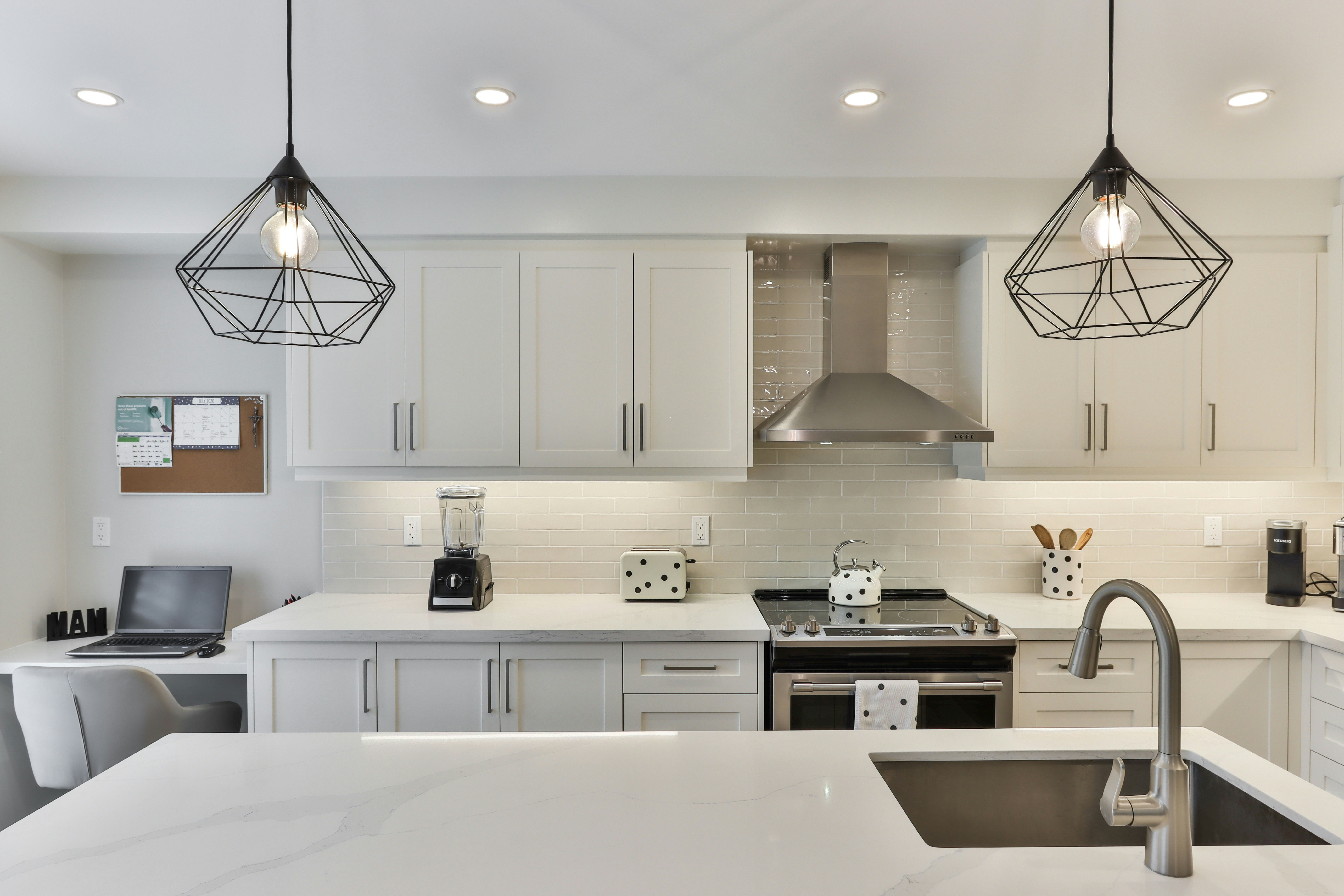
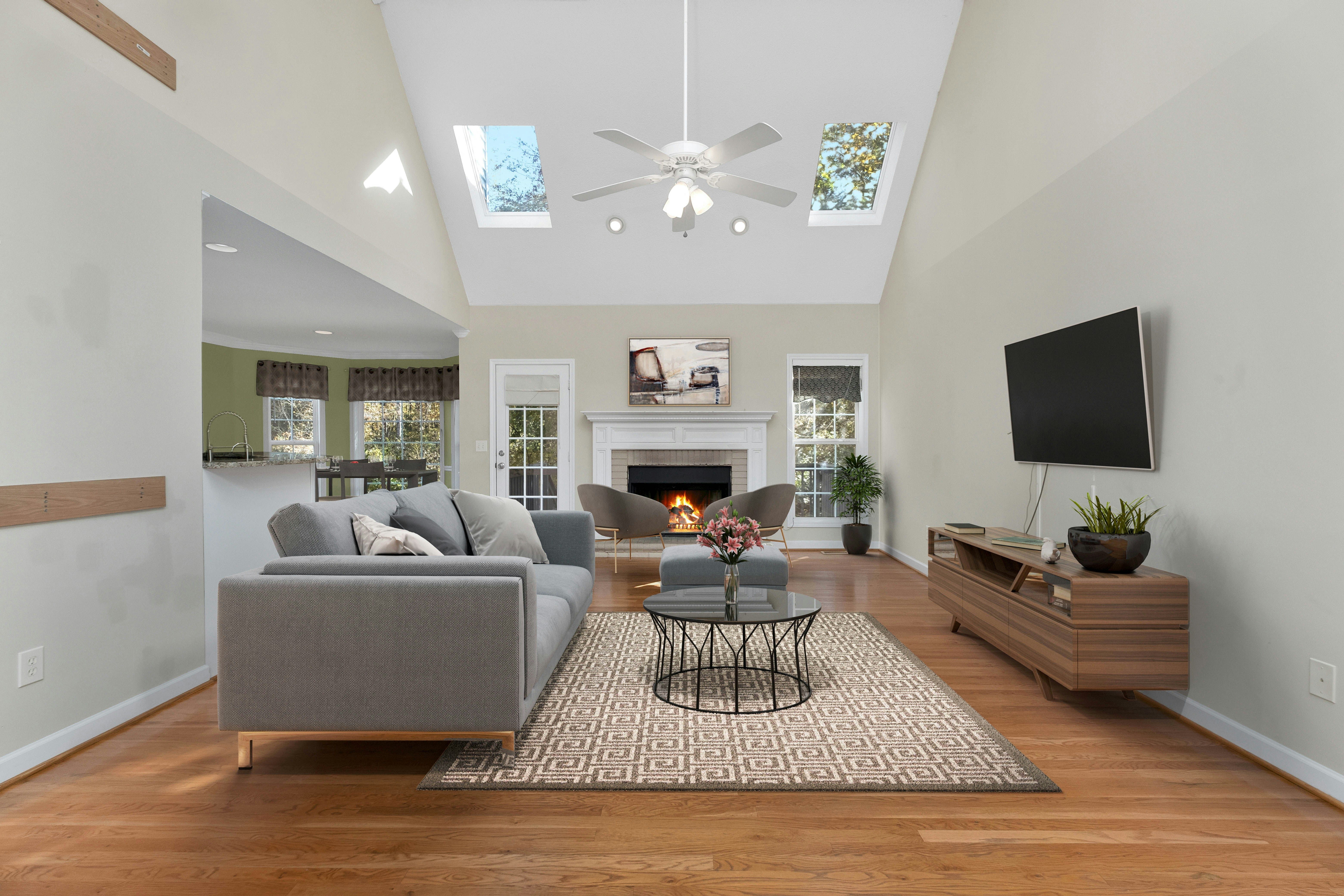
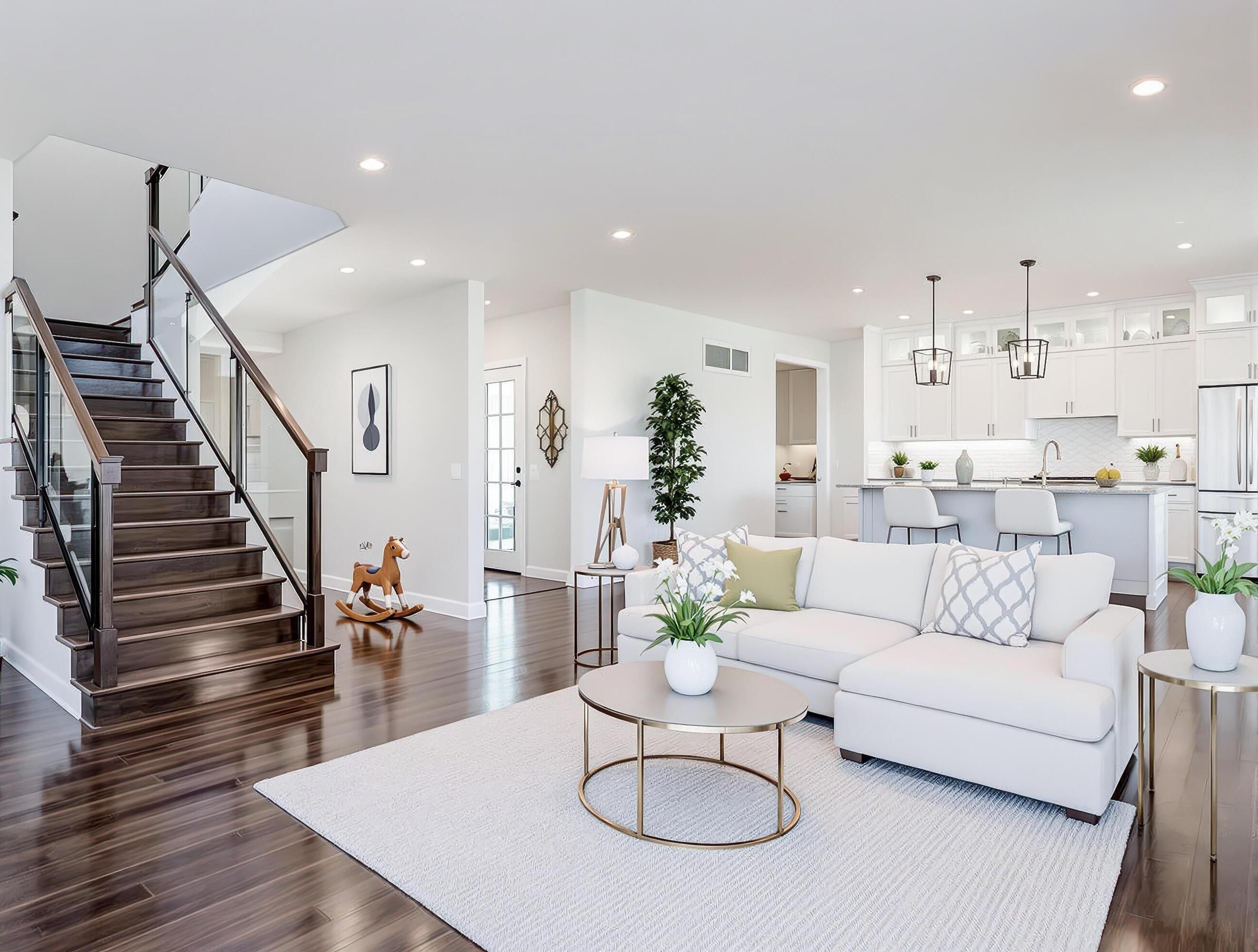
Set two photographs of the same empty living room side by side. In the first, a person scrolling through listings sees bare carpet and blank walls, and has no way to judge what furniture the room holds. In the second, digitally placed furniture shows one plausible way to use the space, at a scale that leaves the doorway and the windows clear. At Sell It Well Home Staging, we offer virtual staging for exactly that gap, and we hold every image to three rules: label the altered photo, keep the original beside it, and never touch a permanent feature. The photographs are the part of a listing a buyer usually opens first, and wanting to test a room’s layout right there is a smart seller’s instinct. The three rules keep that instinct honest.
What a Digital Layout Actually Adds
Virtual staging places furniture and decor into a real photograph of your room without moving a single physical item. A buyer studying an empty room has no familiar object for comparison, so the estimate of its size usually runs small. Set a dining table for six into the photograph and the same room shows its true dimensions, because everyone knows how much space six chairs need. We choose pieces at that known scale and keep the doors, walkways, and windows usable around them, since an oversized sofa that could never fit would mislead the buyer. We usually stage the room a buyer cannot figure out from the photo alone, such as a flex room that could hold an office or a nursery.
Label the Altered Image Where a Buyer Sees It
Disclosure only works when a buyer cannot miss it. A virtually staged photo should carry its label on the image itself or in a caption directly beside it, never buried in remarks a buyer has to hunt for. Listing photos travel to other sites, and captions do not always travel with them, which is one more reason we put the label on the image. A buyer who knows which photo is digital trusts the rest of the listing more, and that trust matters most at the showing.
Publish the Original Beside the Staged Version
We publish the untouched photo next to the staged one, so anyone can compare the furnished possibility with the actual room before booking a visit. We hold to that pairing to protect the moment a buyer walks in. A buyer who has seen both photos arrives expecting exactly the room that exists, and the visit confirms the listing. Your credibility as a seller stays intact from the first click to the final walkthrough.
Leave Every Permanent Feature Untouched
The last rule draws the line at the house itself. Add a sofa when the room needs a scale reference, and never erase a stain, brighten a worn floor, move a wall, or improve the view. A sofa can be brought in before closing, so showing one digitally stays truthful, while the flooring, windows, cabinets, and fixtures are the property your buyer is actually purchasing. Those features appear exactly as they are in every photo we publish. We add what could genuinely be moved in, and we change nothing that could not be.
Confirm the MLS Rule, Then Publish the Pair
A digital layout does its job online. The buyer will stand in the real room, and the sale happens there. Before any staged image goes live, your listing agent should confirm the rules your Ames-area MLS applies to altered photos, because disclosure requirements vary by market and the agent controls the upload. We decide which room needs the digital furniture, what one credible layout should show, and how the pair reads side by side. If you are preparing an empty Ames home for its listing photos, call Sell It Well Home Staging at (515) 238-3795, and we will map out what each room should show, in the photograph and in person.