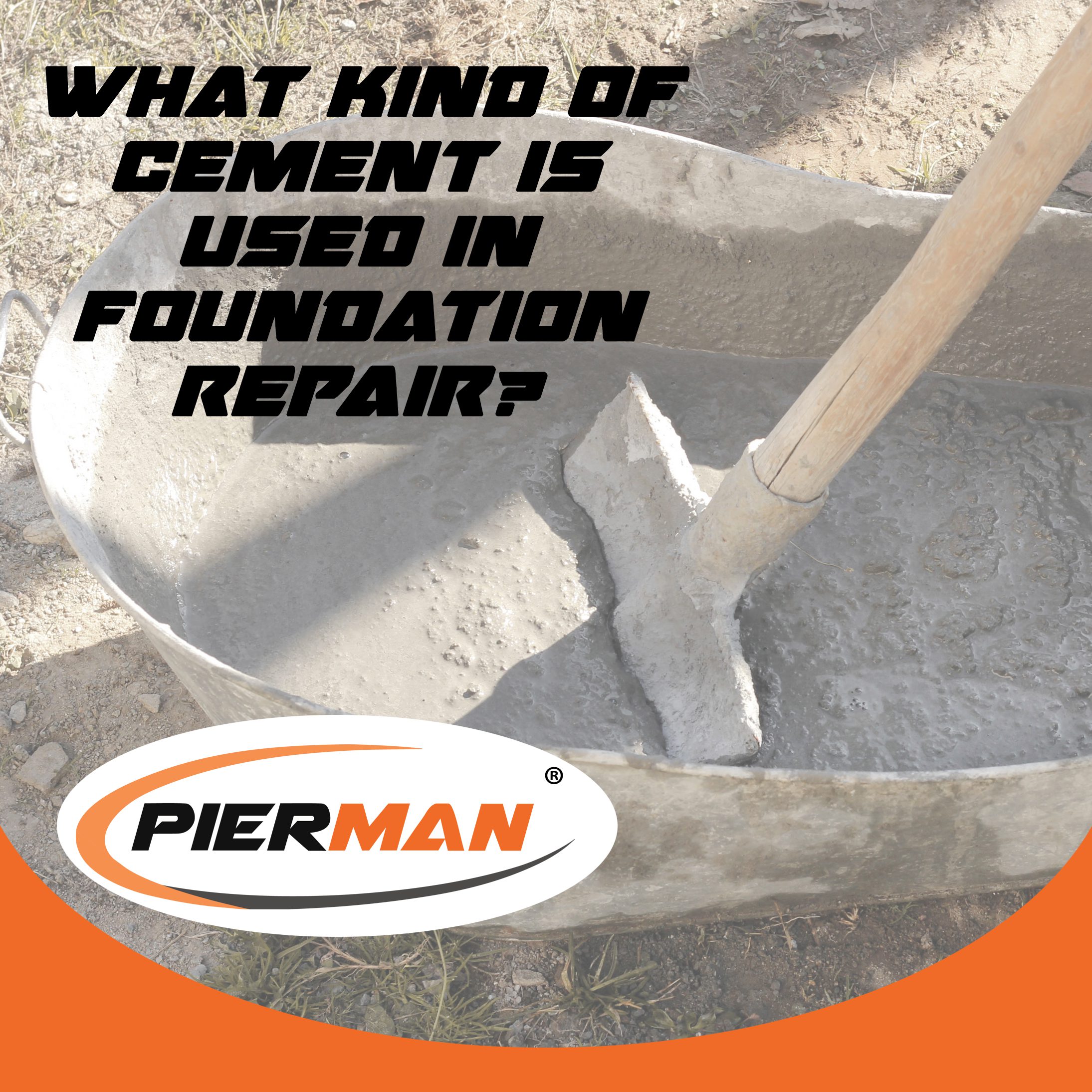
 Many individuals are unaware of the sort of cement used to repair their home's foundation. However, it may save you the time of conducting research in advance if you simply ask your contractor this useful question before they begin any work on your house.
Although there are many other kinds of cement, they will most likely answer with Portland cement. It is the one most commonly used types of concrete, so naturally, it is frequently used for foundations. Other kinds include masonry cement, hydraulic cement, and mortar mix.
Continue reading below to learn more from these commonly asked questions about the different kinds of cement and which types are used for foundation repair:
Many individuals are unaware of the sort of cement used to repair their home's foundation. However, it may save you the time of conducting research in advance if you simply ask your contractor this useful question before they begin any work on your house.
Although there are many other kinds of cement, they will most likely answer with Portland cement. It is the one most commonly used types of concrete, so naturally, it is frequently used for foundations. Other kinds include masonry cement, hydraulic cement, and mortar mix.
Continue reading below to learn more from these commonly asked questions about the different kinds of cement and which types are used for foundation repair:
Which Concrete Mix Is The Most Efficient?
For instance, a fundamental sand and cement mixture needs at least three parts sand (aggregate) to one part cement. A good ratio for a strong concrete mix is 1:3:5. (Cement, Sand, Coarse Gravel). Sand and gravel are both components of the aggregate used in these instances. When it comes to pre-mixed concrete, the cement and aggregate have already been included in the mix in a ratio that is standard enough for most projects.Is It Possible To Use Cement Without Sand?
Although sand is the most common aggregate used in concrete, it can also be combined with several other aggregates. These include crushed stone, gravel, or even pieces of already-built concrete. Depending on the aggregate material, you may use more or less water, but it should be between 15% and 20%.Which Cement Is The Smoothest?
When it is necessary to create smooth surfaces, it is advised to use Portland cement and sand without aggregates (or silica powder if it's available). To ensure you get as much smoothness as possible, work out the surface once the concrete is poured but before it has solidified.Is It Possible To Restore Disintegrating Concrete?
Concrete that is eroding or breaking down can be replaced or repaired. If the concrete had been mixed, applied, and cured properly, it could essentially last for 100 years or longer. However, some conditions can still take their toll on concrete surfaces. Some methods include creating a thin concrete patch by combining coarse clean sand with Portland cement.Can New Concrete Be Poured On Top Of Old Concrete?
New concrete can be poured directly over an old slab if done properly. You may pour fresh concrete directly on top of the old if your concrete is in good condition. Usually, a few inches of elevation would not pose any problems for the slab underneath. Be aware that any problems affecting the previous concrete slab will continue to harm the new one if not resolved separately.Hydraulic Cement for Water Damage Concrete Cracks
It is advisable to utilize hydraulic cement rather than all-purpose cement if the damage to your foundation was brought on by water. If this situation applies to your current foundation damage, you can follow the common steps below to perform basic crack repair with hydraulic cement.- Fill the bucket with three parts sand and one part cement.
- While blending the solution, add water. Once you have a thick mixture, continue to add water gradually.
- Once you've prepared the new batch of concrete, let it sit.
- In a small-sized disposable tray, combine a small amount of cement and water.
- Water should be added until the mixture resembles the consistency of paint.
- Apply a thin coating of the cement-like paint to the inside surface of the crack using a small but durable paintbrush. Ensure that you cover the whole inside surface of the fracture with the mixture.
- A putty knife should help insert the thick concrete mixture efficiently. Use pressure to push the mixture deeply into the crack as you pour concrete.
- As you fill with the thick concrete mixture, keep pouring additional concrete inside the crack until it has become full.
- Level the concrete patch's surface with any straight edge.
- Give the concrete repair one to two hours to dry naturally.
- Apply a thin coating of cement using a trowel to the patch's surface once it has cured to completely seal the repair. The foundation's surrounding surface should be level with the newly applied cement.