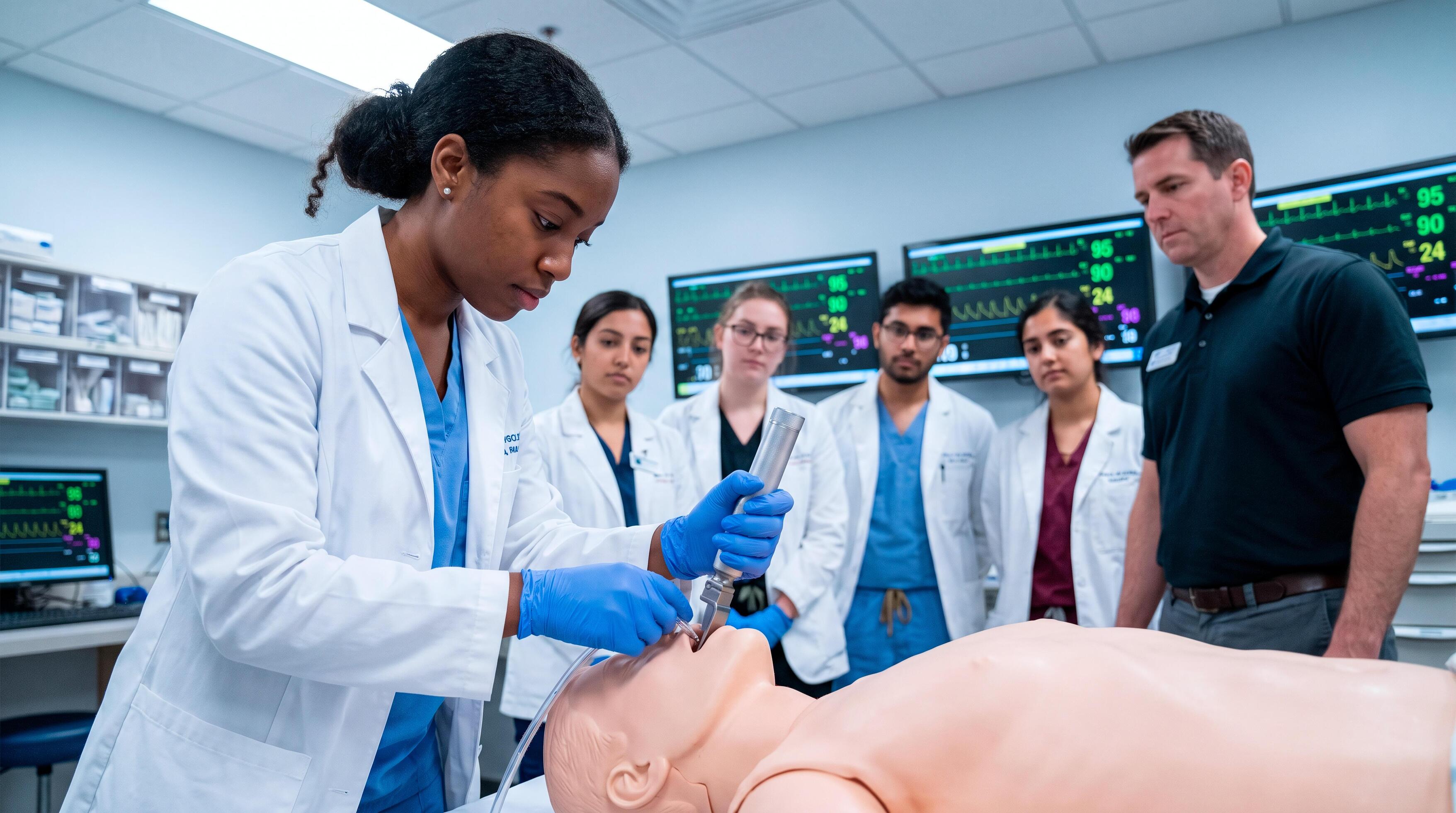
 Tampa’s healthcare sector is booming, but the playbook for leading in it has changed completely. If you’re running a practice, overseeing a service line, or managing operations at one of the region’s growing health systems, you already know: Relying only on clinical expertise will leave you behind; you need more. The job now demands financial fluency, technology assessment, regulatory navigation, and the ability to lead teams through constant change.
The Gap Between Clinical Training and Management Reality
Excellent bedside work frequently pushes healthcare workers into leadership, as they prove their ability to guide teams. But medical school, nursing programs, and allied health training rarely teach you how to read a P&L, evaluate an AI triage vendor, design a quality-improvement workflow, or build a staffing model that survives tourist-season patient surges along Florida’s Gulf Coast.
This gap creates stress. You’re making high-stakes decisions: expanding telehealth, negotiating payer contracts, implementing new EHR modules, without the frameworks or vocabulary to assess trade-offs confidently. An advanced degree in healthcare management fills that gap, turning instinct into strategy and reactive problem-solving into proactive leadership.
What Modern Healthcare Leadership Actually Requires
Tampa’s systems are wrestling with the same forces reshaping care nationwide: aging populations, value-based reimbursement, workforce shortages, and technology that promises efficiency but demands careful integration. Being at the helm means you’ve got to master four pillars.
- Key Health Care Foundations’ Reimbursement models shift constantly. Fee-for-service is giving way to bundled payments, risk-adjusted capitation, and quality bonuses tied to outcomes. Leaders must understand how CMS policy changes, state Medicaid waivers, and commercial payer strategies affect revenue, staffing, and care delivery. This is the difference between expanding services and cutting them.
- Fundamental Business Tools: Managing the budget, you fine-tune workflows, direct resources where needed, and map out a strategic plan. Can you interpret a cash-flow statement? For example, a firm might forecast $200 in new contracts and $80k in startup costs, resulting in a roughly 150% ROI for the added line. Sketch out an operations model that offers patients easy access while guarding against employee burnout. These are business skills, and healthcare’s unique constraints like mission-driven mandates, regulatory complexity, and third-party payment make them even more critical.
- Tech Proficiency: Without careful rollout, tech won’t make healthcare any better. Leaders must evaluate vendors, champion adoption, and ensure digital tools enhance quality without fragmenting workflows or overwhelming staff.
- Leading with clear conversation: Multidisciplinary teams, competing priorities, and rapid change demand emotional intelligence, clear communication, and the ability to inspire when the path forward is murky. By mixing core competencies and tech know-how, these programs prepare you to shape initiatives instead of just ticking boxes.
How Vedere University Prepares Tampa’s Next Healthcare Leaders
Vedere University’s Healthcare Management MSc draws on the real-world experience of teachers who have wrestled with these problems.
The program leans on four solid content pillars. Health care basics, core business skills, modern tech, and effective leadership are all covered. It’s delivered entirely online in a problem-based learning format, meaning you tackle authentic challenges like designing compliance frameworks, optimizing utilization, and piloting digital-health expansions, rather than absorbing abstract theory.
With 36 credits spread across 12 courses, the program accommodates working professionals. You start with “The Business of Medicine,” then move through modules on compliance, quality, utilization management, operations, information technology, Medicare risk adjustment, blockchain applications, and leadership. A capstone project lets you integrate these competencies by solving a strategic problem drawn from your own organization or aspirational role.
Why Now Matters
Healthcare is consolidating. Systems are integrating. Value-based models are replacing volume-based ones. Technology is reshaping care pathways. When leaders bring together medical credibility and strong business know‑how, they can direct transformation. Those without this toolkit will find themselves reacting to change rather than steering it.
An advanced degree is an operating system upgrade. The competencies you gain compound over your career, opening doors to roles with broader impact and giving you the confidence to shape the future of care delivery.
Take the Next Step
Ready to move from departmental supervisor to strategic change-agent? Contact Vedere University’s admissions team to request the full MSc in Healthcare Management syllabus, explore upcoming start dates, and map your path to leadership in Tampa’s dynamic healthcare environment.