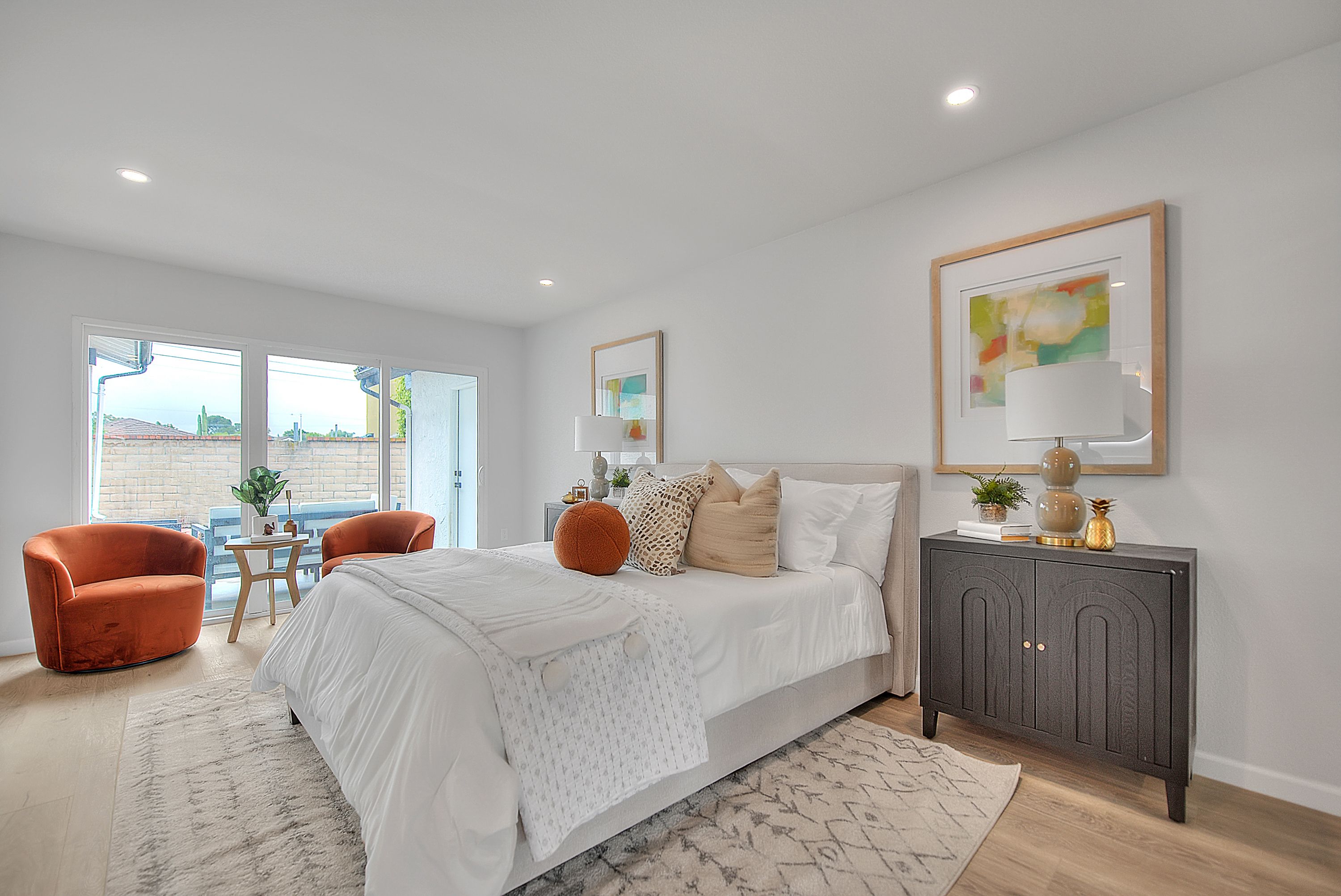
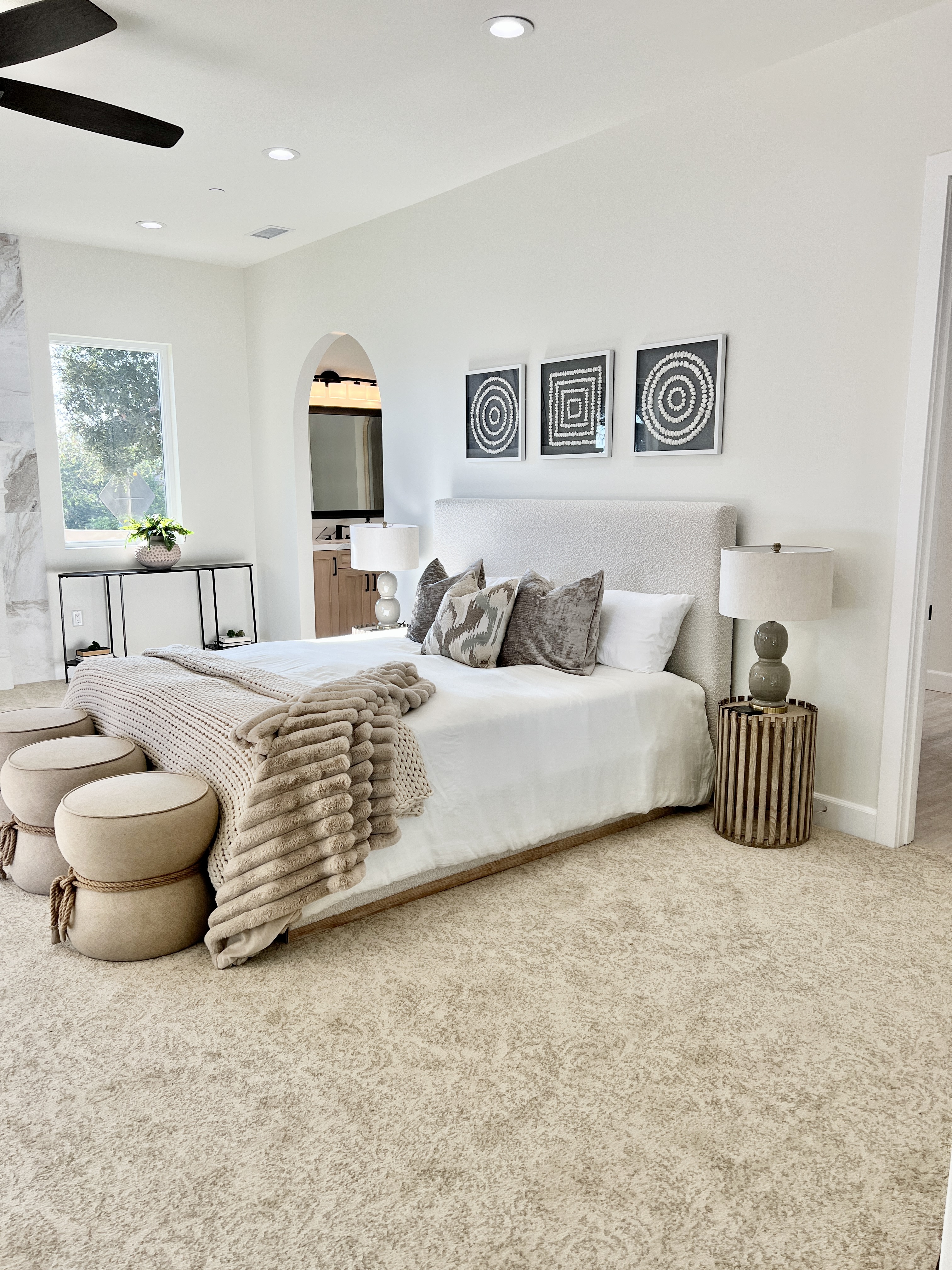
 Your open floor plan isn't a selling feature if buyers stand in the middle and panic about where their couch goes. We've watched Los Angeles homes with gorgeous open layouts sit on market for sixty days while buyers complain they can't visualize the space, and sellers watch price reductions eat into equity because staging never defined the zones. Empty open floor plans photograph like bowling alleys - long, empty corridors, driving down online engagement and cutting showing requests before buyers even walk through your door. Overfurnished open plans make buyers assume the space is too small for their furniture, triggering immediate square footage objections and offers twenty to fifty thousand dollars below asking. Open floor plans don't sell themselves, and purpose sells homes.
The Three-Zone Rule Defines Function Without Walls
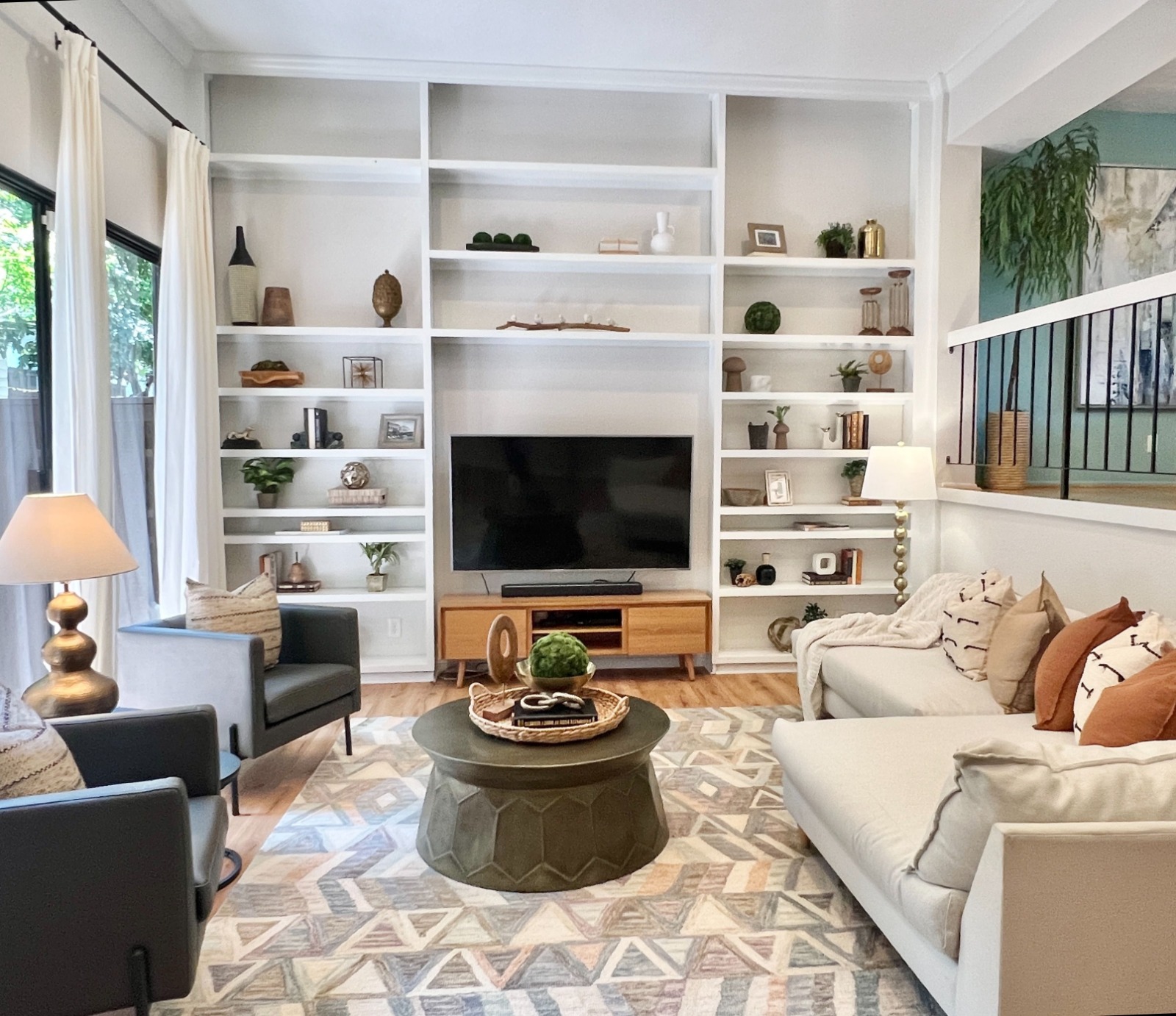
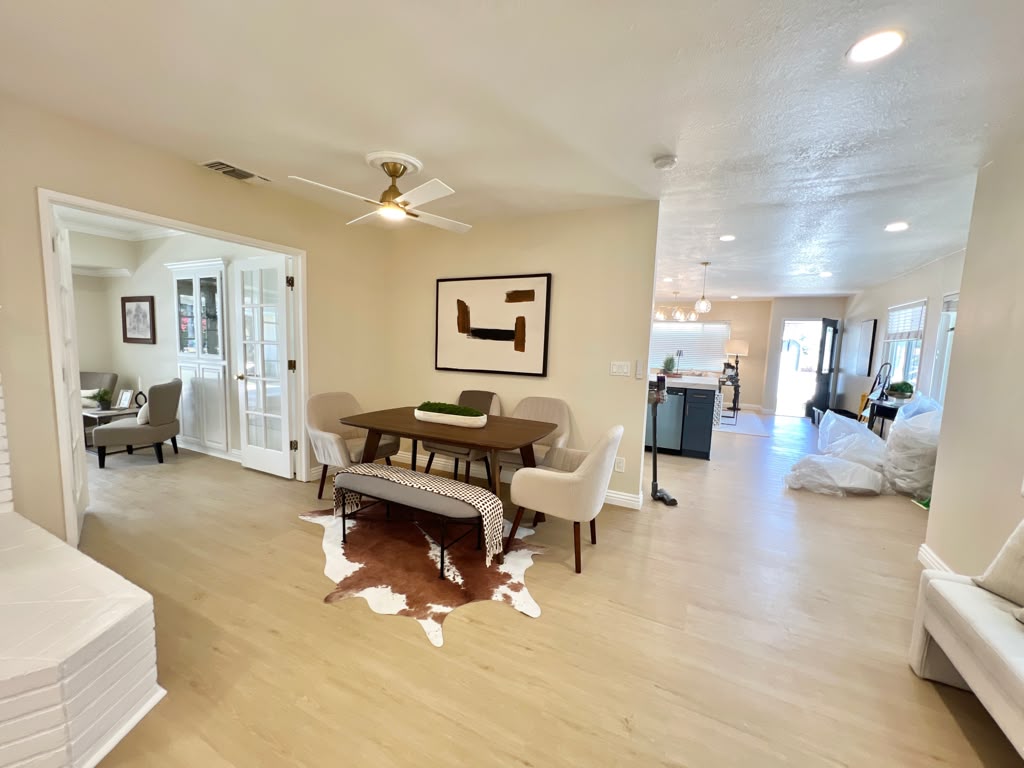
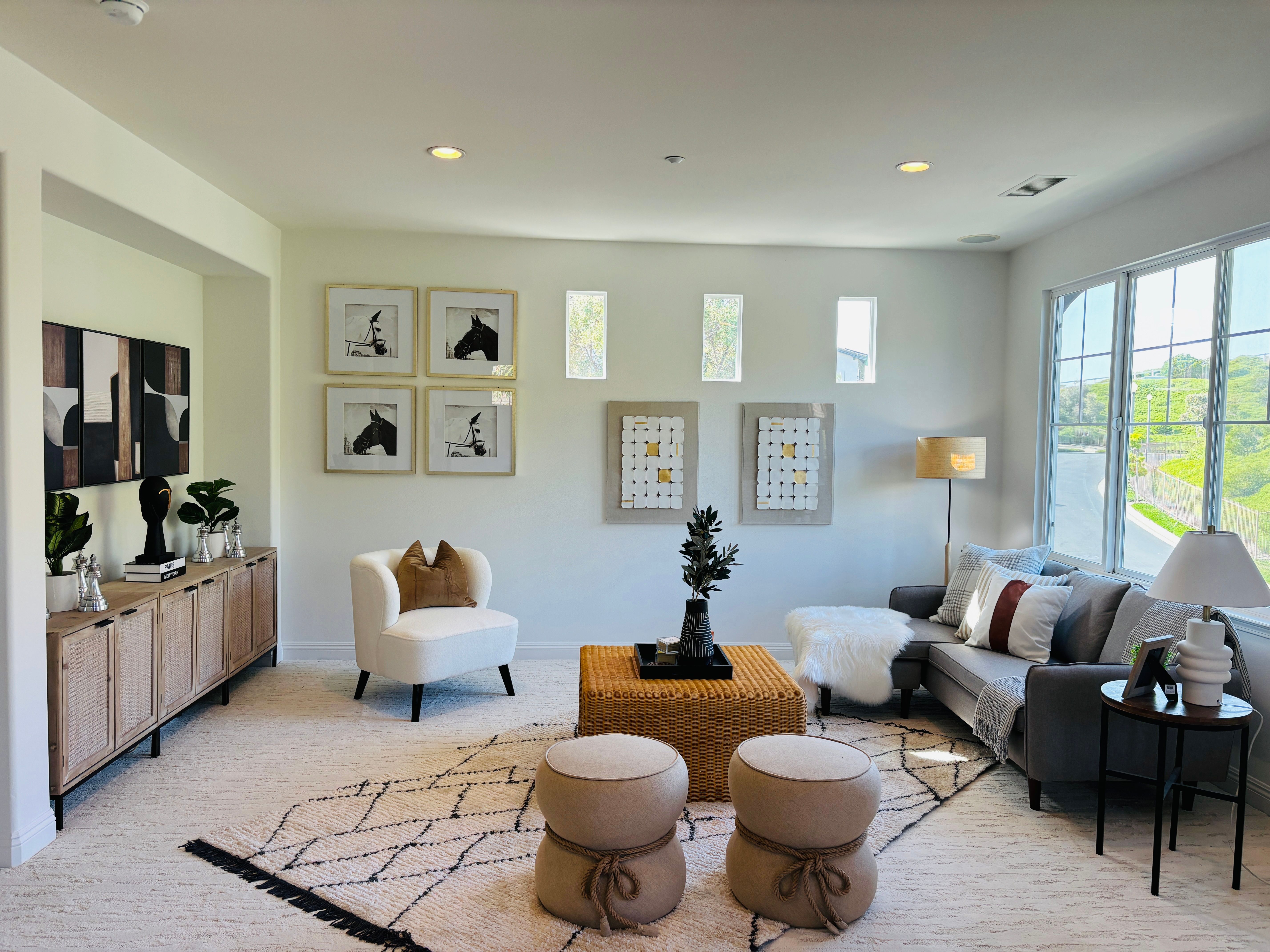
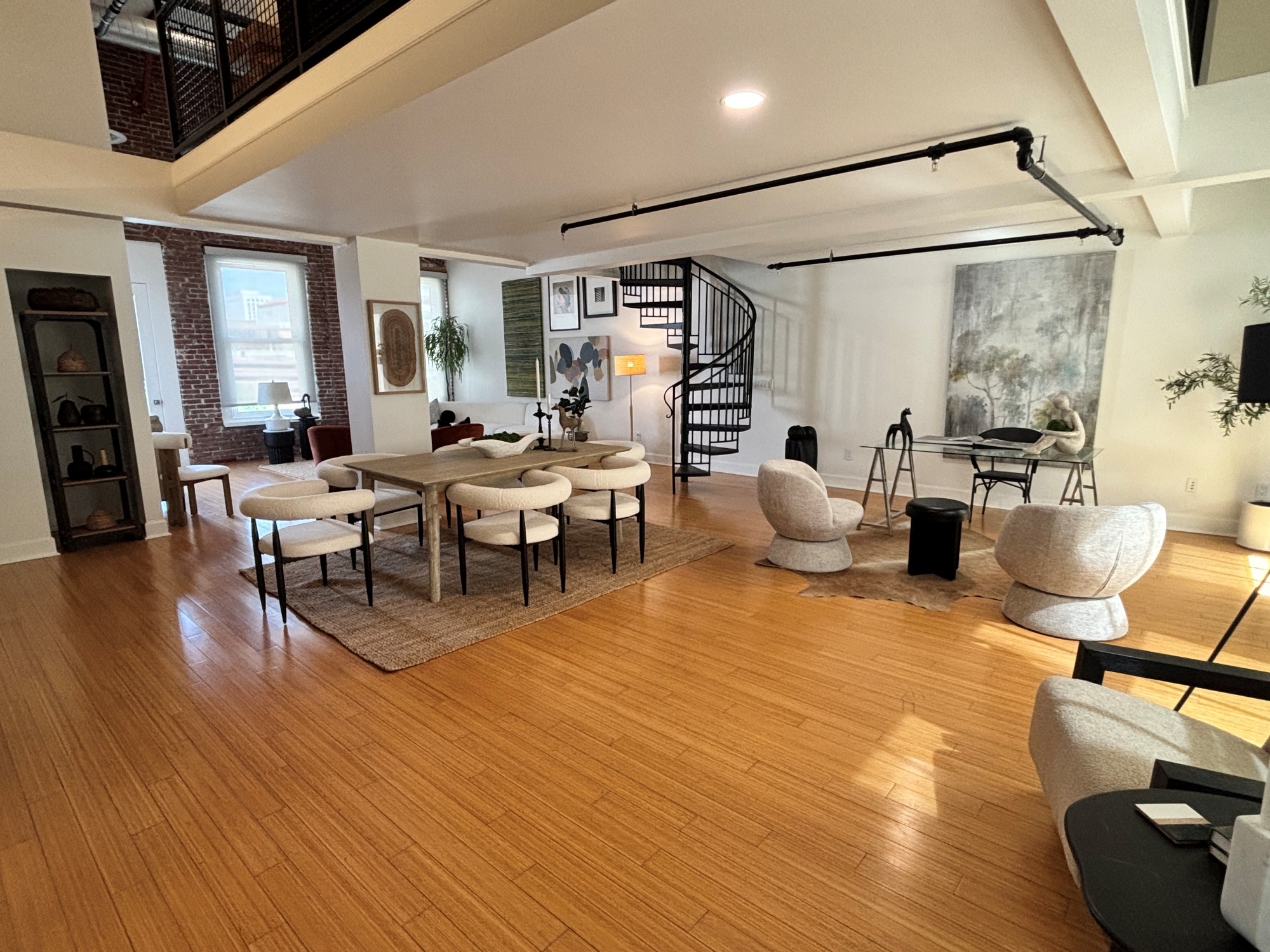
Every open floor plan needs three distinct functional zones: conversation area, dining area, and transition space that connects them without blocking flow. We define these zones through rug placement and furniture angles, not walls, because buyers need to see how the space works the moment they walk in. The eighteen-inch rule matters here: leave at least eighteen inches of visual separation between rugs in different zones so each area reads as its own space instead of furniture floating randomly across one giant room. Position your conversation zone perpendicular to main traffic paths, angle dining chairs to create boundaries without blocking sightlines, and use the transition space to guide buyers naturally from entry to living area to kitchen. Undefined zones force buyers to do mental math during showings instead of falling in love, which kills emotional urgency and generates lowball offers from people who need time to think about whether your space actually works.
The Entry Sightline Secret Controls First Impressions
Whatever buyers see from your front door determines their emotional anchor for the entire showing, so we position the strongest design moment directly in that sightline. Walk into your Los Angeles home and look at what catches your eye first: if it's a blank wall or awkward furniture arrangement, buyers are starting confused instead of impressed. Position your fireplace focal wall, statement dining table, or best architectural feature in that direct entry sightline so buyers walk in thinking about how beautiful the space looks instead of wondering where everything goes. This detail separates professional staging from furniture placement, because most people arrange rooms based on what fits instead of what buyers see first. The entry sightline controls whether buyers pull out their phones to schedule second showings or mentally cross your listing off the list before they reach the kitchen.
Cohesion Beats Matching Every Time
Buyers reject open plans when every zone looks like a different catalog, so we use the three-color palette rule to create flow without monotony. Pick three colors that appear throughout your entire open space: one primary neutral, one accent color, and one metal or wood tone that repeats in multiple zones. This doesn't mean matching everything, which looks staged and sterile, but rather repeating one design element like metal finish, wood tone, or textile pattern across zones so the space feels cohesive. We might use brass hardware in the kitchen, brass picture frames in the conversation zone, and brass candlesticks on the dining table so buyers subconsciously register flow instead of noticing three separate rooms fighting for attention. Cohesion makes open floor plans feel intentional and expensive, while mismatched zones make buyers wonder if the space is actually smaller than the listing claimed.
Stage It So Buyers See A Home, Not A Puzzle
Every day your Los Angeles open floor plan sits unstaged or poorly staged, buyers are scrolling past your listing to tour homes where they immediately understand the layout and can imagine their furniture fitting perfectly. Call Bionki Interiors at (909) 706-5347 to stage your open floor plan with the three-zone rule, entry sightline positioning, and cohesive design that stops buyers from doing mental math and starts them writing offers, because confused buyers make lowball offers or walk away entirely when they can't figure out where their couch goes.
Your open floor plan isn't a selling feature if buyers stand in the middle and panic about where their couch goes. We've watched Los Angeles homes with gorgeous open layouts sit on market for sixty days while buyers complain they can't visualize the space, and sellers watch price reductions eat into equity because staging never defined the zones. Empty open floor plans photograph like bowling alleys - long, empty corridors, driving down online engagement and cutting showing requests before buyers even walk through your door. Overfurnished open plans make buyers assume the space is too small for their furniture, triggering immediate square footage objections and offers twenty to fifty thousand dollars below asking. Open floor plans don't sell themselves, and purpose sells homes.
The Three-Zone Rule Defines Function Without Walls
Every open floor plan needs three distinct functional zones: conversation area, dining area, and transition space that connects them without blocking flow. We define these zones through rug placement and furniture angles, not walls, because buyers need to see how the space works the moment they walk in. The eighteen-inch rule matters here: leave at least eighteen inches of visual separation between rugs in different zones so each area reads as its own space instead of furniture floating randomly across one giant room. Position your conversation zone perpendicular to main traffic paths, angle dining chairs to create boundaries without blocking sightlines, and use the transition space to guide buyers naturally from entry to living area to kitchen. Undefined zones force buyers to do mental math during showings instead of falling in love, which kills emotional urgency and generates lowball offers from people who need time to think about whether your space actually works.
The Entry Sightline Secret Controls First Impressions
Whatever buyers see from your front door determines their emotional anchor for the entire showing, so we position the strongest design moment directly in that sightline. Walk into your Los Angeles home and look at what catches your eye first: if it's a blank wall or awkward furniture arrangement, buyers are starting confused instead of impressed. Position your fireplace focal wall, statement dining table, or best architectural feature in that direct entry sightline so buyers walk in thinking about how beautiful the space looks instead of wondering where everything goes. This detail separates professional staging from furniture placement, because most people arrange rooms based on what fits instead of what buyers see first. The entry sightline controls whether buyers pull out their phones to schedule second showings or mentally cross your listing off the list before they reach the kitchen.
Cohesion Beats Matching Every Time
Buyers reject open plans when every zone looks like a different catalog, so we use the three-color palette rule to create flow without monotony. Pick three colors that appear throughout your entire open space: one primary neutral, one accent color, and one metal or wood tone that repeats in multiple zones. This doesn't mean matching everything, which looks staged and sterile, but rather repeating one design element like metal finish, wood tone, or textile pattern across zones so the space feels cohesive. We might use brass hardware in the kitchen, brass picture frames in the conversation zone, and brass candlesticks on the dining table so buyers subconsciously register flow instead of noticing three separate rooms fighting for attention. Cohesion makes open floor plans feel intentional and expensive, while mismatched zones make buyers wonder if the space is actually smaller than the listing claimed.
Stage It So Buyers See A Home, Not A Puzzle
Every day your Los Angeles open floor plan sits unstaged or poorly staged, buyers are scrolling past your listing to tour homes where they immediately understand the layout and can imagine their furniture fitting perfectly. Call Bionki Interiors at (909) 706-5347 to stage your open floor plan with the three-zone rule, entry sightline positioning, and cohesive design that stops buyers from doing mental math and starts them writing offers, because confused buyers make lowball offers or walk away entirely when they can't figure out where their couch goes.
Los Angeles, CA - Tips on Staging an Open Floor Plan from a Home Stager
SYNOPSIS: Bionki Interiors explains how to stage open floor plans in Los Angeles homes so buyers see defined living spaces instead of empty confusion that triggers furniture placement panic and lower offers.
Open Floor Plans In L.A. Never Sell Themselves
BY: Pantea Bionki, Bionki Interiors
Your open floor plan isn't a selling feature if buyers stand in the middle and panic about where their couch goes. We've watched Los Angeles homes with gorgeous open layouts sit on market for sixty days while buyers complain they can't visualize the space, and sellers watch price reductions eat into equity because staging never defined the zones. Empty open floor plans photograph like bowling alleys - long, empty corridors, driving down online engagement and cutting showing requests before buyers even walk through your door. Overfurnished open plans make buyers assume the space is too small for their furniture, triggering immediate square footage objections and offers twenty to fifty thousand dollars below asking. Open floor plans don't sell themselves, and purpose sells homes.
The Three-Zone Rule Defines Function Without Walls
Every open floor plan needs three distinct functional zones: conversation area, dining area, and transition space that connects them without blocking flow. We define these zones through rug placement and furniture angles, not walls, because buyers need to see how the space works the moment they walk in. The eighteen-inch rule matters here: leave at least eighteen inches of visual separation between rugs in different zones so each area reads as its own space instead of furniture floating randomly across one giant room. Position your conversation zone perpendicular to main traffic paths, angle dining chairs to create boundaries without blocking sightlines, and use the transition space to guide buyers naturally from entry to living area to kitchen. Undefined zones force buyers to do mental math during showings instead of falling in love, which kills emotional urgency and generates lowball offers from people who need time to think about whether your space actually works.
The Entry Sightline Secret Controls First Impressions
Whatever buyers see from your front door determines their emotional anchor for the entire showing, so we position the strongest design moment directly in that sightline. Walk into your Los Angeles home and look at what catches your eye first: if it's a blank wall or awkward furniture arrangement, buyers are starting confused instead of impressed. Position your fireplace focal wall, statement dining table, or best architectural feature in that direct entry sightline so buyers walk in thinking about how beautiful the space looks instead of wondering where everything goes. This detail separates professional staging from furniture placement, because most people arrange rooms based on what fits instead of what buyers see first. The entry sightline controls whether buyers pull out their phones to schedule second showings or mentally cross your listing off the list before they reach the kitchen.
Cohesion Beats Matching Every Time
Buyers reject open plans when every zone looks like a different catalog, so we use the three-color palette rule to create flow without monotony. Pick three colors that appear throughout your entire open space: one primary neutral, one accent color, and one metal or wood tone that repeats in multiple zones. This doesn't mean matching everything, which looks staged and sterile, but rather repeating one design element like metal finish, wood tone, or textile pattern across zones so the space feels cohesive. We might use brass hardware in the kitchen, brass picture frames in the conversation zone, and brass candlesticks on the dining table so buyers subconsciously register flow instead of noticing three separate rooms fighting for attention. Cohesion makes open floor plans feel intentional and expensive, while mismatched zones make buyers wonder if the space is actually smaller than the listing claimed.
Stage It So Buyers See A Home, Not A Puzzle
Every day your Los Angeles open floor plan sits unstaged or poorly staged, buyers are scrolling past your listing to tour homes where they immediately understand the layout and can imagine their furniture fitting perfectly. Call Bionki Interiors at (909) 706-5347 to stage your open floor plan with the three-zone rule, entry sightline positioning, and cohesive design that stops buyers from doing mental math and starts them writing offers, because confused buyers make lowball offers or walk away entirely when they can't figure out where their couch goes.