The Files we want to see:
PDF – Portable Document Format - The most common and friendliest, especially when they contain saved vector images originally created in Adobe Illustrator. EPS – Encapsulated PostScript – The standard graphics file format for exchanging images, drawings or whole pages. EPS with outlined text is how you become your printer’s best friend. More about our preferred and favorite format AI – Adobe Illustrator – A file created in Illustrator that has not been saved as a pdf, acceptable format as long as text has been saved as outlines to prevent font swaps when loaded on other computers. Can also let creators and users go between layers and make changes if necessary. TIFF – Tagged Image File Format – The most responsible and high resolution photo format. Great for saving scanned images, a non-compressed file. PSD – Photoshop Data File – A file created in Photoshop that has multiple layers and allows the creator and user to go back and forth between layers or masks. JPEG – Joint Photographic Experts Group – The most typical photo file. Good for photos, terrible for logos.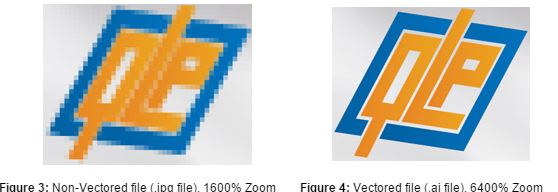
Images from Quality Logo Products
The files we don’t like to see:
All of these file formats either are raster files that give you that pixelated, unclear images, file formats most printers aren’t able to print, formats intended just for internet use or just involve a series of steps that could result in quality loss or lost images. Please stick to the formats listed above when printing. [caption id="attachment_832" align="aligncenter" width="605"] A GIF - You probably don't want to try to print this.[/caption]
BMP – Bitmap
PNG – Portable Network Graphics
GIF – Graphics Interchange Format
INDD – InDesign Document
DWG – Drawing (CAD)
PUB – Publisher Document
DOC – Word Document
XLS – Excel Spreadsheet
PPT – PowerPoint Document
A GIF - You probably don't want to try to print this.[/caption]
BMP – Bitmap
PNG – Portable Network Graphics
GIF – Graphics Interchange Format
INDD – InDesign Document
DWG – Drawing (CAD)
PUB – Publisher Document
DOC – Word Document
XLS – Excel Spreadsheet
PPT – PowerPoint Document
Possibly acceptable:
ZIP – Compressed File – This always means there are multiple files, some of which may or may not be one of the files above.If you're still confused: