 Engine coolant, also commonly referred to as antifreeze, is a vital fluid responsible for facilitating the transfer and dissipation of excess heat generated during combustion within your vehicle's engine. It plays a pivotal role in maintaining the optimal operating temperature of your engine. While engine coolants are available in various formulations, with some being specialized for specific vehicles, most commercially accessible coolants consist of a combination of 50% propylene glycol or ethylene and 50% water. To ensure the appropriate engine coolant for your particular vehicle, always refer to your owner's manual.
Now, let's delve into the mechanics of an engine coolant flush. This essential automotive procedure involves the systematic removal of the existing coolant from your vehicle's cooling system. Simultaneously, it eradicates any chemical build-up within the system, which can include rust, sludge, and dirt. Subsequently, the cooling system is replenished with fresh coolant, thus rejuvenating its efficiency in regulating your engine's temperature. Essentially, a coolant flush allows your vehicle's cooling system to operate at peak performance, effectively moderating engine temperature.
Engine coolant, also commonly referred to as antifreeze, is a vital fluid responsible for facilitating the transfer and dissipation of excess heat generated during combustion within your vehicle's engine. It plays a pivotal role in maintaining the optimal operating temperature of your engine. While engine coolants are available in various formulations, with some being specialized for specific vehicles, most commercially accessible coolants consist of a combination of 50% propylene glycol or ethylene and 50% water. To ensure the appropriate engine coolant for your particular vehicle, always refer to your owner's manual.
Now, let's delve into the mechanics of an engine coolant flush. This essential automotive procedure involves the systematic removal of the existing coolant from your vehicle's cooling system. Simultaneously, it eradicates any chemical build-up within the system, which can include rust, sludge, and dirt. Subsequently, the cooling system is replenished with fresh coolant, thus rejuvenating its efficiency in regulating your engine's temperature. Essentially, a coolant flush allows your vehicle's cooling system to operate at peak performance, effectively moderating engine temperature.
How Important Is A Coolant Flush? | Phoenix Auto Repair Nashville Tennessee
SYNOPSIS: Engine coolant plays a pivotal role in maintaining the optimal operating temperature of your engine. To ensure the appropriate engine coolant for your particular vehicle, always refer to your manual.
How Important Is A Coolant Flush Anyways?
BY: ,
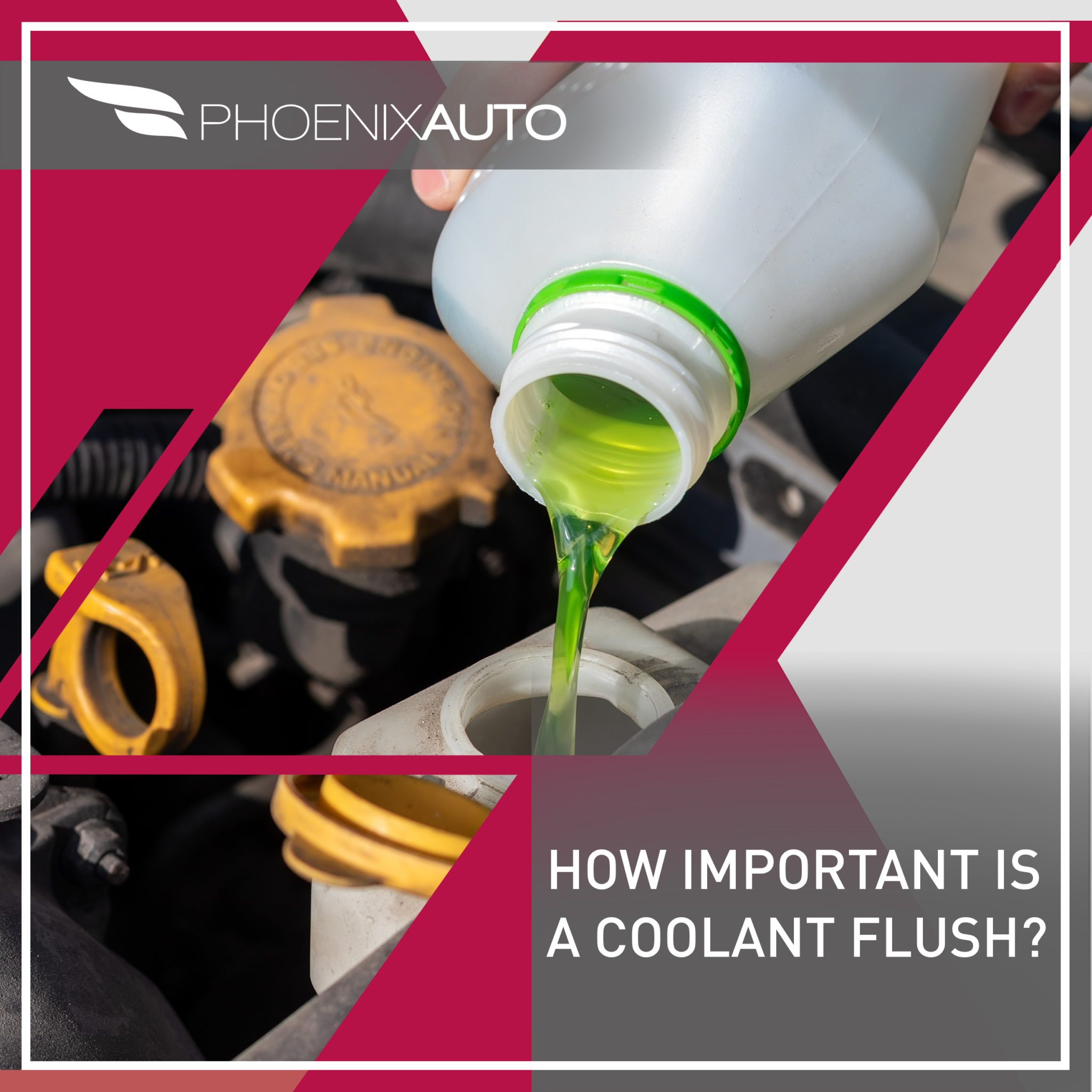
Engine coolant, also commonly referred to as antifreeze, is a vital fluid responsible for facilitating the transfer and dissipation of excess heat generated during combustion within your vehicle's engine. It plays a pivotal role in maintaining the optimal operating temperature of your engine. While engine coolants are available in various formulations, with some being specialized for specific vehicles, most commercially accessible coolants consist of a combination of 50% propylene glycol or ethylene and 50% water. To ensure the appropriate engine coolant for your particular vehicle, always refer to your owner's manual.
Now, let's delve into the mechanics of an engine coolant flush. This essential automotive procedure involves the systematic removal of the existing coolant from your vehicle's cooling system. Simultaneously, it eradicates any chemical build-up within the system, which can include rust, sludge, and dirt. Subsequently, the cooling system is replenished with fresh coolant, thus rejuvenating its efficiency in regulating your engine's temperature. Essentially, a coolant flush allows your vehicle's cooling system to operate at peak performance, effectively moderating engine temperature.