 The rear of your BMW hangs two inches lower than it did last night, and now the dash shows a suspension warning you've never seen before. Castro Valley drivers bring E70 X5s and F01 7 Series sedans into German Car Service in Hayward with this exact complaint, and the diagnosis rarely matches what they expected. Dealerships quote full-suspension replacements; we find one worn component causing the entire system to misbehave. The difference between those two outcomes starts with understanding what you're dealing with.
Two Systems That Do Different Jobs
BMW equipped the X5 and 7 Series with two separate suspension technologies that sound similar but serve completely different purposes. The rear self-leveling air suspension uses air springs to maintain consistent ride height regardless of passenger or cargo load, and an electric compressor in the trunk feeds pressurized air through lines to each rear spring. Electronic Damper Control, which BMW calls EDC, adjusts shock absorber firmness for comfort or sport driving modes but has nothing to do with ride height. Both systems can fail, both trigger warning lights, and both require different repairs; confusing them leads to parts getting replaced for no reason.
Which BMWs Have Air Suspension Problems
E70 X5 models produced from 2007 through 2013 came with rear air suspension as standard or optional equipment, depending on trim level, and these vehicles develop air spring failures after years of heat cycling and rubber fatigue. The bladder inside each spring folds and compresses thousands of times, and eventually the rubber cracks at the fold points where stress concentrates. F15 X5 models from 2014 through 2018 share similar construction with similar failure patterns. E65 7 Series sedans built from 2002 through 2008 and F01 models from 2009 through 2015 use comparable rear air spring designs, and their bladders crack the same way after enough compression cycles.
What Happens After The Bladder Cracks
A cracked air spring bladder leaks slowly at first, and most owners don't notice until the car sits overnight and sinks on one side. The compressor detects low height through the rear sensors and runs to compensate, pumping air into a spring that can't hold pressure. This cycle repeats every few minutes while parked, and sometimes while driving, until the compressor motor overheats and fails. Now you've got a dead compressor and a leaking spring, and the repair bill reflects both failures instead of just the one that started it.
Why Dealers Replace Everything At Once
Most BMW dealerships approach air suspension faults by quoting both rear springs, the compressor, and sometimes the valve block as a package replacement. That strategy guarantees the problem gets fixed, but it also guarantees you pay for parts that haven't failed yet. Height sensors can also drift out of calibration over time, causing the control module to read incorrect ride positions even when the springs and compressor work fine. Without testing each component individually, there's no way to know which one caused the fault.
Finding The One Part That Failed
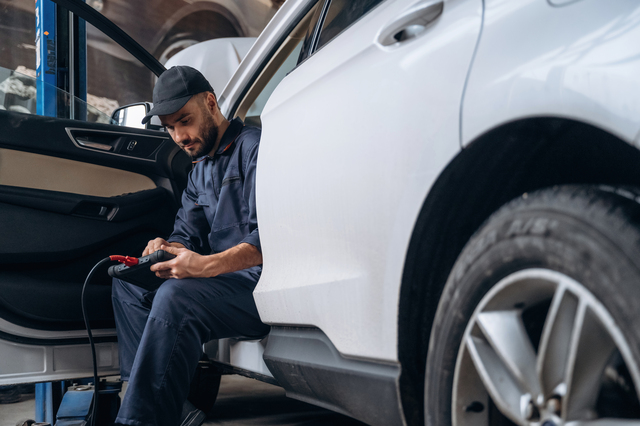
German Car Service uses BMW factory-level diagnostic software to pull suspension fault codes and monitor compressor duty cycles in real time. We watch how frequently the motor runs and how long it stays on; excessive cycling points to a leak somewhere in the system. Controlled pressure tests at each rear corner show which spring loses air fastest when the compressor shuts off. We verify height sensor readings against physical measurements to catch calibration drift before replacing parts that don't need replacing. Castro Valley BMW owners deserve a diagnosis that identifies the failure, not a parts list based on probabilities. Call German Car Service in Hayward at (650) 832-8455 and find out which component broke.
The rear of your BMW hangs two inches lower than it did last night, and now the dash shows a suspension warning you've never seen before. Castro Valley drivers bring E70 X5s and F01 7 Series sedans into German Car Service in Hayward with this exact complaint, and the diagnosis rarely matches what they expected. Dealerships quote full-suspension replacements; we find one worn component causing the entire system to misbehave. The difference between those two outcomes starts with understanding what you're dealing with.
Two Systems That Do Different Jobs
BMW equipped the X5 and 7 Series with two separate suspension technologies that sound similar but serve completely different purposes. The rear self-leveling air suspension uses air springs to maintain consistent ride height regardless of passenger or cargo load, and an electric compressor in the trunk feeds pressurized air through lines to each rear spring. Electronic Damper Control, which BMW calls EDC, adjusts shock absorber firmness for comfort or sport driving modes but has nothing to do with ride height. Both systems can fail, both trigger warning lights, and both require different repairs; confusing them leads to parts getting replaced for no reason.
Which BMWs Have Air Suspension Problems
E70 X5 models produced from 2007 through 2013 came with rear air suspension as standard or optional equipment, depending on trim level, and these vehicles develop air spring failures after years of heat cycling and rubber fatigue. The bladder inside each spring folds and compresses thousands of times, and eventually the rubber cracks at the fold points where stress concentrates. F15 X5 models from 2014 through 2018 share similar construction with similar failure patterns. E65 7 Series sedans built from 2002 through 2008 and F01 models from 2009 through 2015 use comparable rear air spring designs, and their bladders crack the same way after enough compression cycles.
What Happens After The Bladder Cracks
A cracked air spring bladder leaks slowly at first, and most owners don't notice until the car sits overnight and sinks on one side. The compressor detects low height through the rear sensors and runs to compensate, pumping air into a spring that can't hold pressure. This cycle repeats every few minutes while parked, and sometimes while driving, until the compressor motor overheats and fails. Now you've got a dead compressor and a leaking spring, and the repair bill reflects both failures instead of just the one that started it.
Why Dealers Replace Everything At Once
Most BMW dealerships approach air suspension faults by quoting both rear springs, the compressor, and sometimes the valve block as a package replacement. That strategy guarantees the problem gets fixed, but it also guarantees you pay for parts that haven't failed yet. Height sensors can also drift out of calibration over time, causing the control module to read incorrect ride positions even when the springs and compressor work fine. Without testing each component individually, there's no way to know which one caused the fault.
Finding The One Part That Failed
German Car Service uses BMW factory-level diagnostic software to pull suspension fault codes and monitor compressor duty cycles in real time. We watch how frequently the motor runs and how long it stays on; excessive cycling points to a leak somewhere in the system. Controlled pressure tests at each rear corner show which spring loses air fastest when the compressor shuts off. We verify height sensor readings against physical measurements to catch calibration drift before replacing parts that don't need replacing. Castro Valley BMW owners deserve a diagnosis that identifies the failure, not a parts list based on probabilities. Call German Car Service in Hayward at (650) 832-8455 and find out which component broke.
Castro Valley, CA- BMW X5 and 7 Series Air Suspension Problems Explained
SYNOPSIS: German Car Service in Hayward, CA serves Castro Valley BMW owners experiencing air suspension failures on X5 and 7 Series models, using factory-level diagnostics to identify where the fault lies.
Fix Your BMW That Sits Crooked in Castro Valley
BY: ,
The rear of your BMW hangs two inches lower than it did last night, and now the dash shows a suspension warning you've never seen before. Castro Valley drivers bring E70 X5s and F01 7 Series sedans into German Car Service in Hayward with this exact complaint, and the diagnosis rarely matches what they expected. Dealerships quote full-suspension replacements; we find one worn component causing the entire system to misbehave. The difference between those two outcomes starts with understanding what you're dealing with.
Two Systems That Do Different Jobs
BMW equipped the X5 and 7 Series with two separate suspension technologies that sound similar but serve completely different purposes. The rear self-leveling air suspension uses air springs to maintain consistent ride height regardless of passenger or cargo load, and an electric compressor in the trunk feeds pressurized air through lines to each rear spring. Electronic Damper Control, which BMW calls EDC, adjusts shock absorber firmness for comfort or sport driving modes but has nothing to do with ride height. Both systems can fail, both trigger warning lights, and both require different repairs; confusing them leads to parts getting replaced for no reason.
Which BMWs Have Air Suspension Problems
E70 X5 models produced from 2007 through 2013 came with rear air suspension as standard or optional equipment, depending on trim level, and these vehicles develop air spring failures after years of heat cycling and rubber fatigue. The bladder inside each spring folds and compresses thousands of times, and eventually the rubber cracks at the fold points where stress concentrates. F15 X5 models from 2014 through 2018 share similar construction with similar failure patterns. E65 7 Series sedans built from 2002 through 2008 and F01 models from 2009 through 2015 use comparable rear air spring designs, and their bladders crack the same way after enough compression cycles.
What Happens After The Bladder Cracks
A cracked air spring bladder leaks slowly at first, and most owners don't notice until the car sits overnight and sinks on one side. The compressor detects low height through the rear sensors and runs to compensate, pumping air into a spring that can't hold pressure. This cycle repeats every few minutes while parked, and sometimes while driving, until the compressor motor overheats and fails. Now you've got a dead compressor and a leaking spring, and the repair bill reflects both failures instead of just the one that started it.
Why Dealers Replace Everything At Once
Most BMW dealerships approach air suspension faults by quoting both rear springs, the compressor, and sometimes the valve block as a package replacement. That strategy guarantees the problem gets fixed, but it also guarantees you pay for parts that haven't failed yet. Height sensors can also drift out of calibration over time, causing the control module to read incorrect ride positions even when the springs and compressor work fine. Without testing each component individually, there's no way to know which one caused the fault.
Finding The One Part That Failed
German Car Service uses BMW factory-level diagnostic software to pull suspension fault codes and monitor compressor duty cycles in real time. We watch how frequently the motor runs and how long it stays on; excessive cycling points to a leak somewhere in the system. Controlled pressure tests at each rear corner show which spring loses air fastest when the compressor shuts off. We verify height sensor readings against physical measurements to catch calibration drift before replacing parts that don't need replacing. Castro Valley BMW owners deserve a diagnosis that identifies the failure, not a parts list based on probabilities. Call German Car Service in Hayward at (650) 832-8455 and find out which component broke.