 Most shops will tell you the rotors on your Audi Q7 are warped. It's the go-to explanation for brake vibration across the entire automotive industry, and it sounds convincing enough that most people don't question it. But modern cast iron brake rotors, including the ones on the Q7 4L and 4M generations, don't warp under normal driving conditions the way that diagnosis implies. German Car Service in Hayward, CA works with Castro Valley Q7 owners to find what's genuinely causing the pulsation, and the answer is almost always more specific than "warped rotors."
The Diagnosis Most Shops Get Wrong
Disc thickness variation is the technical term for what Q7 owners feel through the steering wheel or brake pedal during a stop. DTV means the rotor's thickness isn't uniform across its full rotation, and differences as small as half a thousandth of an inch create a pulsation that the driver perceives as vibration. That measurement is tiny, about one-fifth the thickness of a sheet of copy paper, yet the braking system translates it into a shudder that's impossible to ignore. The 4L Q7 weighs over 5,300 pounds in most configurations, and the 4M runs closer to 4,800, so the kinetic energy moving through those rotors during deceleration magnifies every micro-imperfection.
How Pad Deposits Create the Problem
DTV doesn't develop because the rotor is bent from the heat. It develops because brake pad material is transferred unevenly onto the rotor face, creating high spots and low spots that measure differently as the rotor spins through the caliper. This happens when new pads aren't bedded in through a proper heat cycling procedure after installation. It also happens when a driver holds the brake pedal down while the rotors are still hot, which presses pad material into one spot on the rotor surface and leaves a raised deposit. Once those deposits exist, every subsequent stop reinforces the pattern and makes the thickness variation progressively worse.
What We Measure and Why It Matters
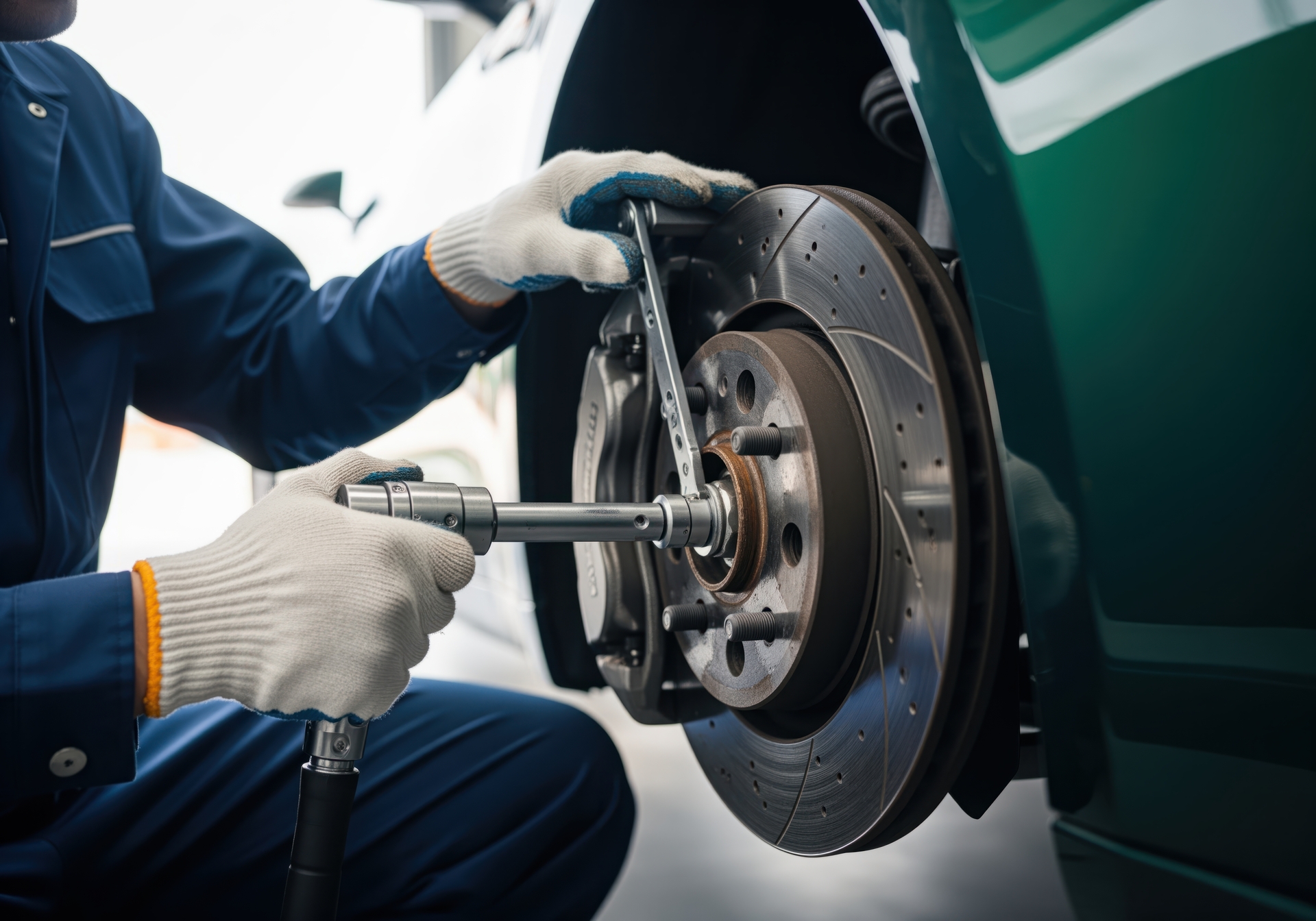
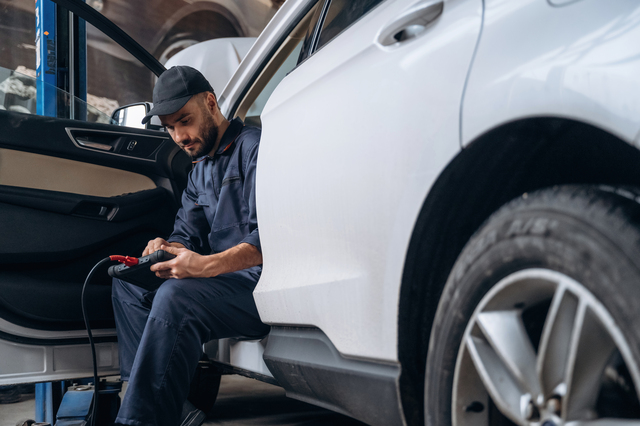
We mount a dial indicator against the rotor face and measure thickness at multiple points around the full rotation to map where the variation exists. That measurement tells us whether the rotor can be resurfaced to restore uniform thickness or whether it needs replacement. We also inspect the caliper slide pins on each side, because a pin that's seized or poorly lubricated prevents the caliper from floating freely and forces one pad to drag against the rotor unevenly. Sticky slide pins don't just cause vibration on their own; they accelerate the DTV cycle by creating constant, uneven contact between pad and rotor surface.
The Sensor Your Dash Is Complaining About
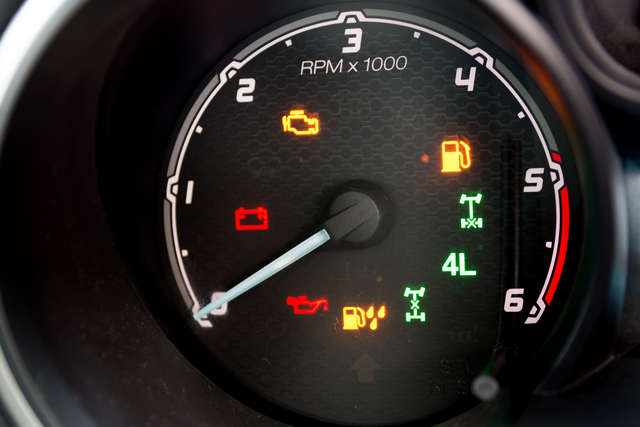
Audi's Q7 uses electronic brake pad wear sensors wired into the vehicle's monitoring system, and those sensors trigger a dashboard warning when the pad material wears past a set threshold. Replacing pads and rotors without replacing the wear sensors leaves the warning active on the instrument cluster, which is a detail that gets overlooked more than it should. We replace sensors as part of every Q7 brake service so the electronic system resets cleanly and monitors the new pad thickness from a fresh baseline.
Vibration That Gets Worse Won't Reverse on Its Own
Every stop you make with uneven pad deposits on the rotors adds another layer to the problem. The pulsation you feel at highway speed braking today will spread into lower-speed stops within a few months, and ignoring it risks uneven pad wear that shortens the life of components you just paid to install. German Car Service in Hayward works with Castro Valley Q7 owners every week on exactly this issue. Call (650) 832-8455 and let's measure what's happening at your rotors so the fix addresses the cause.
Most shops will tell you the rotors on your Audi Q7 are warped. It's the go-to explanation for brake vibration across the entire automotive industry, and it sounds convincing enough that most people don't question it. But modern cast iron brake rotors, including the ones on the Q7 4L and 4M generations, don't warp under normal driving conditions the way that diagnosis implies. German Car Service in Hayward, CA works with Castro Valley Q7 owners to find what's genuinely causing the pulsation, and the answer is almost always more specific than "warped rotors."
The Diagnosis Most Shops Get Wrong
Disc thickness variation is the technical term for what Q7 owners feel through the steering wheel or brake pedal during a stop. DTV means the rotor's thickness isn't uniform across its full rotation, and differences as small as half a thousandth of an inch create a pulsation that the driver perceives as vibration. That measurement is tiny, about one-fifth the thickness of a sheet of copy paper, yet the braking system translates it into a shudder that's impossible to ignore. The 4L Q7 weighs over 5,300 pounds in most configurations, and the 4M runs closer to 4,800, so the kinetic energy moving through those rotors during deceleration magnifies every micro-imperfection.
How Pad Deposits Create the Problem
DTV doesn't develop because the rotor is bent from the heat. It develops because brake pad material is transferred unevenly onto the rotor face, creating high spots and low spots that measure differently as the rotor spins through the caliper. This happens when new pads aren't bedded in through a proper heat cycling procedure after installation. It also happens when a driver holds the brake pedal down while the rotors are still hot, which presses pad material into one spot on the rotor surface and leaves a raised deposit. Once those deposits exist, every subsequent stop reinforces the pattern and makes the thickness variation progressively worse.
What We Measure and Why It Matters
We mount a dial indicator against the rotor face and measure thickness at multiple points around the full rotation to map where the variation exists. That measurement tells us whether the rotor can be resurfaced to restore uniform thickness or whether it needs replacement. We also inspect the caliper slide pins on each side, because a pin that's seized or poorly lubricated prevents the caliper from floating freely and forces one pad to drag against the rotor unevenly. Sticky slide pins don't just cause vibration on their own; they accelerate the DTV cycle by creating constant, uneven contact between pad and rotor surface.
The Sensor Your Dash Is Complaining About
Audi's Q7 uses electronic brake pad wear sensors wired into the vehicle's monitoring system, and those sensors trigger a dashboard warning when the pad material wears past a set threshold. Replacing pads and rotors without replacing the wear sensors leaves the warning active on the instrument cluster, which is a detail that gets overlooked more than it should. We replace sensors as part of every Q7 brake service so the electronic system resets cleanly and monitors the new pad thickness from a fresh baseline.
Vibration That Gets Worse Won't Reverse on Its Own
Every stop you make with uneven pad deposits on the rotors adds another layer to the problem. The pulsation you feel at highway speed braking today will spread into lower-speed stops within a few months, and ignoring it risks uneven pad wear that shortens the life of components you just paid to install. German Car Service in Hayward works with Castro Valley Q7 owners every week on exactly this issue. Call (650) 832-8455 and let's measure what's happening at your rotors so the fix addresses the cause.
Castro Valley, CA - Audi Q7 Brake Vibration Fixes with Pads, Rotors and Sensors
SYNOPSIS: German Car Service in Hayward diagnoses Audi Q7 brake vibration for Castro Valley drivers, correcting the disc variation, pad deposits, caliper function, and sensor faults.
Q7 Brake Shudder? It's Probably Not Warped
BY: ,
Most shops will tell you the rotors on your Audi Q7 are warped. It's the go-to explanation for brake vibration across the entire automotive industry, and it sounds convincing enough that most people don't question it. But modern cast iron brake rotors, including the ones on the Q7 4L and 4M generations, don't warp under normal driving conditions the way that diagnosis implies. German Car Service in Hayward, CA works with Castro Valley Q7 owners to find what's genuinely causing the pulsation, and the answer is almost always more specific than "warped rotors."
The Diagnosis Most Shops Get Wrong
Disc thickness variation is the technical term for what Q7 owners feel through the steering wheel or brake pedal during a stop. DTV means the rotor's thickness isn't uniform across its full rotation, and differences as small as half a thousandth of an inch create a pulsation that the driver perceives as vibration. That measurement is tiny, about one-fifth the thickness of a sheet of copy paper, yet the braking system translates it into a shudder that's impossible to ignore. The 4L Q7 weighs over 5,300 pounds in most configurations, and the 4M runs closer to 4,800, so the kinetic energy moving through those rotors during deceleration magnifies every micro-imperfection.
How Pad Deposits Create the Problem
DTV doesn't develop because the rotor is bent from the heat. It develops because brake pad material is transferred unevenly onto the rotor face, creating high spots and low spots that measure differently as the rotor spins through the caliper. This happens when new pads aren't bedded in through a proper heat cycling procedure after installation. It also happens when a driver holds the brake pedal down while the rotors are still hot, which presses pad material into one spot on the rotor surface and leaves a raised deposit. Once those deposits exist, every subsequent stop reinforces the pattern and makes the thickness variation progressively worse.
What We Measure and Why It Matters
We mount a dial indicator against the rotor face and measure thickness at multiple points around the full rotation to map where the variation exists. That measurement tells us whether the rotor can be resurfaced to restore uniform thickness or whether it needs replacement. We also inspect the caliper slide pins on each side, because a pin that's seized or poorly lubricated prevents the caliper from floating freely and forces one pad to drag against the rotor unevenly. Sticky slide pins don't just cause vibration on their own; they accelerate the DTV cycle by creating constant, uneven contact between pad and rotor surface.
The Sensor Your Dash Is Complaining About
Audi's Q7 uses electronic brake pad wear sensors wired into the vehicle's monitoring system, and those sensors trigger a dashboard warning when the pad material wears past a set threshold. Replacing pads and rotors without replacing the wear sensors leaves the warning active on the instrument cluster, which is a detail that gets overlooked more than it should. We replace sensors as part of every Q7 brake service so the electronic system resets cleanly and monitors the new pad thickness from a fresh baseline.
Vibration That Gets Worse Won't Reverse on Its Own
Every stop you make with uneven pad deposits on the rotors adds another layer to the problem. The pulsation you feel at highway speed braking today will spread into lower-speed stops within a few months, and ignoring it risks uneven pad wear that shortens the life of components you just paid to install. German Car Service in Hayward works with Castro Valley Q7 owners every week on exactly this issue. Call (650) 832-8455 and let's measure what's happening at your rotors so the fix addresses the cause.