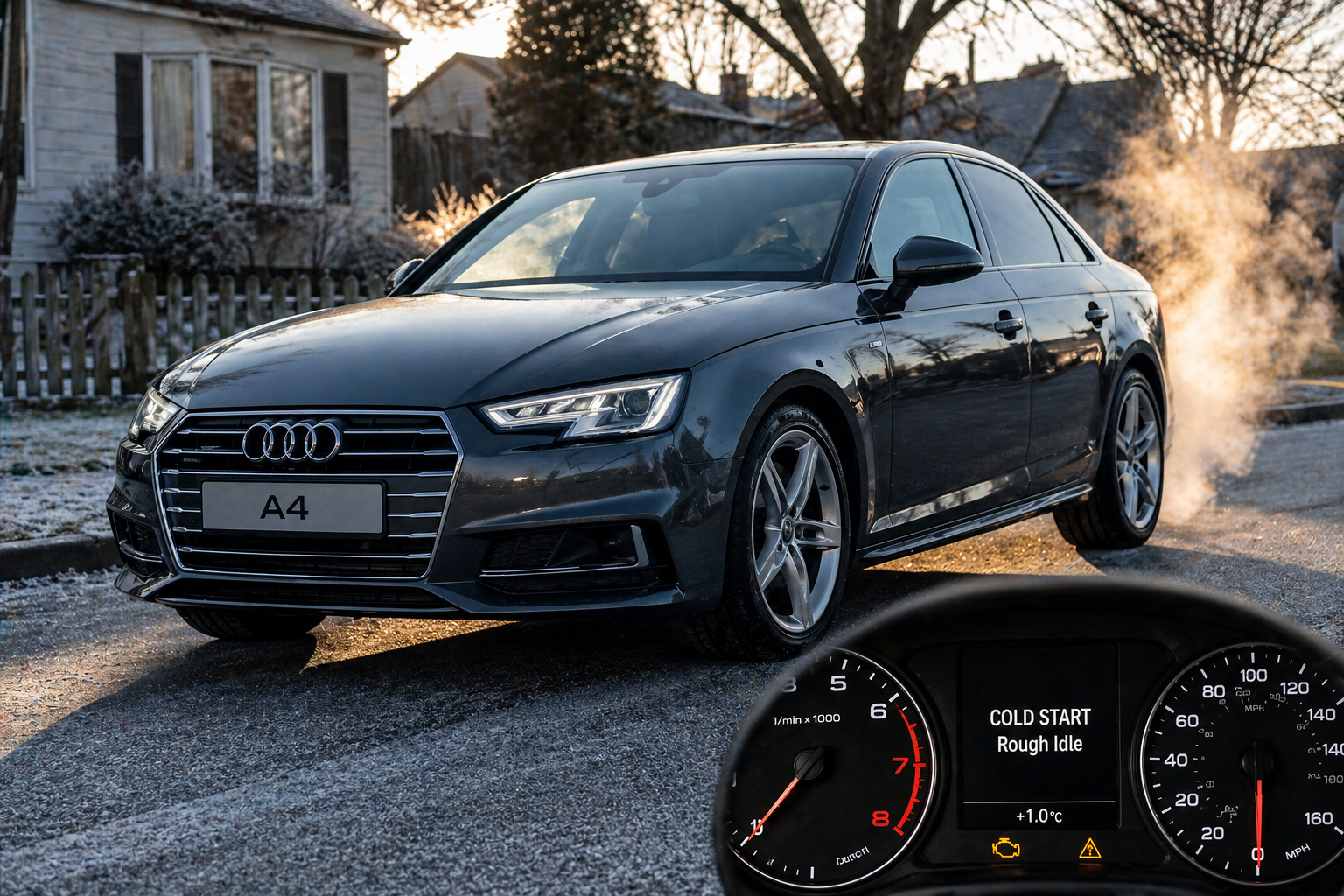
 Many Audi owners in Castro Valley only notice something is wrong once their battery has already died more than once, and even then, they often assume it is a weak battery rather than a deeper electronic issue. The problem often starts with a small parasitic draw from a single module or component that refuses to enter sleep mode after the car is locked. Over time, even a healthy battery will drain completely when a module stays awake overnight, keeping power flowing through systems that should have powered down. What makes this problem even more difficult to catch is that it leaves no check engine light, no warning beep, and no immediate change to how the car behaves during the day. At German Car Service in Hayward, we specialize in identifying these stealth battery drains, particularly on Audi A4, Q5, A6, and Q7 models, serving drivers throughout Castro Valley.
Control Modules Are the Number One Hidden Source of Overnight Draw
One of the most common issues we diagnose in Audi vehicles relates to control modules, specifically the Body Control Module, or Comfort Control Unit, which is responsible for shutting down non-essential systems after the car has been inactive for a period of time. When functioning properly, these modules should allow the vehicle to enter sleep mode within 15 to 30 minutes after locking the doors; when they fail, they can pull 200 to 500 milliamps of current all night. That level of drain is enough to kill an otherwise good battery within 24 hours, even without the headlights, stereo, or interior lights activated. These are not guesses or estimates, but verified amperage readings we test using long-term current draw logs and timed multimeter sweeps. If your Audi in Castro Valley has had a repeat battery failure and your mechanic only tested the alternator output, they likely missed the root cause entirely.
Keyless Entry and Door Handle Sensors Fail in Ways Most Shops Don’t Catch
Modern Audi platforms use keyless entry systems with proximity sensors embedded in the door handles, which are designed to detect your key fob and unlock the car automatically when you approach. However, when one of those sensors malfunctions, it can continue sending out search signals even when the car is parked and locked, which keeps the entire communication network awake. Most owners never suspect these components because their doors lock normally and there are no exterior signs of malfunction, but the CAN bus stays partially live behind the scenes. We diagnose this issue by monitoring module wake times and tracking polling activity that refuses to shut down after the designated sleep interval. This behavior is common on B8 and B9 Audi A4 and Q5 models, and if left unresolved, it guarantees your battery will slowly die overnight again and again.
Small Interior Features Like Trunk Switches and Glovebox Lights Can Become Drain Hazards
It may seem unlikely, but a stuck glovebox switch or an improperly latched trunk can cause interior circuits to remain energized, even while the rest of the vehicle powers down. In several cases, we have discovered faulty glovebox lights and trunk relays pulling 100 to 150 milliamps of current that went unnoticed because they didn’t activate fault codes or visual errors. These low-drain conditions can deplete a battery in 48 to 72 hours, especially if the vehicle is not driven frequently. In Castro Valley, we’ve diagnosed A6 and Q7 owners with no-start conditions that trace back to minor parts that quietly shorted without warning. When we test vehicles at German Car Service, we manually trigger and inspect all latch and lighting circuits, because the software won’t always report the failure on its own.
Battery Replacement Without Proper Coding Causes System-Wide Miscommunication
Audi vehicles from 2010 onward use Battery Energy Management systems that monitor battery condition, charge cycles, and voltage demand patterns, relaying that data to the vehicle’s alternator and control units. When a replacement battery is installed without being properly coded into the vehicle’s computer system, the BEM may misinterpret its age or charge status and overcompensate with excessive alternator output. This can lead to long-term battery degradation or unexpected module behavior that contributes to electrical instability or intermittent parasitic draw. At German Car Service in Hayward, we properly register every replacement battery into the BEM system during service for Castro Valley Audi owners to prevent these avoidable performance losses.
When Aftermarket Wiring Isn’t Done Right, Electrical Draw Can Hide Anywhere
Aftermarket accessories like dashcams, radar detectors, or subwoofers may appear simple, but improperly installed units often cause electrical draw when wired to constant power circuits or poorly grounded. We have identified systems pulling over 0.3 amps at rest because of a single incorrectly tapped fuse box line or dangling ground. These components rarely show up in diagnostic software because they’re not factory-integrated, which means their failures must be tracked manually using current measurement and segment isolation techniques. Our technicians in Hayward test every circuit from the fuse panel to the chassis, especially when aftermarket installations are involved in a no-start complaint.
Don’t Let Your Audi Decide When You’re Allowed to Drive
The most frustrating part of battery drain is that it’s often completely avoidable, yet it leaves drivers helpless and late to work when the problem is ignored for too long. If your Audi in Castro Valley has experienced unexplained battery failure, slow cranking, or has needed multiple jump-starts in recent weeks, you should not wait for it to leave you stranded at night. Call German Car Service at (650) 832-8455 today to schedule a battery drain diagnostic before you replace a battery that isn’t the real problem. We’re located in Hayward and serve Audi drivers across Castro Valley with proven solutions that prevent repeat failures.
Many Audi owners in Castro Valley only notice something is wrong once their battery has already died more than once, and even then, they often assume it is a weak battery rather than a deeper electronic issue. The problem often starts with a small parasitic draw from a single module or component that refuses to enter sleep mode after the car is locked. Over time, even a healthy battery will drain completely when a module stays awake overnight, keeping power flowing through systems that should have powered down. What makes this problem even more difficult to catch is that it leaves no check engine light, no warning beep, and no immediate change to how the car behaves during the day. At German Car Service in Hayward, we specialize in identifying these stealth battery drains, particularly on Audi A4, Q5, A6, and Q7 models, serving drivers throughout Castro Valley.
Control Modules Are the Number One Hidden Source of Overnight Draw
One of the most common issues we diagnose in Audi vehicles relates to control modules, specifically the Body Control Module, or Comfort Control Unit, which is responsible for shutting down non-essential systems after the car has been inactive for a period of time. When functioning properly, these modules should allow the vehicle to enter sleep mode within 15 to 30 minutes after locking the doors; when they fail, they can pull 200 to 500 milliamps of current all night. That level of drain is enough to kill an otherwise good battery within 24 hours, even without the headlights, stereo, or interior lights activated. These are not guesses or estimates, but verified amperage readings we test using long-term current draw logs and timed multimeter sweeps. If your Audi in Castro Valley has had a repeat battery failure and your mechanic only tested the alternator output, they likely missed the root cause entirely.
Keyless Entry and Door Handle Sensors Fail in Ways Most Shops Don’t Catch
Modern Audi platforms use keyless entry systems with proximity sensors embedded in the door handles, which are designed to detect your key fob and unlock the car automatically when you approach. However, when one of those sensors malfunctions, it can continue sending out search signals even when the car is parked and locked, which keeps the entire communication network awake. Most owners never suspect these components because their doors lock normally and there are no exterior signs of malfunction, but the CAN bus stays partially live behind the scenes. We diagnose this issue by monitoring module wake times and tracking polling activity that refuses to shut down after the designated sleep interval. This behavior is common on B8 and B9 Audi A4 and Q5 models, and if left unresolved, it guarantees your battery will slowly die overnight again and again.
Small Interior Features Like Trunk Switches and Glovebox Lights Can Become Drain Hazards
It may seem unlikely, but a stuck glovebox switch or an improperly latched trunk can cause interior circuits to remain energized, even while the rest of the vehicle powers down. In several cases, we have discovered faulty glovebox lights and trunk relays pulling 100 to 150 milliamps of current that went unnoticed because they didn’t activate fault codes or visual errors. These low-drain conditions can deplete a battery in 48 to 72 hours, especially if the vehicle is not driven frequently. In Castro Valley, we’ve diagnosed A6 and Q7 owners with no-start conditions that trace back to minor parts that quietly shorted without warning. When we test vehicles at German Car Service, we manually trigger and inspect all latch and lighting circuits, because the software won’t always report the failure on its own.
Battery Replacement Without Proper Coding Causes System-Wide Miscommunication
Audi vehicles from 2010 onward use Battery Energy Management systems that monitor battery condition, charge cycles, and voltage demand patterns, relaying that data to the vehicle’s alternator and control units. When a replacement battery is installed without being properly coded into the vehicle’s computer system, the BEM may misinterpret its age or charge status and overcompensate with excessive alternator output. This can lead to long-term battery degradation or unexpected module behavior that contributes to electrical instability or intermittent parasitic draw. At German Car Service in Hayward, we properly register every replacement battery into the BEM system during service for Castro Valley Audi owners to prevent these avoidable performance losses.
When Aftermarket Wiring Isn’t Done Right, Electrical Draw Can Hide Anywhere
Aftermarket accessories like dashcams, radar detectors, or subwoofers may appear simple, but improperly installed units often cause electrical draw when wired to constant power circuits or poorly grounded. We have identified systems pulling over 0.3 amps at rest because of a single incorrectly tapped fuse box line or dangling ground. These components rarely show up in diagnostic software because they’re not factory-integrated, which means their failures must be tracked manually using current measurement and segment isolation techniques. Our technicians in Hayward test every circuit from the fuse panel to the chassis, especially when aftermarket installations are involved in a no-start complaint.
Don’t Let Your Audi Decide When You’re Allowed to Drive
The most frustrating part of battery drain is that it’s often completely avoidable, yet it leaves drivers helpless and late to work when the problem is ignored for too long. If your Audi in Castro Valley has experienced unexplained battery failure, slow cranking, or has needed multiple jump-starts in recent weeks, you should not wait for it to leave you stranded at night. Call German Car Service at (650) 832-8455 today to schedule a battery drain diagnostic before you replace a battery that isn’t the real problem. We’re located in Hayward and serve Audi drivers across Castro Valley with proven solutions that prevent repeat failures.
Castro Valley, CA - Common Battery Drain Issues on Audis | Auto Repair Shop News
SYNOPSIS: German Car Service, located in Hayward, CA, helps Castro Valley Audi owners fix battery drain problems caused by failing modules, faulty sensor behavior, and parasitic electrical draw.
What Causes Audi Battery Drains in Castro Valley?
BY: ,
Many Audi owners in Castro Valley only notice something is wrong once their battery has already died more than once, and even then, they often assume it is a weak battery rather than a deeper electronic issue. The problem often starts with a small parasitic draw from a single module or component that refuses to enter sleep mode after the car is locked. Over time, even a healthy battery will drain completely when a module stays awake overnight, keeping power flowing through systems that should have powered down. What makes this problem even more difficult to catch is that it leaves no check engine light, no warning beep, and no immediate change to how the car behaves during the day. At German Car Service in Hayward, we specialize in identifying these stealth battery drains, particularly on Audi A4, Q5, A6, and Q7 models, serving drivers throughout Castro Valley.
Control Modules Are the Number One Hidden Source of Overnight Draw
One of the most common issues we diagnose in Audi vehicles relates to control modules, specifically the Body Control Module, or Comfort Control Unit, which is responsible for shutting down non-essential systems after the car has been inactive for a period of time. When functioning properly, these modules should allow the vehicle to enter sleep mode within 15 to 30 minutes after locking the doors; when they fail, they can pull 200 to 500 milliamps of current all night. That level of drain is enough to kill an otherwise good battery within 24 hours, even without the headlights, stereo, or interior lights activated. These are not guesses or estimates, but verified amperage readings we test using long-term current draw logs and timed multimeter sweeps. If your Audi in Castro Valley has had a repeat battery failure and your mechanic only tested the alternator output, they likely missed the root cause entirely.
Keyless Entry and Door Handle Sensors Fail in Ways Most Shops Don’t Catch
Modern Audi platforms use keyless entry systems with proximity sensors embedded in the door handles, which are designed to detect your key fob and unlock the car automatically when you approach. However, when one of those sensors malfunctions, it can continue sending out search signals even when the car is parked and locked, which keeps the entire communication network awake. Most owners never suspect these components because their doors lock normally and there are no exterior signs of malfunction, but the CAN bus stays partially live behind the scenes. We diagnose this issue by monitoring module wake times and tracking polling activity that refuses to shut down after the designated sleep interval. This behavior is common on B8 and B9 Audi A4 and Q5 models, and if left unresolved, it guarantees your battery will slowly die overnight again and again.
Small Interior Features Like Trunk Switches and Glovebox Lights Can Become Drain Hazards
It may seem unlikely, but a stuck glovebox switch or an improperly latched trunk can cause interior circuits to remain energized, even while the rest of the vehicle powers down. In several cases, we have discovered faulty glovebox lights and trunk relays pulling 100 to 150 milliamps of current that went unnoticed because they didn’t activate fault codes or visual errors. These low-drain conditions can deplete a battery in 48 to 72 hours, especially if the vehicle is not driven frequently. In Castro Valley, we’ve diagnosed A6 and Q7 owners with no-start conditions that trace back to minor parts that quietly shorted without warning. When we test vehicles at German Car Service, we manually trigger and inspect all latch and lighting circuits, because the software won’t always report the failure on its own.
Battery Replacement Without Proper Coding Causes System-Wide Miscommunication
Audi vehicles from 2010 onward use Battery Energy Management systems that monitor battery condition, charge cycles, and voltage demand patterns, relaying that data to the vehicle’s alternator and control units. When a replacement battery is installed without being properly coded into the vehicle’s computer system, the BEM may misinterpret its age or charge status and overcompensate with excessive alternator output. This can lead to long-term battery degradation or unexpected module behavior that contributes to electrical instability or intermittent parasitic draw. At German Car Service in Hayward, we properly register every replacement battery into the BEM system during service for Castro Valley Audi owners to prevent these avoidable performance losses.
When Aftermarket Wiring Isn’t Done Right, Electrical Draw Can Hide Anywhere
Aftermarket accessories like dashcams, radar detectors, or subwoofers may appear simple, but improperly installed units often cause electrical draw when wired to constant power circuits or poorly grounded. We have identified systems pulling over 0.3 amps at rest because of a single incorrectly tapped fuse box line or dangling ground. These components rarely show up in diagnostic software because they’re not factory-integrated, which means their failures must be tracked manually using current measurement and segment isolation techniques. Our technicians in Hayward test every circuit from the fuse panel to the chassis, especially when aftermarket installations are involved in a no-start complaint.
Don’t Let Your Audi Decide When You’re Allowed to Drive
The most frustrating part of battery drain is that it’s often completely avoidable, yet it leaves drivers helpless and late to work when the problem is ignored for too long. If your Audi in Castro Valley has experienced unexplained battery failure, slow cranking, or has needed multiple jump-starts in recent weeks, you should not wait for it to leave you stranded at night. Call German Car Service at (650) 832-8455 today to schedule a battery drain diagnostic before you replace a battery that isn’t the real problem. We’re located in Hayward and serve Audi drivers across Castro Valley with proven solutions that prevent repeat failures.