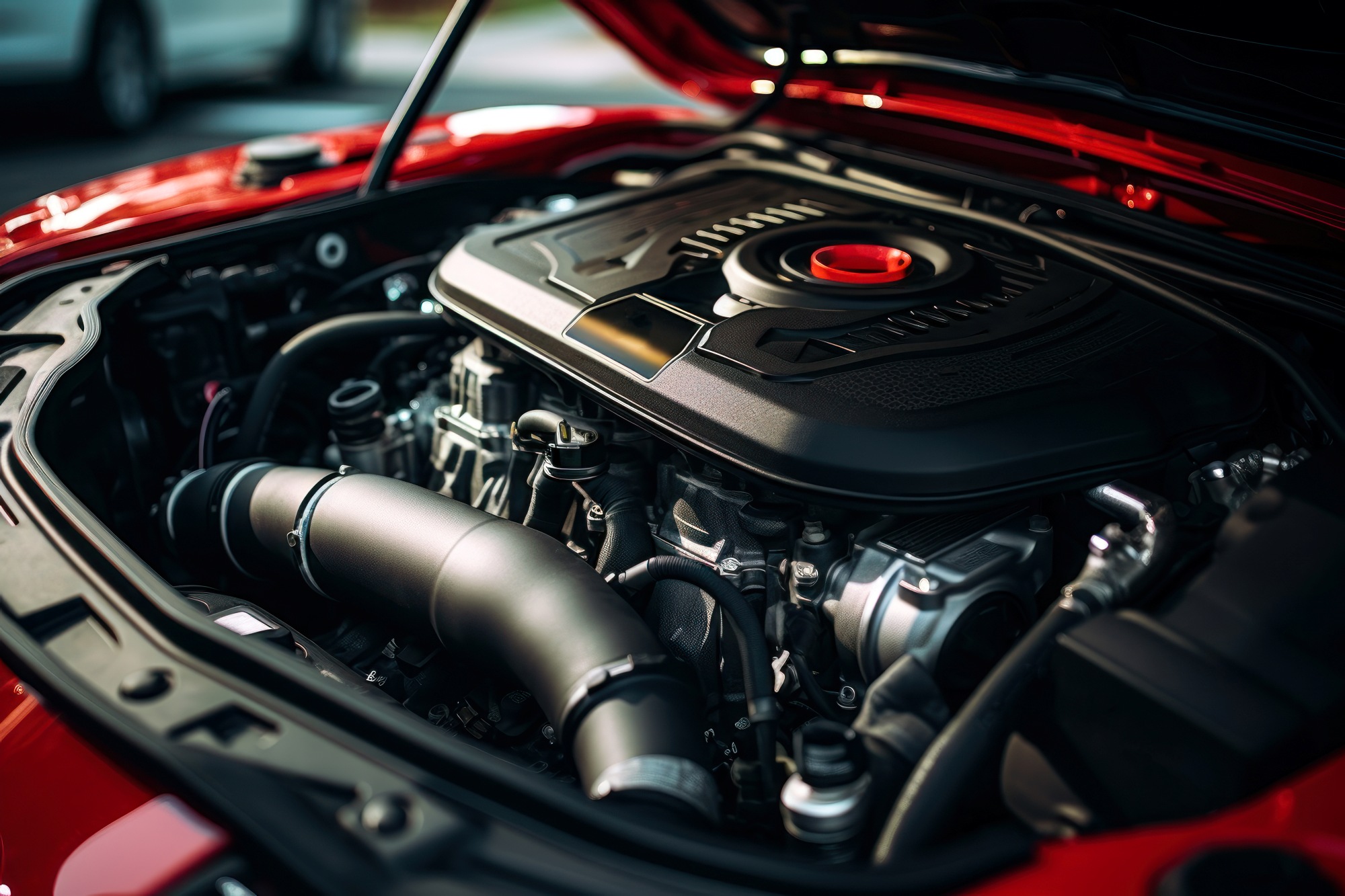
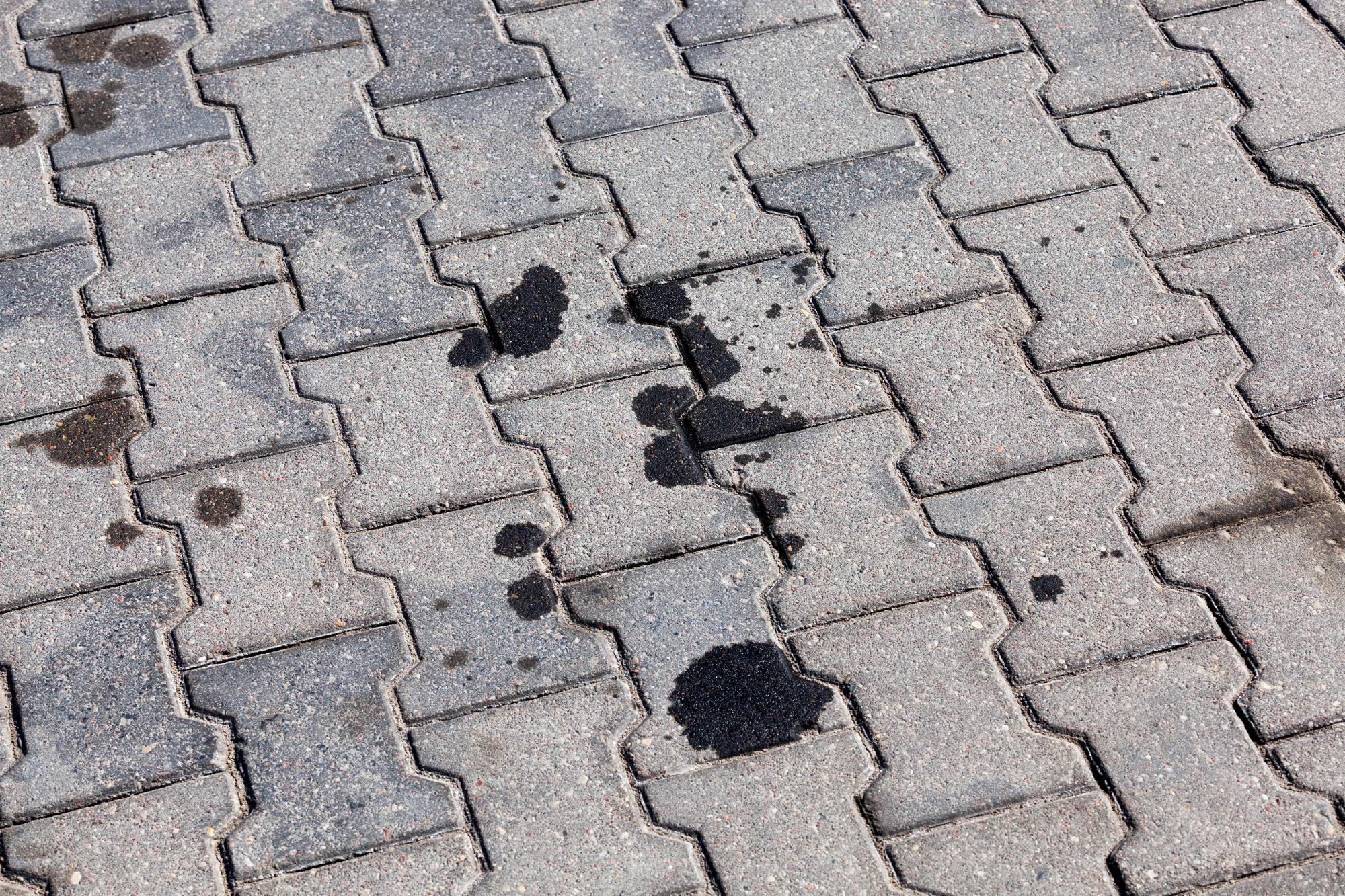
 Mercedes designed the GLE to deliver SUV power with luxury-car precision, but when oil starts leaking onto your driveway, you lose more than fluids—you lose confidence in your vehicle’s reliability. Most Newark GLE owners aren’t warned by a check engine light or oil pressure alert; the leak starts silently, then spreads across belts, undercarriage shields, and sensitive electronics before symptoms finally surface. At German Car Service in Hayward, CA, we’ve repaired hundreds of GLE oil leaks—from the first drip on the garage floor to full-on contamination that destroys sensors and triggers cascading failures. Whether you drive a 2016 GLE 350 or a 2022 GLE 580, your engine is loaded with high-pressure points that rely on airtight seals that do not last forever. These leaks never fix themselves, and the damage they cause always multiplies with time.
Valve Cover Gasket Leaks Start Small But Don’t Stay That Way
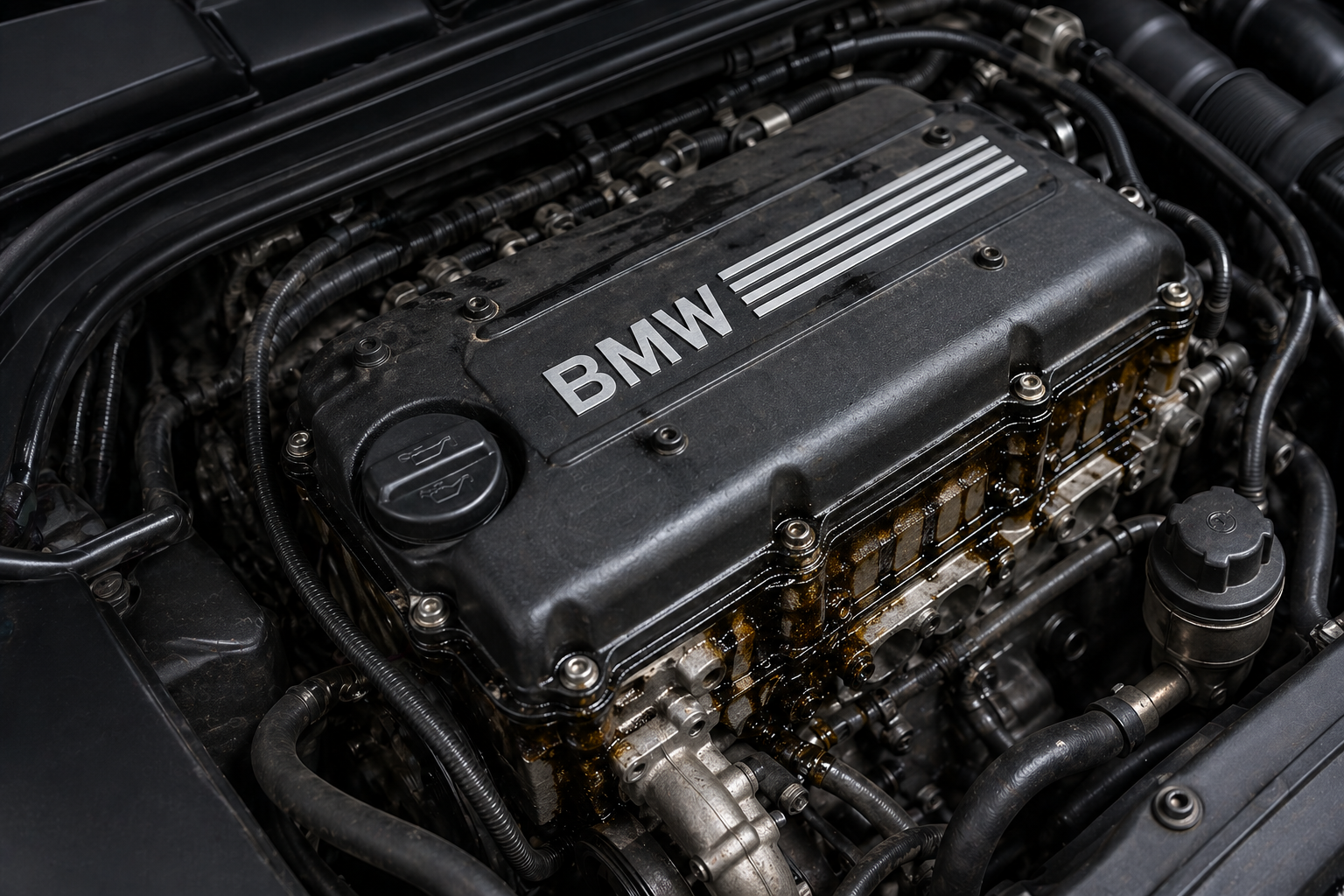
One of the most common oil leaks we repair in the Mercedes GLE is a failing valve cover gasket, particularly on the M276 V6 and M177 V8 engines found in the GLE 400, GLE 450, and GLE 580. As the rubber gasket ages and shrinks under heat cycling, oil begins to seep along the cylinder head or drip directly onto the turbocharger heat shielding or exhaust manifold. What begins as a faint burning oil smell during idle can quickly turn into a full-blown misfire if the oil enters the spark plug well or ignition coil boot. At our Hayward shop, we inspect the valve cover area using both dye-tracing and borescope tools to confirm the leak source before applying OE-torque procedures to reseal with updated Mercedes gaskets. Ignoring this early leak not only ruins ignition parts, it sends oil further down the engine block, where diagnosis becomes exponentially harder.
Front Timing Cover Leaks Create a Mess Behind Your Splash Shields
Timing cover leaks are especially common in GLEs that have crossed the 60,000-mile threshold or experienced long-haul driving under heat-soaked conditions. The lower timing cover connects to the front plate with aluminum mating surfaces, and even slight expansion over time causes sealant failure and seepage that spreads behind engine shields. Most Newark GLE drivers don’t see the leak until we remove the underbody tray and find a sticky film coating the pulleys, serpentine belt, and crank pulley. At German Car Service, we degrease and recheck after applying UV dye, confirming whether the timing cover is the origin before disassembly. We then reseal the cover using factory-grade anaerobic sealants and revised torque specs designed to counteract housing warpage common in Mercedes SUV platforms.
Camshaft Solenoid Seals Leak Quietly and Destroy Wiring If Ignored
Your GLE’s variable cam timing is controlled by electronically actuated solenoids that depend on clean oil flow and fully sealed O-rings, but those seals fail earlier than most Newark drivers expect. Oil that escapes from cam solenoids often drains behind the valve cover or into the wiring harness, triggering a cascade of miscommunication between timing modules and engine sensors. We’ve seen leaking solenoids cause camshaft position codes, oil pressure warnings, and even crank sensor faults, despite the actual mechanical components being fully functional. At our Hayward shop, we inspect every solenoid for leaks and replace all related O-rings with high-temperature variants before clearing and relearning camshaft adaptations. This is not a repair you delay; once oil hits the harness, electrical failures become inevitable.
Oil Cooler Leaks Are Hard to See but Expensive to Miss
Many GLE engines position the oil cooler and its seals between the oil filter housing and the engine block, buried under intake piping and cooling lines that conceal slow leaks for months. When those gaskets flatten or crack, oil begins leaking directly onto the transmission tunnel or mixes into the coolant system without obvious signs. We pressure-test both systems and check for hydrocarbon cross-contamination before removing the cooler to reseal with OE-spec gaskets. If ignored, oil cooler leaks often mimic head gasket failures or trigger low oil pressure events under load, especially in GLE 350 and GLE 450 models that operate under higher RPM on inclines. We’ve seen Newark drivers spend triple on damage that could have been prevented with a simple seal job.
Rear Main Seal Leaks Will Eventually Soak the Transmission Bellhousing
The rear main seal, located between the crankshaft and the transmission housing, tends to fail slowly at first, releasing oil only under higher RPM or extended hot driving. Most drivers notice this only after multiple top-offs or once oil saturation begins to affect transmission sensors or the starter motor. At German Car Service, we confirm rear main seal leaks using dye tracking and thermal imaging before recommending transmission removal. When confirmed, we replace the seal and reseal the mating surface with Mercedes’ updated crank housing sealant formula. These repairs are expensive if delayed, but manageable when caught early, especially for Newark GLE owners who depend on long-term vehicle reliability.
Your GLE Wasn’t Built to Leak—Let’s Keep It That Way
Mercedes doesn’t design the GLE to leak oil, but when seals fail, it’s your responsibility to act before small issues multiply. At German Car Service in Hayward, CA, we offer Newark GLE owners a full diagnostic approach that confirms the exact source of every leak and addresses it with model-specific tools, procedures, and OE-grade materials. We don’t guess. We prove it. Call (650) 832-8455 now to schedule a leak inspection and protect your Mercedes GLE before your next drive becomes your next repair bill.
Mercedes designed the GLE to deliver SUV power with luxury-car precision, but when oil starts leaking onto your driveway, you lose more than fluids—you lose confidence in your vehicle’s reliability. Most Newark GLE owners aren’t warned by a check engine light or oil pressure alert; the leak starts silently, then spreads across belts, undercarriage shields, and sensitive electronics before symptoms finally surface. At German Car Service in Hayward, CA, we’ve repaired hundreds of GLE oil leaks—from the first drip on the garage floor to full-on contamination that destroys sensors and triggers cascading failures. Whether you drive a 2016 GLE 350 or a 2022 GLE 580, your engine is loaded with high-pressure points that rely on airtight seals that do not last forever. These leaks never fix themselves, and the damage they cause always multiplies with time.
Valve Cover Gasket Leaks Start Small But Don’t Stay That Way
One of the most common oil leaks we repair in the Mercedes GLE is a failing valve cover gasket, particularly on the M276 V6 and M177 V8 engines found in the GLE 400, GLE 450, and GLE 580. As the rubber gasket ages and shrinks under heat cycling, oil begins to seep along the cylinder head or drip directly onto the turbocharger heat shielding or exhaust manifold. What begins as a faint burning oil smell during idle can quickly turn into a full-blown misfire if the oil enters the spark plug well or ignition coil boot. At our Hayward shop, we inspect the valve cover area using both dye-tracing and borescope tools to confirm the leak source before applying OE-torque procedures to reseal with updated Mercedes gaskets. Ignoring this early leak not only ruins ignition parts, it sends oil further down the engine block, where diagnosis becomes exponentially harder.
Front Timing Cover Leaks Create a Mess Behind Your Splash Shields
Timing cover leaks are especially common in GLEs that have crossed the 60,000-mile threshold or experienced long-haul driving under heat-soaked conditions. The lower timing cover connects to the front plate with aluminum mating surfaces, and even slight expansion over time causes sealant failure and seepage that spreads behind engine shields. Most Newark GLE drivers don’t see the leak until we remove the underbody tray and find a sticky film coating the pulleys, serpentine belt, and crank pulley. At German Car Service, we degrease and recheck after applying UV dye, confirming whether the timing cover is the origin before disassembly. We then reseal the cover using factory-grade anaerobic sealants and revised torque specs designed to counteract housing warpage common in Mercedes SUV platforms.
Camshaft Solenoid Seals Leak Quietly and Destroy Wiring If Ignored
Your GLE’s variable cam timing is controlled by electronically actuated solenoids that depend on clean oil flow and fully sealed O-rings, but those seals fail earlier than most Newark drivers expect. Oil that escapes from cam solenoids often drains behind the valve cover or into the wiring harness, triggering a cascade of miscommunication between timing modules and engine sensors. We’ve seen leaking solenoids cause camshaft position codes, oil pressure warnings, and even crank sensor faults, despite the actual mechanical components being fully functional. At our Hayward shop, we inspect every solenoid for leaks and replace all related O-rings with high-temperature variants before clearing and relearning camshaft adaptations. This is not a repair you delay; once oil hits the harness, electrical failures become inevitable.
Oil Cooler Leaks Are Hard to See but Expensive to Miss
Many GLE engines position the oil cooler and its seals between the oil filter housing and the engine block, buried under intake piping and cooling lines that conceal slow leaks for months. When those gaskets flatten or crack, oil begins leaking directly onto the transmission tunnel or mixes into the coolant system without obvious signs. We pressure-test both systems and check for hydrocarbon cross-contamination before removing the cooler to reseal with OE-spec gaskets. If ignored, oil cooler leaks often mimic head gasket failures or trigger low oil pressure events under load, especially in GLE 350 and GLE 450 models that operate under higher RPM on inclines. We’ve seen Newark drivers spend triple on damage that could have been prevented with a simple seal job.
Rear Main Seal Leaks Will Eventually Soak the Transmission Bellhousing
The rear main seal, located between the crankshaft and the transmission housing, tends to fail slowly at first, releasing oil only under higher RPM or extended hot driving. Most drivers notice this only after multiple top-offs or once oil saturation begins to affect transmission sensors or the starter motor. At German Car Service, we confirm rear main seal leaks using dye tracking and thermal imaging before recommending transmission removal. When confirmed, we replace the seal and reseal the mating surface with Mercedes’ updated crank housing sealant formula. These repairs are expensive if delayed, but manageable when caught early, especially for Newark GLE owners who depend on long-term vehicle reliability.
Your GLE Wasn’t Built to Leak—Let’s Keep It That Way
Mercedes doesn’t design the GLE to leak oil, but when seals fail, it’s your responsibility to act before small issues multiply. At German Car Service in Hayward, CA, we offer Newark GLE owners a full diagnostic approach that confirms the exact source of every leak and addresses it with model-specific tools, procedures, and OE-grade materials. We don’t guess. We prove it. Call (650) 832-8455 now to schedule a leak inspection and protect your Mercedes GLE before your next drive becomes your next repair bill.
Newark, CA - Auto Repair Shop in the East Bay Fixes Oil Leaks in Mercedes GLE
SYNOPSIS: German Car Service, located in Hayward, CA, explains the most common oil leaks seen in Mercedes GLE models from Newark—what causes them, what they damage, and what you should do next.
GLE Leaking Oil? Newark Drivers Need to Know
BY: ,
Mercedes designed the GLE to deliver SUV power with luxury-car precision, but when oil starts leaking onto your driveway, you lose more than fluids—you lose confidence in your vehicle’s reliability. Most Newark GLE owners aren’t warned by a check engine light or oil pressure alert; the leak starts silently, then spreads across belts, undercarriage shields, and sensitive electronics before symptoms finally surface. At German Car Service in Hayward, CA, we’ve repaired hundreds of GLE oil leaks—from the first drip on the garage floor to full-on contamination that destroys sensors and triggers cascading failures. Whether you drive a 2016 GLE 350 or a 2022 GLE 580, your engine is loaded with high-pressure points that rely on airtight seals that do not last forever. These leaks never fix themselves, and the damage they cause always multiplies with time.
Valve Cover Gasket Leaks Start Small But Don’t Stay That Way
One of the most common oil leaks we repair in the Mercedes GLE is a failing valve cover gasket, particularly on the M276 V6 and M177 V8 engines found in the GLE 400, GLE 450, and GLE 580. As the rubber gasket ages and shrinks under heat cycling, oil begins to seep along the cylinder head or drip directly onto the turbocharger heat shielding or exhaust manifold. What begins as a faint burning oil smell during idle can quickly turn into a full-blown misfire if the oil enters the spark plug well or ignition coil boot. At our Hayward shop, we inspect the valve cover area using both dye-tracing and borescope tools to confirm the leak source before applying OE-torque procedures to reseal with updated Mercedes gaskets. Ignoring this early leak not only ruins ignition parts, it sends oil further down the engine block, where diagnosis becomes exponentially harder.
Front Timing Cover Leaks Create a Mess Behind Your Splash Shields
Timing cover leaks are especially common in GLEs that have crossed the 60,000-mile threshold or experienced long-haul driving under heat-soaked conditions. The lower timing cover connects to the front plate with aluminum mating surfaces, and even slight expansion over time causes sealant failure and seepage that spreads behind engine shields. Most Newark GLE drivers don’t see the leak until we remove the underbody tray and find a sticky film coating the pulleys, serpentine belt, and crank pulley. At German Car Service, we degrease and recheck after applying UV dye, confirming whether the timing cover is the origin before disassembly. We then reseal the cover using factory-grade anaerobic sealants and revised torque specs designed to counteract housing warpage common in Mercedes SUV platforms.
Camshaft Solenoid Seals Leak Quietly and Destroy Wiring If Ignored
Your GLE’s variable cam timing is controlled by electronically actuated solenoids that depend on clean oil flow and fully sealed O-rings, but those seals fail earlier than most Newark drivers expect. Oil that escapes from cam solenoids often drains behind the valve cover or into the wiring harness, triggering a cascade of miscommunication between timing modules and engine sensors. We’ve seen leaking solenoids cause camshaft position codes, oil pressure warnings, and even crank sensor faults, despite the actual mechanical components being fully functional. At our Hayward shop, we inspect every solenoid for leaks and replace all related O-rings with high-temperature variants before clearing and relearning camshaft adaptations. This is not a repair you delay; once oil hits the harness, electrical failures become inevitable.
Oil Cooler Leaks Are Hard to See but Expensive to Miss
Many GLE engines position the oil cooler and its seals between the oil filter housing and the engine block, buried under intake piping and cooling lines that conceal slow leaks for months. When those gaskets flatten or crack, oil begins leaking directly onto the transmission tunnel or mixes into the coolant system without obvious signs. We pressure-test both systems and check for hydrocarbon cross-contamination before removing the cooler to reseal with OE-spec gaskets. If ignored, oil cooler leaks often mimic head gasket failures or trigger low oil pressure events under load, especially in GLE 350 and GLE 450 models that operate under higher RPM on inclines. We’ve seen Newark drivers spend triple on damage that could have been prevented with a simple seal job.
Rear Main Seal Leaks Will Eventually Soak the Transmission Bellhousing
The rear main seal, located between the crankshaft and the transmission housing, tends to fail slowly at first, releasing oil only under higher RPM or extended hot driving. Most drivers notice this only after multiple top-offs or once oil saturation begins to affect transmission sensors or the starter motor. At German Car Service, we confirm rear main seal leaks using dye tracking and thermal imaging before recommending transmission removal. When confirmed, we replace the seal and reseal the mating surface with Mercedes’ updated crank housing sealant formula. These repairs are expensive if delayed, but manageable when caught early, especially for Newark GLE owners who depend on long-term vehicle reliability.
Your GLE Wasn’t Built to Leak—Let’s Keep It That Way
Mercedes doesn’t design the GLE to leak oil, but when seals fail, it’s your responsibility to act before small issues multiply. At German Car Service in Hayward, CA, we offer Newark GLE owners a full diagnostic approach that confirms the exact source of every leak and addresses it with model-specific tools, procedures, and OE-grade materials. We don’t guess. We prove it. Call (650) 832-8455 now to schedule a leak inspection and protect your Mercedes GLE before your next drive becomes your next repair bill.