 Anyone who has owned an E90, E60, or E70 BMW long enough has probably replaced at least one plastic coolant part already, and the reason is simple arithmetic. Nearly every coolant-touching component on these cars from the 2006 through 2013 era was molded from plastic to save weight, cost, and assembly time. Plastic holds pressure fine when the system is cool and the engine is off.
Plastic starts to fail when heat-soak cycling, ozone, and hot coolant work on the molded seams year after year. Union City drivers heading into summer need to know where the cooling system is most likely to give out, and Fremont Foreign Auto in Fremont, CA has seen every one of these failures. The walk around the engine bay goes component by component from here.
Expansion Tank
The coolant reservoir cracks along the molded seam where the two halves of the tank are welded together. Cracks start as weeping pinholes and widen into visible splits. A tank that cracks while you're driving dumps coolant faster than the overflow system can catch, and the temperature gauge climbs within a few miles.
Radiator End Tanks
The radiator itself is an aluminum core sandwiched between two plastic end tanks, crimped together at the seam. The crimp seal hardens over the years of thermal cycling, and coolant begins to weep along the crimp line. Once the leak starts, it accelerates whenever the system is under full operating pressure during highway driving.
Thermostat Housing
The thermostat sits in a plastic housing that bolts to the engine block, and the housing develops weeping cracks at the temperature sensor port. A slow weep here drips onto the side of the block and evaporates, leaving a dry but contaminated surface that a careful shop can spot under lighting. The sensor port is the weak point because the plastic is thinnest where the threaded bore interrupts the molded wall.
Upper Radiator Hose Quick-Disconnect
The upper radiator hose on these models uses a plastic quick-disconnect fitting that locks into the radiator with a collar and an o-ring. The collar becomes brittle with age and snaps loose under pressure, and when it lets go, the whole system dumps coolant onto the serpentine belt below. A collar failure usually announces itself with a loud pop under the hood, followed by a burst of steam from the front of the engine.
Heater Core Bypass And Water Pump Weep Hole
The heater core bypass hoses route coolant through the dashboard heat exchanger and can split at their crimps. Those crimps are where the rubber hose meets a plastic barb, and the plastic barb is the part that fails first. The water pump itself has a small weep hole on its underside that announces a failing internal seal by dripping coolant onto the timing chain cover.
Expansion Tank Cap
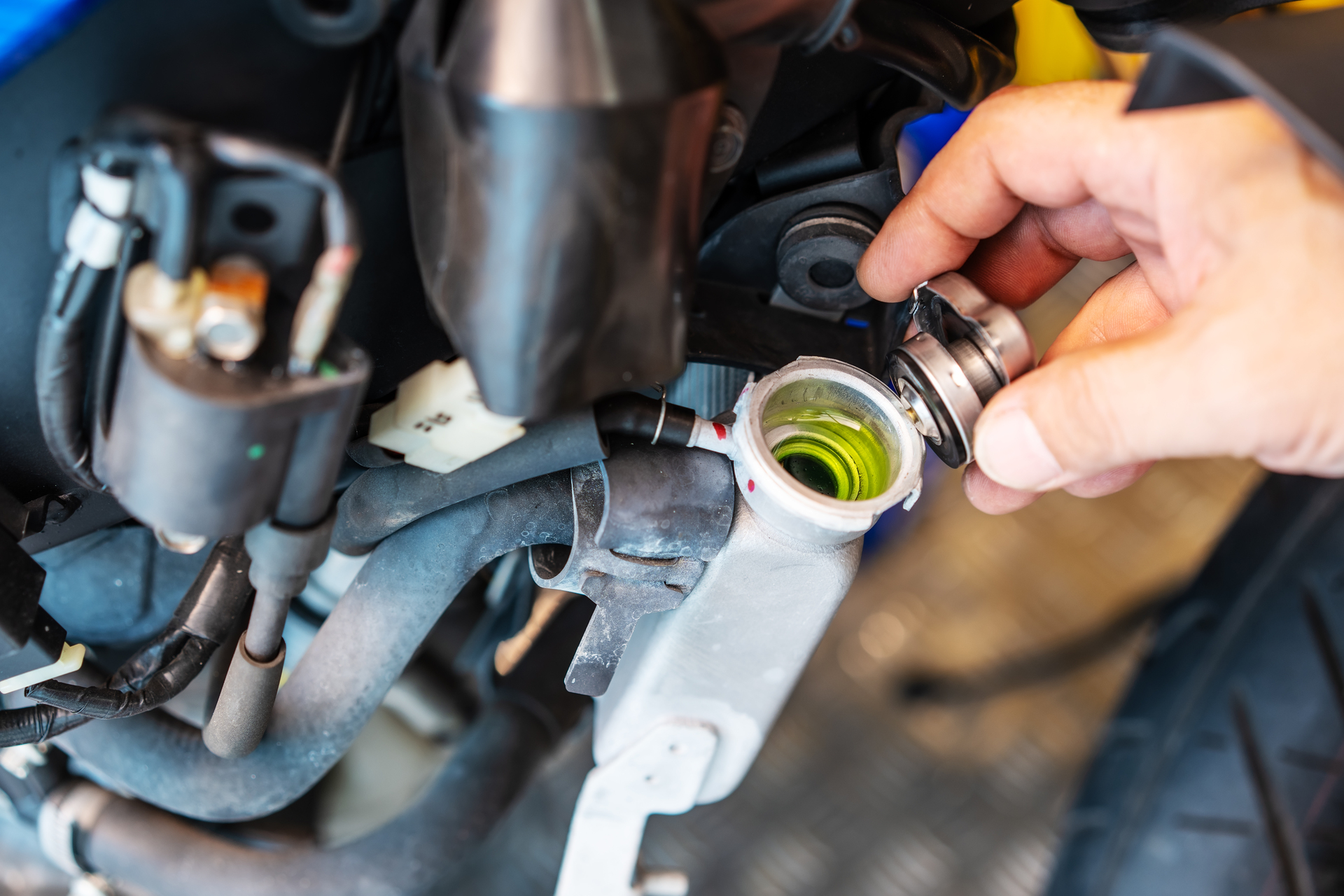
The last component nobody thinks about is the tank cap itself. The cap contains a pressure relief valve that weakens with age and starts bleeding off coolant through its vent instead of holding it inside the cooling loop. A weak cap is one of the few failures that can be tested in thirty seconds with a handheld pressure gauge at any competent shop.
Call Before The Gauge Climbs
Union City BMW drivers who want to catch these failures before a July commute turns into a tow can dial (510) 793-6067. Fremont Foreign Auto runs a cold pressure test, inspects every component listed, and writes up which plastic parts are closest to failure.
Anyone who has owned an E90, E60, or E70 BMW long enough has probably replaced at least one plastic coolant part already, and the reason is simple arithmetic. Nearly every coolant-touching component on these cars from the 2006 through 2013 era was molded from plastic to save weight, cost, and assembly time. Plastic holds pressure fine when the system is cool and the engine is off.
Plastic starts to fail when heat-soak cycling, ozone, and hot coolant work on the molded seams year after year. Union City drivers heading into summer need to know where the cooling system is most likely to give out, and Fremont Foreign Auto in Fremont, CA has seen every one of these failures. The walk around the engine bay goes component by component from here.
Expansion Tank
The coolant reservoir cracks along the molded seam where the two halves of the tank are welded together. Cracks start as weeping pinholes and widen into visible splits. A tank that cracks while you're driving dumps coolant faster than the overflow system can catch, and the temperature gauge climbs within a few miles.
Radiator End Tanks
The radiator itself is an aluminum core sandwiched between two plastic end tanks, crimped together at the seam. The crimp seal hardens over the years of thermal cycling, and coolant begins to weep along the crimp line. Once the leak starts, it accelerates whenever the system is under full operating pressure during highway driving.
Thermostat Housing
The thermostat sits in a plastic housing that bolts to the engine block, and the housing develops weeping cracks at the temperature sensor port. A slow weep here drips onto the side of the block and evaporates, leaving a dry but contaminated surface that a careful shop can spot under lighting. The sensor port is the weak point because the plastic is thinnest where the threaded bore interrupts the molded wall.
Upper Radiator Hose Quick-Disconnect
The upper radiator hose on these models uses a plastic quick-disconnect fitting that locks into the radiator with a collar and an o-ring. The collar becomes brittle with age and snaps loose under pressure, and when it lets go, the whole system dumps coolant onto the serpentine belt below. A collar failure usually announces itself with a loud pop under the hood, followed by a burst of steam from the front of the engine.
Heater Core Bypass And Water Pump Weep Hole
The heater core bypass hoses route coolant through the dashboard heat exchanger and can split at their crimps. Those crimps are where the rubber hose meets a plastic barb, and the plastic barb is the part that fails first. The water pump itself has a small weep hole on its underside that announces a failing internal seal by dripping coolant onto the timing chain cover.
Expansion Tank Cap
The last component nobody thinks about is the tank cap itself. The cap contains a pressure relief valve that weakens with age and starts bleeding off coolant through its vent instead of holding it inside the cooling loop. A weak cap is one of the few failures that can be tested in thirty seconds with a handheld pressure gauge at any competent shop.
Call Before The Gauge Climbs
Union City BMW drivers who want to catch these failures before a July commute turns into a tow can dial (510) 793-6067. Fremont Foreign Auto runs a cold pressure test, inspects every component listed, and writes up which plastic parts are closest to failure.
Union City, CA - Could BMW Coolant Leaks Lead to Overheating This Summer?
SYNOPSIS: Fremont Foreign Auto outlines common BMW coolant leak points, helping Union City drivers identify weak components before heat causes failures. Don't let this ruin your summer.
Seven Plastic Parts Waiting To Betray Your BMW
BY: Eduardo Porta, Fremont Foreign Auto
Anyone who has owned an E90, E60, or E70 BMW long enough has probably replaced at least one plastic coolant part already, and the reason is simple arithmetic. Nearly every coolant-touching component on these cars from the 2006 through 2013 era was molded from plastic to save weight, cost, and assembly time. Plastic holds pressure fine when the system is cool and the engine is off.
Plastic starts to fail when heat-soak cycling, ozone, and hot coolant work on the molded seams year after year. Union City drivers heading into summer need to know where the cooling system is most likely to give out, and Fremont Foreign Auto in Fremont, CA has seen every one of these failures. The walk around the engine bay goes component by component from here.
Expansion Tank
The coolant reservoir cracks along the molded seam where the two halves of the tank are welded together. Cracks start as weeping pinholes and widen into visible splits. A tank that cracks while you're driving dumps coolant faster than the overflow system can catch, and the temperature gauge climbs within a few miles.
Radiator End Tanks
The radiator itself is an aluminum core sandwiched between two plastic end tanks, crimped together at the seam. The crimp seal hardens over the years of thermal cycling, and coolant begins to weep along the crimp line. Once the leak starts, it accelerates whenever the system is under full operating pressure during highway driving.
Thermostat Housing
The thermostat sits in a plastic housing that bolts to the engine block, and the housing develops weeping cracks at the temperature sensor port. A slow weep here drips onto the side of the block and evaporates, leaving a dry but contaminated surface that a careful shop can spot under lighting. The sensor port is the weak point because the plastic is thinnest where the threaded bore interrupts the molded wall.
Upper Radiator Hose Quick-Disconnect
The upper radiator hose on these models uses a plastic quick-disconnect fitting that locks into the radiator with a collar and an o-ring. The collar becomes brittle with age and snaps loose under pressure, and when it lets go, the whole system dumps coolant onto the serpentine belt below. A collar failure usually announces itself with a loud pop under the hood, followed by a burst of steam from the front of the engine.
Heater Core Bypass And Water Pump Weep Hole
The heater core bypass hoses route coolant through the dashboard heat exchanger and can split at their crimps. Those crimps are where the rubber hose meets a plastic barb, and the plastic barb is the part that fails first. The water pump itself has a small weep hole on its underside that announces a failing internal seal by dripping coolant onto the timing chain cover.
Expansion Tank Cap
The last component nobody thinks about is the tank cap itself. The cap contains a pressure relief valve that weakens with age and starts bleeding off coolant through its vent instead of holding it inside the cooling loop. A weak cap is one of the few failures that can be tested in thirty seconds with a handheld pressure gauge at any competent shop.
Call Before The Gauge Climbs
Union City BMW drivers who want to catch these failures before a July commute turns into a tow can dial (510) 793-6067. Fremont Foreign Auto runs a cold pressure test, inspects every component listed, and writes up which plastic parts are closest to failure.