 A rubber gasket the size of a dinner plate is the only thing standing between your BMW's valve train oil and the hot exhaust manifold six inches below it. That gasket doesn't fail dramatically; it hardens a little more with every drive until one Tuesday morning you catch a faint burning smell while idling at a Fremont stoplight. We fix this exact leak at Fremont Foreign Auto more than almost any other BMW repair, and the pattern is consistent enough that we can walk you through it before you pop the hood.
The Gasket That Takes The Most Heat
BMW's N52, N54, and N55 inline engines use a rubber elastomer valve cover gasket that seals the top of the cylinder head. Every time the engine heats to operating temperature and cools back down, that rubber absorbs a full thermal cycle that makes it slightly less flexible than it was the cycle before. Most of these gaskets begin to seep between 60,000 and 100,000 miles on models like the 3 Series, 5 Series, and X5. The oil creeps past the hardened seal, runs down the block, and lands on the exhaust manifold where it vaporizes into that familiar burnt smell. Does the odor seem stronger when you park after a highway run and step out of the car? That's the manifold at peak temperature cooking the freshest oil that reached it during the drive.
Plastic Covers and the Mistake That Causes a Second Leak
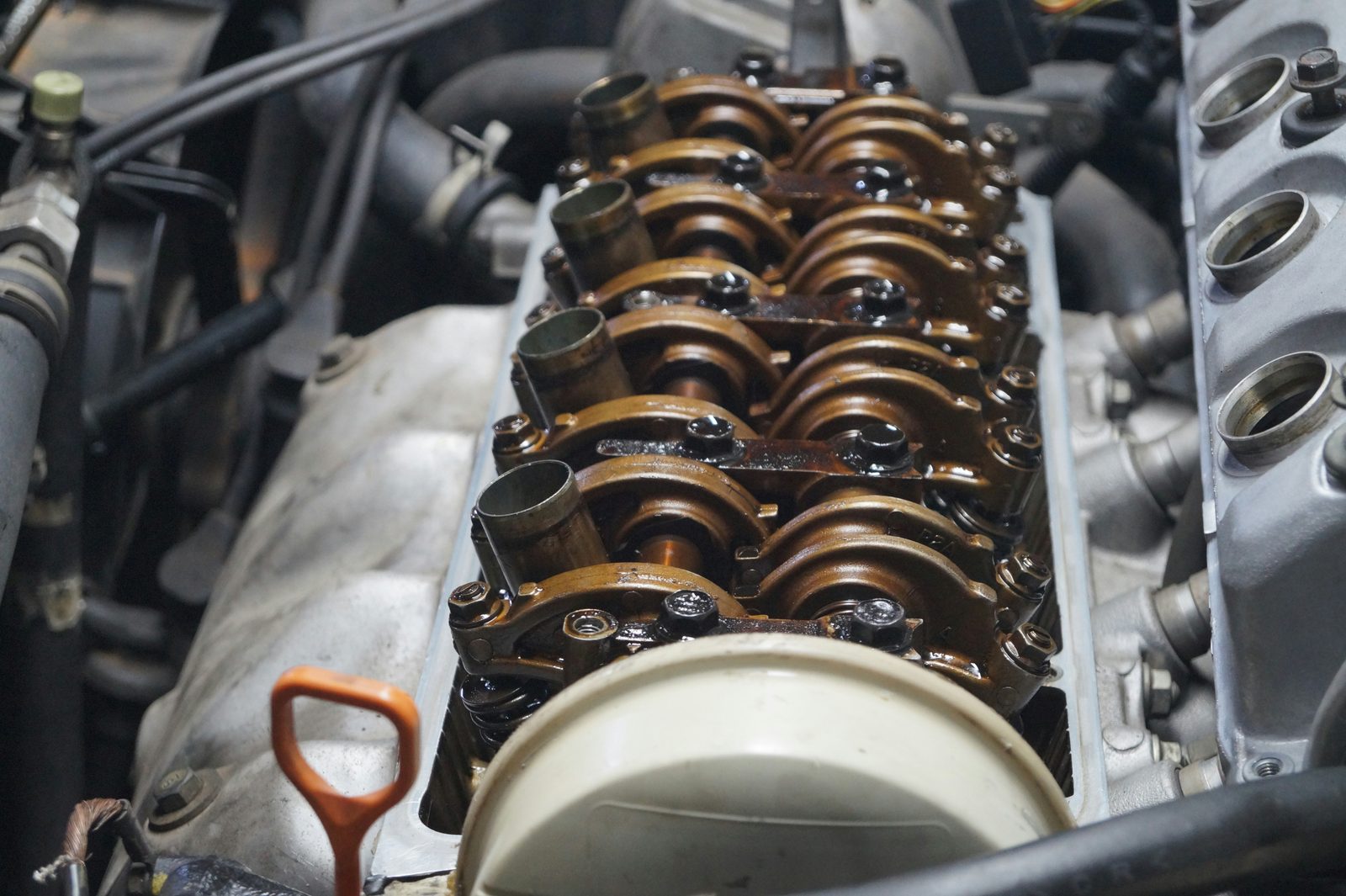
Post-2006 BMW valve covers are reinforced plastic rather than aluminum, and that material choice introduces a problem most owners don't expect. Plastic warps from the same heat cycling that kills the gasket, and it can develop hairline cracks along the bolt flanges that are invisible under engine grime. A technician who replaces the gasket without inspecting the cover itself risks reinstalling a warped surface that will seep again within a few months. We hold every cover we remove up to bright light and run a straightedge across the sealing face, because a three-second check saves a second visit. Overtightening the cover bolts is the other common cause of repeat leaks; BMW publishes a specific torque value and a tightening sequence for each engine, and skipping that sequence distorts the plastic before you've even started the car.
When Oil Finds the Spark Plug Wells
Beneath the valve cover sit the spark plug tube seals, and a failing cover gasket lets oil pool directly around those seals until it floods the wells. What happens to a spark plug sitting in a half-inch of warm engine oil? It loses its ground path, misfires on that cylinder, and you feel a stumble at idle or a hesitation when you step on the throttle. We pull the ignition coils and inspect every well before recommending any ignition work, because swapping coils on an oil-contaminated plug well is a temporary fix at best.
The Second Gasket Worth Checking at the Same Time
The oil filter housing gasket sits on the passenger side of the block on N52, N54, and N55 engines, and it deteriorates in the same mileage window as the valve cover gasket. A leak here sends oil down the rear of the engine where it hides behind brackets and wiring, making it easy to miss on a quick visual inspection. How often have you topped off your oil and assumed consumption was normal when a slow leak was the real culprit? We recommend pairing both gasket replacements when the mileage supports it, because the labor overlaps and the second gasket is rarely far behind the first.
How We Trace Every Drop in Our Fremont Shop
UV dye testing is how we confirm leak paths that visual inspection can't catch. We add fluorescent dye to the engine oil, run the vehicle through a drive cycle, then scan the engine bay with a black light that makes every trace of escaped oil glow bright green against the block. That process shows us exactly which gasket is leaking, how far the oil has traveled, and whether secondary components like wiring harnesses or coil connectors need cleaning. We clean every sealing surface, seat the new gasket into the cover, and torque each bolt in BMW's published sequence to the exact specification. Every repair gets a test drive to full operating temperature and a final black-light scan before the vehicle leaves our Fremont, CA facility.
Your BMW's engine was built to perform for a long time, and keeping the gaskets sealed is one of the most straightforward ways to protect that investment. Call Fremont Foreign Auto at (510) 793-6067 and let our Fremont team trace the leak, fix the source, and get you back on the road with a clean, dry engine bay.
A rubber gasket the size of a dinner plate is the only thing standing between your BMW's valve train oil and the hot exhaust manifold six inches below it. That gasket doesn't fail dramatically; it hardens a little more with every drive until one Tuesday morning you catch a faint burning smell while idling at a Fremont stoplight. We fix this exact leak at Fremont Foreign Auto more than almost any other BMW repair, and the pattern is consistent enough that we can walk you through it before you pop the hood.
The Gasket That Takes The Most Heat
BMW's N52, N54, and N55 inline engines use a rubber elastomer valve cover gasket that seals the top of the cylinder head. Every time the engine heats to operating temperature and cools back down, that rubber absorbs a full thermal cycle that makes it slightly less flexible than it was the cycle before. Most of these gaskets begin to seep between 60,000 and 100,000 miles on models like the 3 Series, 5 Series, and X5. The oil creeps past the hardened seal, runs down the block, and lands on the exhaust manifold where it vaporizes into that familiar burnt smell. Does the odor seem stronger when you park after a highway run and step out of the car? That's the manifold at peak temperature cooking the freshest oil that reached it during the drive.
Plastic Covers and the Mistake That Causes a Second Leak
Post-2006 BMW valve covers are reinforced plastic rather than aluminum, and that material choice introduces a problem most owners don't expect. Plastic warps from the same heat cycling that kills the gasket, and it can develop hairline cracks along the bolt flanges that are invisible under engine grime. A technician who replaces the gasket without inspecting the cover itself risks reinstalling a warped surface that will seep again within a few months. We hold every cover we remove up to bright light and run a straightedge across the sealing face, because a three-second check saves a second visit. Overtightening the cover bolts is the other common cause of repeat leaks; BMW publishes a specific torque value and a tightening sequence for each engine, and skipping that sequence distorts the plastic before you've even started the car.
When Oil Finds the Spark Plug Wells
Beneath the valve cover sit the spark plug tube seals, and a failing cover gasket lets oil pool directly around those seals until it floods the wells. What happens to a spark plug sitting in a half-inch of warm engine oil? It loses its ground path, misfires on that cylinder, and you feel a stumble at idle or a hesitation when you step on the throttle. We pull the ignition coils and inspect every well before recommending any ignition work, because swapping coils on an oil-contaminated plug well is a temporary fix at best.
The Second Gasket Worth Checking at the Same Time
The oil filter housing gasket sits on the passenger side of the block on N52, N54, and N55 engines, and it deteriorates in the same mileage window as the valve cover gasket. A leak here sends oil down the rear of the engine where it hides behind brackets and wiring, making it easy to miss on a quick visual inspection. How often have you topped off your oil and assumed consumption was normal when a slow leak was the real culprit? We recommend pairing both gasket replacements when the mileage supports it, because the labor overlaps and the second gasket is rarely far behind the first.
How We Trace Every Drop in Our Fremont Shop
UV dye testing is how we confirm leak paths that visual inspection can't catch. We add fluorescent dye to the engine oil, run the vehicle through a drive cycle, then scan the engine bay with a black light that makes every trace of escaped oil glow bright green against the block. That process shows us exactly which gasket is leaking, how far the oil has traveled, and whether secondary components like wiring harnesses or coil connectors need cleaning. We clean every sealing surface, seat the new gasket into the cover, and torque each bolt in BMW's published sequence to the exact specification. Every repair gets a test drive to full operating temperature and a final black-light scan before the vehicle leaves our Fremont, CA facility.
Your BMW's engine was built to perform for a long time, and keeping the gaskets sealed is one of the most straightforward ways to protect that investment. Call Fremont Foreign Auto at (510) 793-6067 and let our Fremont team trace the leak, fix the source, and get you back on the road with a clean, dry engine bay.
Fremont, CA - BMW Oil Leak Repairs from Trusted European Auto Specialists
SYNOPSIS: Fremont Foreign Auto in Fremont, CA walks BMW owners through the specific gaskets, engine designs, and diagnostic steps behind the most common oil leaks on the N52, N54, and N55 platforms.
BMW Auto Specialists: Oil Leak Fixes in Fremont
BY: Eduardo Porta, Fremont Foreign Auto
A rubber gasket the size of a dinner plate is the only thing standing between your BMW's valve train oil and the hot exhaust manifold six inches below it. That gasket doesn't fail dramatically; it hardens a little more with every drive until one Tuesday morning you catch a faint burning smell while idling at a Fremont stoplight. We fix this exact leak at Fremont Foreign Auto more than almost any other BMW repair, and the pattern is consistent enough that we can walk you through it before you pop the hood.
The Gasket That Takes The Most Heat
BMW's N52, N54, and N55 inline engines use a rubber elastomer valve cover gasket that seals the top of the cylinder head. Every time the engine heats to operating temperature and cools back down, that rubber absorbs a full thermal cycle that makes it slightly less flexible than it was the cycle before. Most of these gaskets begin to seep between 60,000 and 100,000 miles on models like the 3 Series, 5 Series, and X5. The oil creeps past the hardened seal, runs down the block, and lands on the exhaust manifold where it vaporizes into that familiar burnt smell. Does the odor seem stronger when you park after a highway run and step out of the car? That's the manifold at peak temperature cooking the freshest oil that reached it during the drive.
Plastic Covers and the Mistake That Causes a Second Leak
Post-2006 BMW valve covers are reinforced plastic rather than aluminum, and that material choice introduces a problem most owners don't expect. Plastic warps from the same heat cycling that kills the gasket, and it can develop hairline cracks along the bolt flanges that are invisible under engine grime. A technician who replaces the gasket without inspecting the cover itself risks reinstalling a warped surface that will seep again within a few months. We hold every cover we remove up to bright light and run a straightedge across the sealing face, because a three-second check saves a second visit. Overtightening the cover bolts is the other common cause of repeat leaks; BMW publishes a specific torque value and a tightening sequence for each engine, and skipping that sequence distorts the plastic before you've even started the car.
When Oil Finds the Spark Plug Wells
Beneath the valve cover sit the spark plug tube seals, and a failing cover gasket lets oil pool directly around those seals until it floods the wells. What happens to a spark plug sitting in a half-inch of warm engine oil? It loses its ground path, misfires on that cylinder, and you feel a stumble at idle or a hesitation when you step on the throttle. We pull the ignition coils and inspect every well before recommending any ignition work, because swapping coils on an oil-contaminated plug well is a temporary fix at best.
The Second Gasket Worth Checking at the Same Time
The oil filter housing gasket sits on the passenger side of the block on N52, N54, and N55 engines, and it deteriorates in the same mileage window as the valve cover gasket. A leak here sends oil down the rear of the engine where it hides behind brackets and wiring, making it easy to miss on a quick visual inspection. How often have you topped off your oil and assumed consumption was normal when a slow leak was the real culprit? We recommend pairing both gasket replacements when the mileage supports it, because the labor overlaps and the second gasket is rarely far behind the first.
How We Trace Every Drop in Our Fremont Shop
UV dye testing is how we confirm leak paths that visual inspection can't catch. We add fluorescent dye to the engine oil, run the vehicle through a drive cycle, then scan the engine bay with a black light that makes every trace of escaped oil glow bright green against the block. That process shows us exactly which gasket is leaking, how far the oil has traveled, and whether secondary components like wiring harnesses or coil connectors need cleaning. We clean every sealing surface, seat the new gasket into the cover, and torque each bolt in BMW's published sequence to the exact specification. Every repair gets a test drive to full operating temperature and a final black-light scan before the vehicle leaves our Fremont, CA facility.
Your BMW's engine was built to perform for a long time, and keeping the gaskets sealed is one of the most straightforward ways to protect that investment. Call Fremont Foreign Auto at (510) 793-6067 and let our Fremont team trace the leak, fix the source, and get you back on the road with a clean, dry engine bay.