 Toyota suspensions stay reliable for years, yet wear still shifts alignment angles and turns a quiet chassis into a drifting, noisy one. We are Fremont Foreign Auto in Fremont, and we help Union City drivers with measurements first, targeted parts second, and documented results at the end. Our technicians treat every complaint as a system problem involving bushings, mounts, struts, bearings, links, and geometry that must agree under temperature, load, and speed. We road-test to reproduce the complaint, we measure what changed, and we correct the cause with procedures that hold on real pavement.
Camry And Corolla Strut Wear You Can Feel
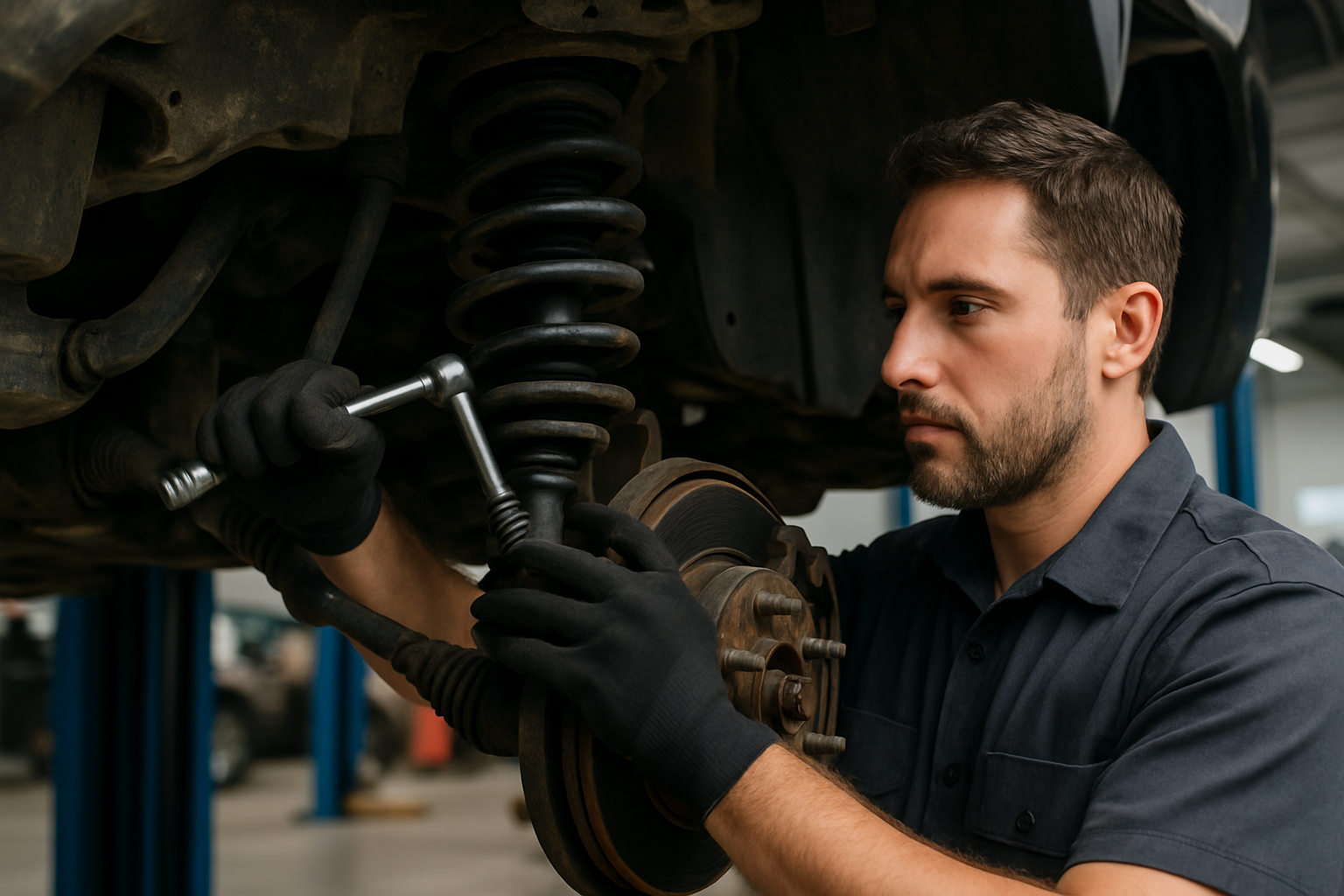
Camry XV50 models from 2012 through 2017 and Corolla E170 models from 2014 through 2019 often lose rebound control long before fluid leaks appear. Drivers feel a float after freeway dips, a knock during low-speed steering, and a delayed settle that demands constant correction. We verify with bounce-decay timing, steering sweep checks for top-mount bearing roughness, and damper force evaluation that exposes weak rebound. Our repair replaces struts and mounts in matched pairs, torques bushings at ride height, and confirms body control on a defined validation route through Fremont and Union City.
RAV4 Inner Shoulder Wear That Keeps Returning
Third and fourth generation RAV4 models from 2006 through 2018 frequently chew inside shoulders when rear toe creeps with load. Many quick alignments correct the front toe, then miss rear toe compliance, so the tires resume wearing within weeks. We measure thrust angle, record rear toe at indexed heights, and watch bushing deflection while the suspension is loaded. The solution combines rear arm service when bushings collapse with a toe setting that holds under cargo and passengers, followed by a printout proving a stable contact patch.
Highlander And 4Runner Bushing Compression That Causes Wander
Unibody Highlander models from 2014 through 2019 and body-on-frame 4Runner models from 2010 to the current rely on large control-arm bushings that slowly compress. Steering then requires constant correction, especially in crosswinds or heavy traffic, because caster falls below its intended window. We inspect lower-arm rear bushings for shear cracking, verify caster loss relative to build data, and check sway-bar link play that adds secondary clatter. New bushings torqued under vehicle weight restore caster so the truck tracks straight without fighting the wheel.
Diagonal Pull That Defies Simple Alignments
A Prius XW30 from 2010 through 2015 or a Camry hybrid from overlapping years can pull right under braking, then drift left at cruise with no obvious pattern. That behavior points to unequal bushing compression and ride-height split, not a single bad toe setting that a shop can dial out. We document ride height, cross-camber, and caster split, then correct the mechanical imbalance before touching the toe. A final straight-line validation on level asphalt confirms the wheel returns to center evenly without driver input.
Rear Clunks That Are Not “Just Shocks”
Rear noise on Highlander and Sienna often comes from separated upper mounts, worn spring isolators, or corroded sway-bar links, even when shocks still hold pressure. Owners hear a hollow knock over small inputs and assume shock failure, although the real issue lies in hardware movement. We stage a low-speed route to isolate the exact bump behavior, then unload the assembly on the rack and feel each joint for play. Replacement mounts, fresh links, and correct torque eliminate the clunk, and a short settling drive seats components before final alignment.
Hubs And Bearings That Undermine Alignment Stability
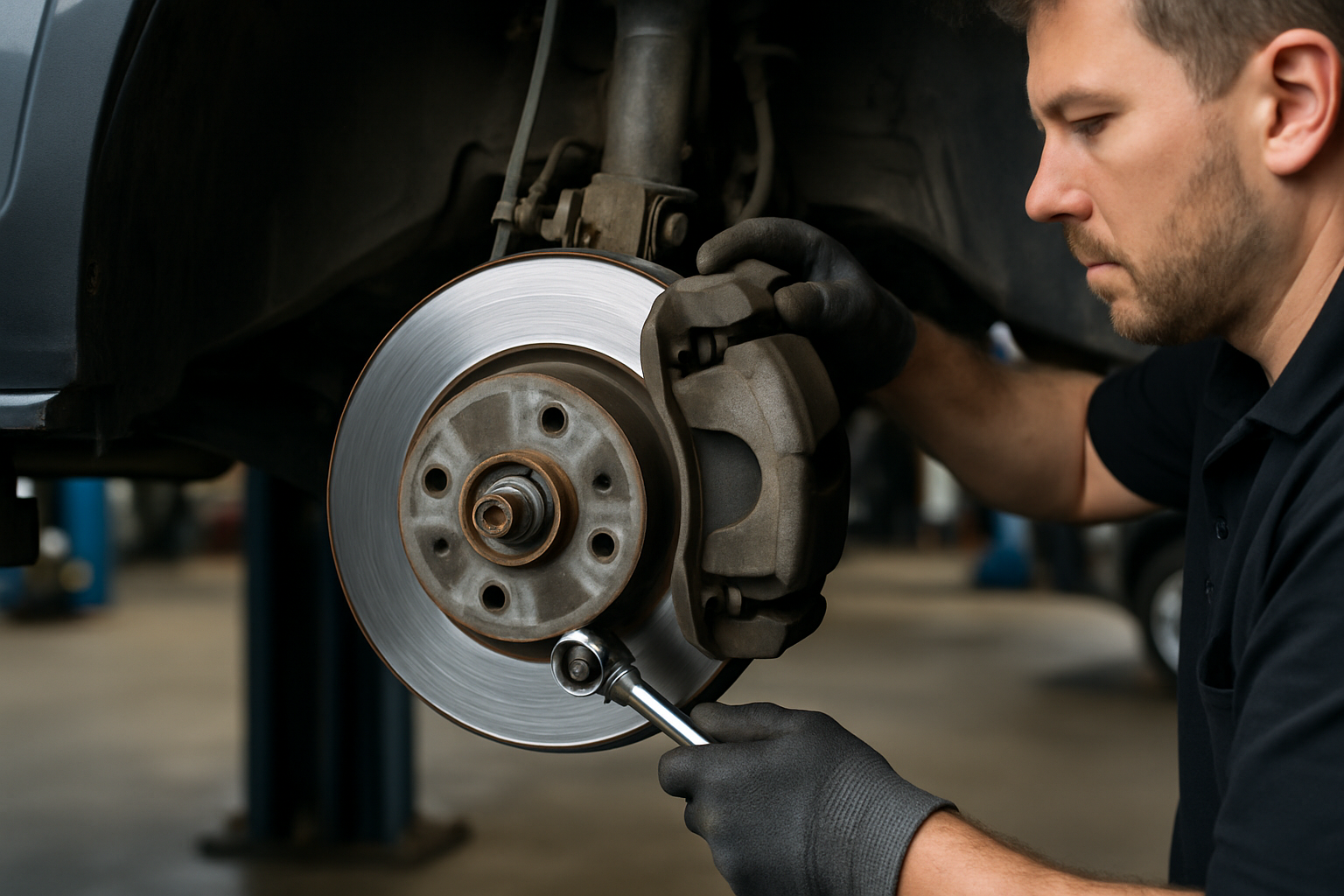
Toyota hub tolerances seldom fail dramatically; instead, they add small runout that rushed alignments never catch. A few thousandths of lateral wobble shifts camber in motion and erases expensive tread while numbers still look acceptable on paper. We measure hub-face runout directly, clean corrosion to bare metal, and index rotors to the lowest position before any alignment. That preparation keeps angles consistent once the car heats up, which is when many alignments lose their claimed accuracy.
ADAS Calibration That Must Follow Geometry Work
Lane camera and radar systems assume a specific ride height and angle, so geometry work without calibration invites nuisance warnings. After height-affecting repairs on Corolla, Camry, RAV4, or Highlander, we verify preconditions, set tire pressures to specification, and align cameras and radar with proper targets. We then road-verify lane centering and adaptive cruise behavior, because predictable steering prompts prove success better than a screen checkmark. Proper suspension service ends with electronics that behave consistently day after day.
Proof You Can See And Feel
We never rely on a single alignment snapshot, because numbers must hold when load, speed, and temperature change. Our technicians drive a repeatable loop with expansion joints, off-camber turns, and freeway lane changes, then record steering return, rebound control, and noise over specific features. If anything drifts, we correct it and retest until the behavior stays consistent in Fremont and Union City. You leave with before-and-after measurements and a route summary, not just a promise that “it feels fine.”
Why Union City Drivers Choose Fremont Foreign Auto
We are Fremont Foreign Auto in Fremont, and we fix Toyota suspension complaints for Union City with measurements you can see and stability you can feel. Our process replaces only what testing proves weak, then locks geometry so results survive real roads and real loads. If your Toyota wanders, clunks, or chews inner shoulders, the cause is measurable and the fix is repeatable. Call (510) 793-6067 today, schedule Toyota suspension diagnostics with Fremont Foreign Auto in Fremont, and drive Union City with a chassis that tracks straight and stays quiet.
Toyota suspensions stay reliable for years, yet wear still shifts alignment angles and turns a quiet chassis into a drifting, noisy one. We are Fremont Foreign Auto in Fremont, and we help Union City drivers with measurements first, targeted parts second, and documented results at the end. Our technicians treat every complaint as a system problem involving bushings, mounts, struts, bearings, links, and geometry that must agree under temperature, load, and speed. We road-test to reproduce the complaint, we measure what changed, and we correct the cause with procedures that hold on real pavement.
Camry And Corolla Strut Wear You Can Feel
Camry XV50 models from 2012 through 2017 and Corolla E170 models from 2014 through 2019 often lose rebound control long before fluid leaks appear. Drivers feel a float after freeway dips, a knock during low-speed steering, and a delayed settle that demands constant correction. We verify with bounce-decay timing, steering sweep checks for top-mount bearing roughness, and damper force evaluation that exposes weak rebound. Our repair replaces struts and mounts in matched pairs, torques bushings at ride height, and confirms body control on a defined validation route through Fremont and Union City.
RAV4 Inner Shoulder Wear That Keeps Returning
Third and fourth generation RAV4 models from 2006 through 2018 frequently chew inside shoulders when rear toe creeps with load. Many quick alignments correct the front toe, then miss rear toe compliance, so the tires resume wearing within weeks. We measure thrust angle, record rear toe at indexed heights, and watch bushing deflection while the suspension is loaded. The solution combines rear arm service when bushings collapse with a toe setting that holds under cargo and passengers, followed by a printout proving a stable contact patch.
Highlander And 4Runner Bushing Compression That Causes Wander
Unibody Highlander models from 2014 through 2019 and body-on-frame 4Runner models from 2010 to the current rely on large control-arm bushings that slowly compress. Steering then requires constant correction, especially in crosswinds or heavy traffic, because caster falls below its intended window. We inspect lower-arm rear bushings for shear cracking, verify caster loss relative to build data, and check sway-bar link play that adds secondary clatter. New bushings torqued under vehicle weight restore caster so the truck tracks straight without fighting the wheel.
Diagonal Pull That Defies Simple Alignments
A Prius XW30 from 2010 through 2015 or a Camry hybrid from overlapping years can pull right under braking, then drift left at cruise with no obvious pattern. That behavior points to unequal bushing compression and ride-height split, not a single bad toe setting that a shop can dial out. We document ride height, cross-camber, and caster split, then correct the mechanical imbalance before touching the toe. A final straight-line validation on level asphalt confirms the wheel returns to center evenly without driver input.
Rear Clunks That Are Not “Just Shocks”
Rear noise on Highlander and Sienna often comes from separated upper mounts, worn spring isolators, or corroded sway-bar links, even when shocks still hold pressure. Owners hear a hollow knock over small inputs and assume shock failure, although the real issue lies in hardware movement. We stage a low-speed route to isolate the exact bump behavior, then unload the assembly on the rack and feel each joint for play. Replacement mounts, fresh links, and correct torque eliminate the clunk, and a short settling drive seats components before final alignment.
Hubs And Bearings That Undermine Alignment Stability
Toyota hub tolerances seldom fail dramatically; instead, they add small runout that rushed alignments never catch. A few thousandths of lateral wobble shifts camber in motion and erases expensive tread while numbers still look acceptable on paper. We measure hub-face runout directly, clean corrosion to bare metal, and index rotors to the lowest position before any alignment. That preparation keeps angles consistent once the car heats up, which is when many alignments lose their claimed accuracy.
ADAS Calibration That Must Follow Geometry Work
Lane camera and radar systems assume a specific ride height and angle, so geometry work without calibration invites nuisance warnings. After height-affecting repairs on Corolla, Camry, RAV4, or Highlander, we verify preconditions, set tire pressures to specification, and align cameras and radar with proper targets. We then road-verify lane centering and adaptive cruise behavior, because predictable steering prompts prove success better than a screen checkmark. Proper suspension service ends with electronics that behave consistently day after day.
Proof You Can See And Feel
We never rely on a single alignment snapshot, because numbers must hold when load, speed, and temperature change. Our technicians drive a repeatable loop with expansion joints, off-camber turns, and freeway lane changes, then record steering return, rebound control, and noise over specific features. If anything drifts, we correct it and retest until the behavior stays consistent in Fremont and Union City. You leave with before-and-after measurements and a route summary, not just a promise that “it feels fine.”
Why Union City Drivers Choose Fremont Foreign Auto
We are Fremont Foreign Auto in Fremont, and we fix Toyota suspension complaints for Union City with measurements you can see and stability you can feel. Our process replaces only what testing proves weak, then locks geometry so results survive real roads and real loads. If your Toyota wanders, clunks, or chews inner shoulders, the cause is measurable and the fix is repeatable. Call (510) 793-6067 today, schedule Toyota suspension diagnostics with Fremont Foreign Auto in Fremont, and drive Union City with a chassis that tracks straight and stays quiet.
Union City, CA - Auto Repair Shop Fixes Common Suspension Problems on Toyotas
SYNOPSIS: Fremont Foreign Auto helps Union City Toyota drivers with suspension diagnostics, precise repairs, and road-tested results that restore stability, comfort, and tire life.
Toyota Suspensions Fixed With Proven Testing
BY: Eduardo Porta, Fremont Foreign Auto
Toyota suspensions stay reliable for years, yet wear still shifts alignment angles and turns a quiet chassis into a drifting, noisy one. We are Fremont Foreign Auto in Fremont, and we help Union City drivers with measurements first, targeted parts second, and documented results at the end. Our technicians treat every complaint as a system problem involving bushings, mounts, struts, bearings, links, and geometry that must agree under temperature, load, and speed. We road-test to reproduce the complaint, we measure what changed, and we correct the cause with procedures that hold on real pavement.
Camry And Corolla Strut Wear You Can Feel
Camry XV50 models from 2012 through 2017 and Corolla E170 models from 2014 through 2019 often lose rebound control long before fluid leaks appear. Drivers feel a float after freeway dips, a knock during low-speed steering, and a delayed settle that demands constant correction. We verify with bounce-decay timing, steering sweep checks for top-mount bearing roughness, and damper force evaluation that exposes weak rebound. Our repair replaces struts and mounts in matched pairs, torques bushings at ride height, and confirms body control on a defined validation route through Fremont and Union City.
RAV4 Inner Shoulder Wear That Keeps Returning
Third and fourth generation RAV4 models from 2006 through 2018 frequently chew inside shoulders when rear toe creeps with load. Many quick alignments correct the front toe, then miss rear toe compliance, so the tires resume wearing within weeks. We measure thrust angle, record rear toe at indexed heights, and watch bushing deflection while the suspension is loaded. The solution combines rear arm service when bushings collapse with a toe setting that holds under cargo and passengers, followed by a printout proving a stable contact patch.
Highlander And 4Runner Bushing Compression That Causes Wander
Unibody Highlander models from 2014 through 2019 and body-on-frame 4Runner models from 2010 to the current rely on large control-arm bushings that slowly compress. Steering then requires constant correction, especially in crosswinds or heavy traffic, because caster falls below its intended window. We inspect lower-arm rear bushings for shear cracking, verify caster loss relative to build data, and check sway-bar link play that adds secondary clatter. New bushings torqued under vehicle weight restore caster so the truck tracks straight without fighting the wheel.
Diagonal Pull That Defies Simple Alignments
A Prius XW30 from 2010 through 2015 or a Camry hybrid from overlapping years can pull right under braking, then drift left at cruise with no obvious pattern. That behavior points to unequal bushing compression and ride-height split, not a single bad toe setting that a shop can dial out. We document ride height, cross-camber, and caster split, then correct the mechanical imbalance before touching the toe. A final straight-line validation on level asphalt confirms the wheel returns to center evenly without driver input.
Rear Clunks That Are Not “Just Shocks”
Rear noise on Highlander and Sienna often comes from separated upper mounts, worn spring isolators, or corroded sway-bar links, even when shocks still hold pressure. Owners hear a hollow knock over small inputs and assume shock failure, although the real issue lies in hardware movement. We stage a low-speed route to isolate the exact bump behavior, then unload the assembly on the rack and feel each joint for play. Replacement mounts, fresh links, and correct torque eliminate the clunk, and a short settling drive seats components before final alignment.
Hubs And Bearings That Undermine Alignment Stability
Toyota hub tolerances seldom fail dramatically; instead, they add small runout that rushed alignments never catch. A few thousandths of lateral wobble shifts camber in motion and erases expensive tread while numbers still look acceptable on paper. We measure hub-face runout directly, clean corrosion to bare metal, and index rotors to the lowest position before any alignment. That preparation keeps angles consistent once the car heats up, which is when many alignments lose their claimed accuracy.
ADAS Calibration That Must Follow Geometry Work
Lane camera and radar systems assume a specific ride height and angle, so geometry work without calibration invites nuisance warnings. After height-affecting repairs on Corolla, Camry, RAV4, or Highlander, we verify preconditions, set tire pressures to specification, and align cameras and radar with proper targets. We then road-verify lane centering and adaptive cruise behavior, because predictable steering prompts prove success better than a screen checkmark. Proper suspension service ends with electronics that behave consistently day after day.
Proof You Can See And Feel
We never rely on a single alignment snapshot, because numbers must hold when load, speed, and temperature change. Our technicians drive a repeatable loop with expansion joints, off-camber turns, and freeway lane changes, then record steering return, rebound control, and noise over specific features. If anything drifts, we correct it and retest until the behavior stays consistent in Fremont and Union City. You leave with before-and-after measurements and a route summary, not just a promise that “it feels fine.”
Why Union City Drivers Choose Fremont Foreign Auto
We are Fremont Foreign Auto in Fremont, and we fix Toyota suspension complaints for Union City with measurements you can see and stability you can feel. Our process replaces only what testing proves weak, then locks geometry so results survive real roads and real loads. If your Toyota wanders, clunks, or chews inner shoulders, the cause is measurable and the fix is repeatable. Call (510) 793-6067 today, schedule Toyota suspension diagnostics with Fremont Foreign Auto in Fremont, and drive Union City with a chassis that tracks straight and stays quiet.