 Most Newark drivers notice something vague before something obvious—maybe a twitch in the steering or a mild clunk over uneven pavement. On BMW platforms like the F10 5-Series or F15 X5, suspension failure rarely announces itself all at once; it begins with changes in ride height equilibrium, bushing deflection, or damper calibration drift. We test these vehicles under live load conditions using spring rate simulation, damper response data logging, and caster sweep verification to locate root causes that generic shops often miss. BMW chassis systems are interconnected, and unless you verify dynamic geometry under suspension load, you’re treating symptoms, not the problem.
Thrust Arm Bushing Degradation Isn’t Cosmetic—It Compromises High-Speed Stability and Brake Feel
BMW’s signature front-end behavior—confident at high speed, responsive under braking—depends on the integrity of the front thrust arm bushings. These liquid-filled bushings, used on platforms like the E70 X5 and F30 3-Series, begin to collapse internally around 60,000–90,000 miles, even if they appear visually intact. Newark customers often describe a vague steering feel or mild braking “wobble” that only occurs on freeway ramps or during rapid deceleration. We test these bushings using lateral pry bar movement and dynamic camber shift measurement under load. When confirmed, we replace them with OE or performance poly options based on use case, then reset alignment to BMW spec using live-caster adjustment—not toe-only quick sets that mask bushing offset.
Adaptive Dampers Don’t Always Fail Electrically—Sometimes They Just Stop Adjusting Correctly
Many newer BMWs, including the F15 X5 and G30 5-Series, use electronic dampers that adjust rebound and compression on the fly via a central suspension control module. While electrical failures throw codes, calibration drift, and internal valve binding do not. Newark drivers often notice their car rides harshly, even in Comfort mode, with no warning lights or logged faults. We perform bounce response testing using accelerometers mounted at each strut and compare real-time compression curves against damper command data from the control module. If the damper’s response rate is outside factory thresholds without flagging a fault, we reinitialize the suspension adaptation values or replace the dampers as needed, ensuring post-install ride matching via scan-tool calibration routines.
Ride Height Problems in X-Drive and M-Sport Packages Begin with Sensor Fatigue, Not Springs or Struts
Ride height inconsistencies—often blamed on worn shocks or spring sag—are frequently caused by ride height sensor wear or connector oxidation. BMW's like the G05 X5 and E70 X5 with self-leveling systems develop uneven stance after 75,000 miles, especially when exposed to weather extremes. At Fremont Foreign Auto, we inspect the potentiometer sweep range and resistance consistency across the full range of suspension travel using multimeter feedback synced with live scan data. Newark customers dealing with visual lean or left-right imbalances often benefit from sensor replacement and height recalibration, not strut overhaul. We re-code final heights to chassis spec, preventing adaptive lighting and alignment issues down the road.
Clunking Noises from the Rear May Not Be Suspension—They’re Often Subframe Bushing or Diff Mount Related
Many BMW rear suspension complaints are misdiagnosed because the actual failure point isn’t a control arm or sway bar—it’s the connection between the drivetrain and chassis. Rear subframe bushings on E60, E90, and F30 platforms begin to collapse internally and allow vertical movement that causes low-speed clunks or vibration under the throttle. Similarly, rear differential bushings degrade and transmit drivetrain lash into the cabin under load. Newark drivers may describe the noise as suspension-related, but we test for rotational deflection under power and verify with chassis-mounted sensors during load simulation. When confirmed, we press in new bushings using BMW-specific fixture tools to avoid frame damage, ensuring alignment remains centered post-repair.
We Don’t Just Replace Suspension Parts—We Rebuild Chassis Behavior from the Ground Up
At Fremont Foreign Auto, located in Fremont and trusted by BMW drivers in Newark, we repair suspension systems by diagnosing platform-specific patterns, not generic wear. Whether you’re experiencing steering twitch, uneven ride height, or a rear-end clunk that nobody else can solve, our team uses load simulation, control module interrogation, and advanced measuring tools to fix the system, not just the symptom. Call (510) 793-6067 and book a diagnostic suspension session that delivers what others only promise—quiet, controlled, BMW-calibrated ride quality that holds under pressure.
Most Newark drivers notice something vague before something obvious—maybe a twitch in the steering or a mild clunk over uneven pavement. On BMW platforms like the F10 5-Series or F15 X5, suspension failure rarely announces itself all at once; it begins with changes in ride height equilibrium, bushing deflection, or damper calibration drift. We test these vehicles under live load conditions using spring rate simulation, damper response data logging, and caster sweep verification to locate root causes that generic shops often miss. BMW chassis systems are interconnected, and unless you verify dynamic geometry under suspension load, you’re treating symptoms, not the problem.
Thrust Arm Bushing Degradation Isn’t Cosmetic—It Compromises High-Speed Stability and Brake Feel
BMW’s signature front-end behavior—confident at high speed, responsive under braking—depends on the integrity of the front thrust arm bushings. These liquid-filled bushings, used on platforms like the E70 X5 and F30 3-Series, begin to collapse internally around 60,000–90,000 miles, even if they appear visually intact. Newark customers often describe a vague steering feel or mild braking “wobble” that only occurs on freeway ramps or during rapid deceleration. We test these bushings using lateral pry bar movement and dynamic camber shift measurement under load. When confirmed, we replace them with OE or performance poly options based on use case, then reset alignment to BMW spec using live-caster adjustment—not toe-only quick sets that mask bushing offset.
Adaptive Dampers Don’t Always Fail Electrically—Sometimes They Just Stop Adjusting Correctly
Many newer BMWs, including the F15 X5 and G30 5-Series, use electronic dampers that adjust rebound and compression on the fly via a central suspension control module. While electrical failures throw codes, calibration drift, and internal valve binding do not. Newark drivers often notice their car rides harshly, even in Comfort mode, with no warning lights or logged faults. We perform bounce response testing using accelerometers mounted at each strut and compare real-time compression curves against damper command data from the control module. If the damper’s response rate is outside factory thresholds without flagging a fault, we reinitialize the suspension adaptation values or replace the dampers as needed, ensuring post-install ride matching via scan-tool calibration routines.
Ride Height Problems in X-Drive and M-Sport Packages Begin with Sensor Fatigue, Not Springs or Struts
Ride height inconsistencies—often blamed on worn shocks or spring sag—are frequently caused by ride height sensor wear or connector oxidation. BMW's like the G05 X5 and E70 X5 with self-leveling systems develop uneven stance after 75,000 miles, especially when exposed to weather extremes. At Fremont Foreign Auto, we inspect the potentiometer sweep range and resistance consistency across the full range of suspension travel using multimeter feedback synced with live scan data. Newark customers dealing with visual lean or left-right imbalances often benefit from sensor replacement and height recalibration, not strut overhaul. We re-code final heights to chassis spec, preventing adaptive lighting and alignment issues down the road.
Clunking Noises from the Rear May Not Be Suspension—They’re Often Subframe Bushing or Diff Mount Related
Many BMW rear suspension complaints are misdiagnosed because the actual failure point isn’t a control arm or sway bar—it’s the connection between the drivetrain and chassis. Rear subframe bushings on E60, E90, and F30 platforms begin to collapse internally and allow vertical movement that causes low-speed clunks or vibration under the throttle. Similarly, rear differential bushings degrade and transmit drivetrain lash into the cabin under load. Newark drivers may describe the noise as suspension-related, but we test for rotational deflection under power and verify with chassis-mounted sensors during load simulation. When confirmed, we press in new bushings using BMW-specific fixture tools to avoid frame damage, ensuring alignment remains centered post-repair.
We Don’t Just Replace Suspension Parts—We Rebuild Chassis Behavior from the Ground Up
At Fremont Foreign Auto, located in Fremont and trusted by BMW drivers in Newark, we repair suspension systems by diagnosing platform-specific patterns, not generic wear. Whether you’re experiencing steering twitch, uneven ride height, or a rear-end clunk that nobody else can solve, our team uses load simulation, control module interrogation, and advanced measuring tools to fix the system, not just the symptom. Call (510) 793-6067 and book a diagnostic suspension session that delivers what others only promise—quiet, controlled, BMW-calibrated ride quality that holds under pressure.
Newark, CA - Visit Fremont Auto Repair for BMW Suspension Repair Services
SYNOPSIS: Fremont Foreign Auto, located in Fremont, CA, helps Newark BMW drivers fix complex suspension issues—from worn thrust arm bushings to adaptive damper control faults—using live-load diagnostics.
BMW Suspensions Fail One Bushing at a Time
BY: Eduardo Porta, Fremont Foreign Auto
Most Newark drivers notice something vague before something obvious—maybe a twitch in the steering or a mild clunk over uneven pavement. On BMW platforms like the F10 5-Series or F15 X5, suspension failure rarely announces itself all at once; it begins with changes in ride height equilibrium, bushing deflection, or damper calibration drift. We test these vehicles under live load conditions using spring rate simulation, damper response data logging, and caster sweep verification to locate root causes that generic shops often miss. BMW chassis systems are interconnected, and unless you verify dynamic geometry under suspension load, you’re treating symptoms, not the problem.
Thrust Arm Bushing Degradation Isn’t Cosmetic—It Compromises High-Speed Stability and Brake Feel
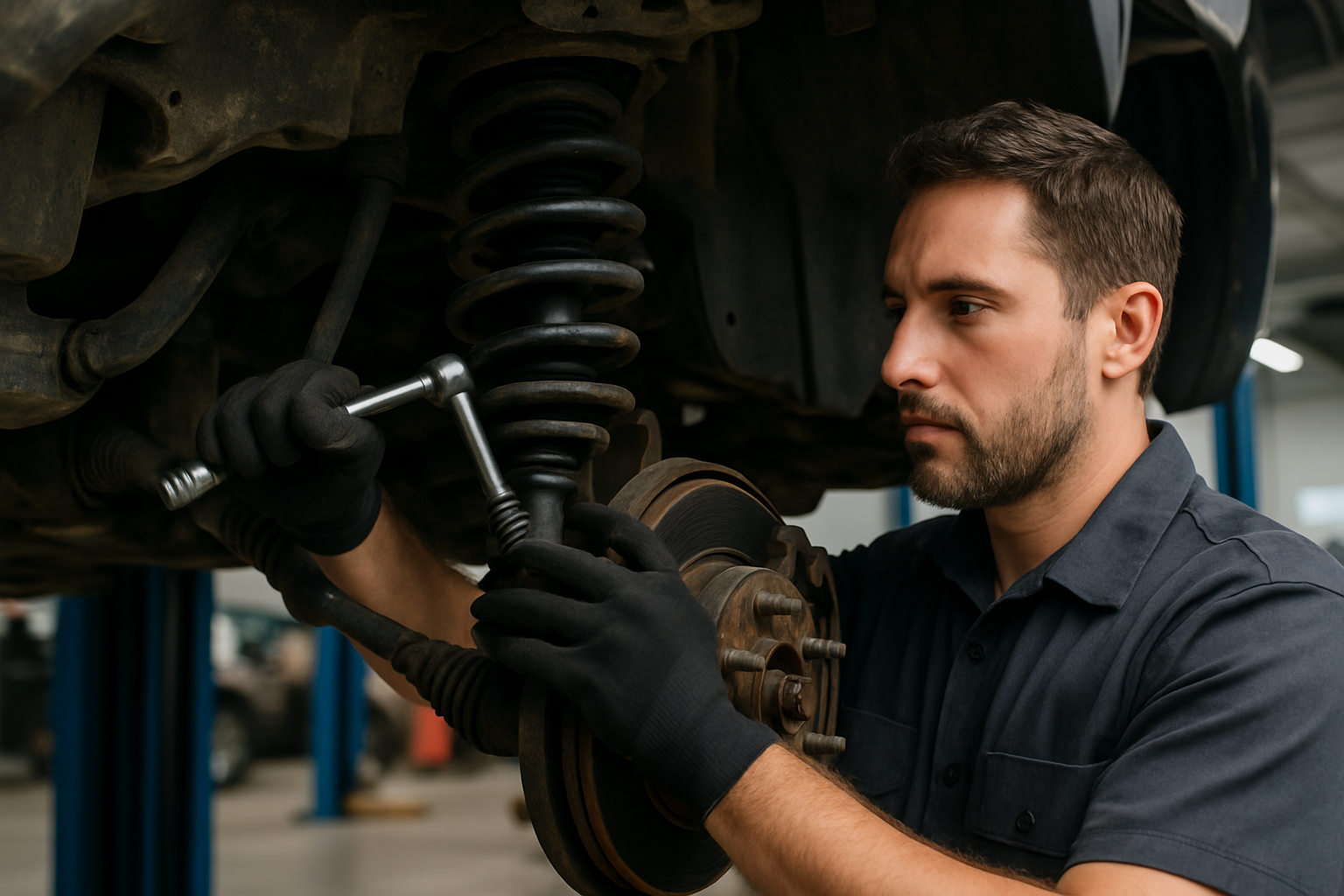
BMW’s signature front-end behavior—confident at high speed, responsive under braking—depends on the integrity of the front thrust arm bushings. These liquid-filled bushings, used on platforms like the E70 X5 and F30 3-Series, begin to collapse internally around 60,000–90,000 miles, even if they appear visually intact. Newark customers often describe a vague steering feel or mild braking “wobble” that only occurs on freeway ramps or during rapid deceleration. We test these bushings using lateral pry bar movement and dynamic camber shift measurement under load. When confirmed, we replace them with OE or performance poly options based on use case, then reset alignment to BMW spec using live-caster adjustment—not toe-only quick sets that mask bushing offset.
Adaptive Dampers Don’t Always Fail Electrically—Sometimes They Just Stop Adjusting Correctly
Many newer BMWs, including the F15 X5 and G30 5-Series, use electronic dampers that adjust rebound and compression on the fly via a central suspension control module. While electrical failures throw codes, calibration drift, and internal valve binding do not. Newark drivers often notice their car rides harshly, even in Comfort mode, with no warning lights or logged faults. We perform bounce response testing using accelerometers mounted at each strut and compare real-time compression curves against damper command data from the control module. If the damper’s response rate is outside factory thresholds without flagging a fault, we reinitialize the suspension adaptation values or replace the dampers as needed, ensuring post-install ride matching via scan-tool calibration routines.
Ride Height Problems in X-Drive and M-Sport Packages Begin with Sensor Fatigue, Not Springs or Struts
Ride height inconsistencies—often blamed on worn shocks or spring sag—are frequently caused by ride height sensor wear or connector oxidation. BMW's like the G05 X5 and E70 X5 with self-leveling systems develop uneven stance after 75,000 miles, especially when exposed to weather extremes. At Fremont Foreign Auto, we inspect the potentiometer sweep range and resistance consistency across the full range of suspension travel using multimeter feedback synced with live scan data. Newark customers dealing with visual lean or left-right imbalances often benefit from sensor replacement and height recalibration, not strut overhaul. We re-code final heights to chassis spec, preventing adaptive lighting and alignment issues down the road.
Clunking Noises from the Rear May Not Be Suspension—They’re Often Subframe Bushing or Diff Mount Related
Many BMW rear suspension complaints are misdiagnosed because the actual failure point isn’t a control arm or sway bar—it’s the connection between the drivetrain and chassis. Rear subframe bushings on E60, E90, and F30 platforms begin to collapse internally and allow vertical movement that causes low-speed clunks or vibration under the throttle. Similarly, rear differential bushings degrade and transmit drivetrain lash into the cabin under load. Newark drivers may describe the noise as suspension-related, but we test for rotational deflection under power and verify with chassis-mounted sensors during load simulation. When confirmed, we press in new bushings using BMW-specific fixture tools to avoid frame damage, ensuring alignment remains centered post-repair.
We Don’t Just Replace Suspension Parts—We Rebuild Chassis Behavior from the Ground Up
At Fremont Foreign Auto, located in Fremont and trusted by BMW drivers in Newark, we repair suspension systems by diagnosing platform-specific patterns, not generic wear. Whether you’re experiencing steering twitch, uneven ride height, or a rear-end clunk that nobody else can solve, our team uses load simulation, control module interrogation, and advanced measuring tools to fix the system, not just the symptom. Call (510) 793-6067 and book a diagnostic suspension session that delivers what others only promise—quiet, controlled, BMW-calibrated ride quality that holds under pressure.