 If you suffer from migraines, you’ve probably searched high and low for the cause. Maybe you’ve cut out certain foods, tracked your stress levels, or tried different medications. But there’s one area most people don’t think to check, your jaw.
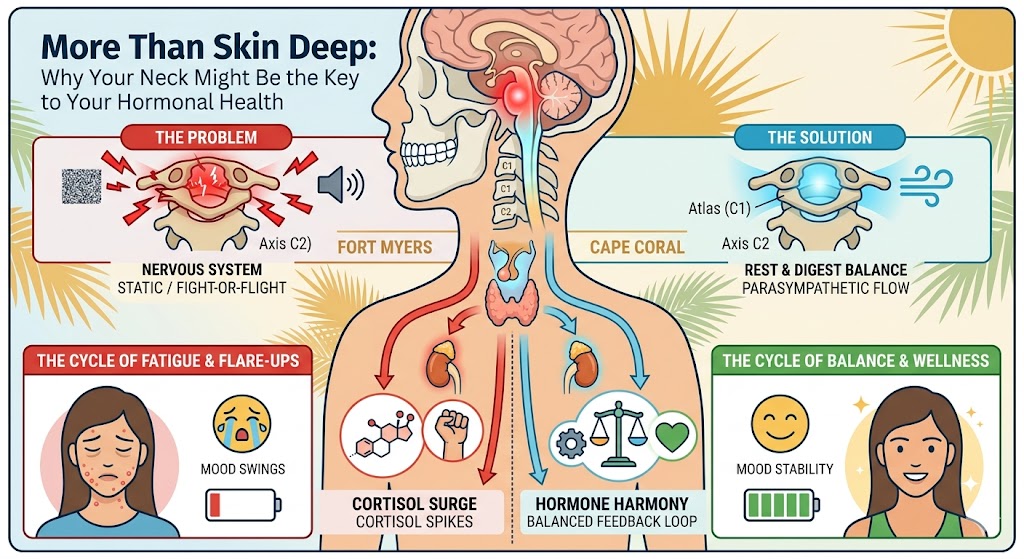
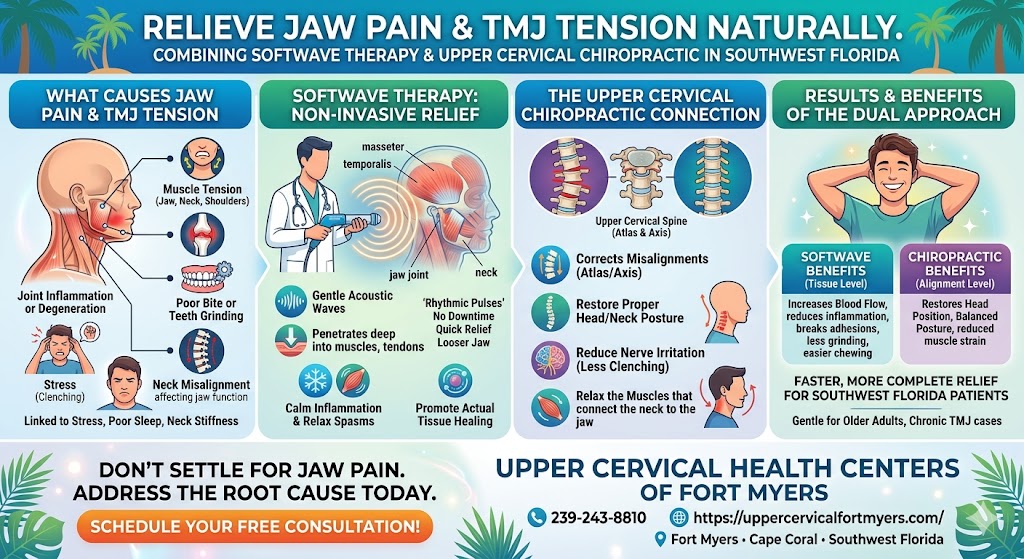
More specifically, the connection between your temporomandibular joint (TMJ) and the upper cervical spine. When either of these areas is out of alignment, it can lead to tension, inflammation, and nerve irritation that triggers headaches and migraines.
Let’s break down how it all works.
If you suffer from migraines, you’ve probably searched high and low for the cause. Maybe you’ve cut out certain foods, tracked your stress levels, or tried different medications. But there’s one area most people don’t think to check, your jaw.
More specifically, the connection between your temporomandibular joint (TMJ) and the upper cervical spine. When either of these areas is out of alignment, it can lead to tension, inflammation, and nerve irritation that triggers headaches and migraines.
Let’s break down how it all works.
What Is the TMJ?
Your TMJ is the hinge-like joint that connects your jaw to your skull. It helps you speak, chew, yawn, and move your mouth in all directions. But it’s also one of the most complex and heavily used joints in your body. When the TMJ becomes misaligned or overworked, it can lead to:- Jaw clicking or popping
- Pain around the ears or temples
- Stiffness in the jaw or face
- Headaches or pressure behind the eyes
- Difficulty chewing or opening your mouth fully