 So many of my patients in Fort Myers and Cape Coral sit in front of me and say, “I feel anxious, but I also feel like something is off in my body.” Their hearts race, their chests feel tight, they cannot catch a deep breath, and yet their tests come back “normal.” What often gets missed is the upper neck. Neck misalignment, especially in the upper cervical spine, can irritate the vagus nerve and trigger dysautonomia, which can look and feel exactly like anxiety.
How Your Upper Neck Influences Your “Anxiety”
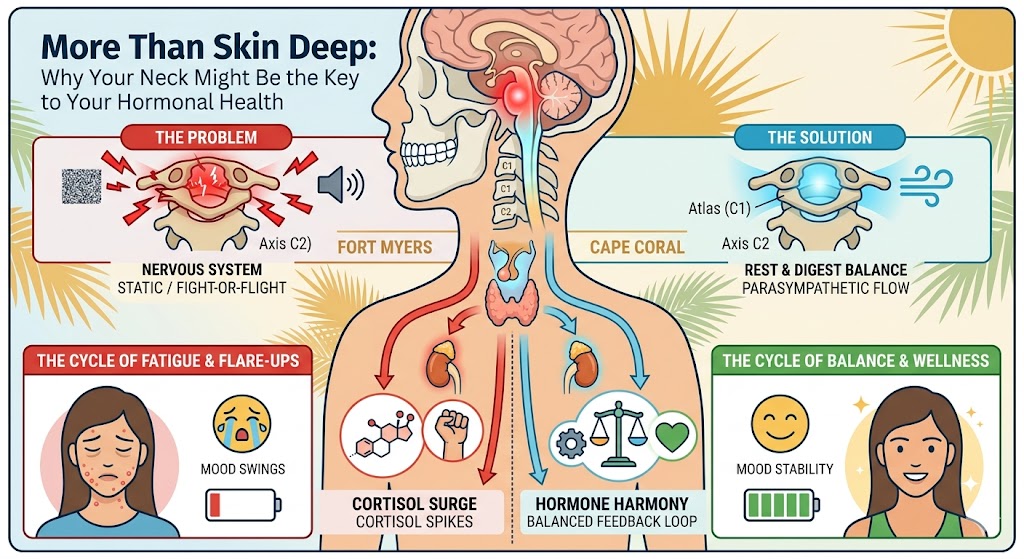
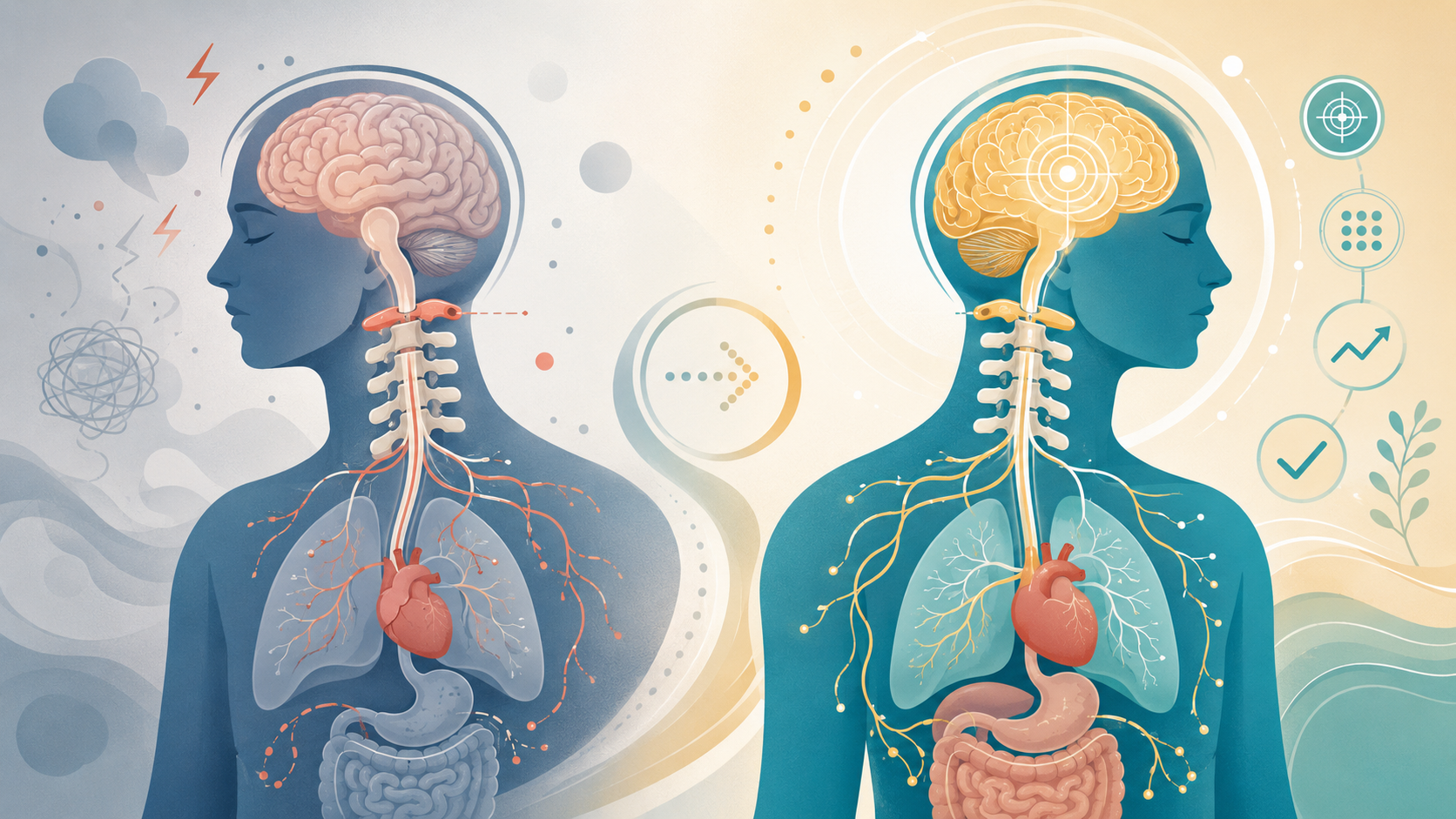
At the very top of your spine are the atlas (C1) and axis (C2), the first two vertebrae in your neck. They surround the brainstem, which is the main control center for your automatic functions like heart rate, breathing, and blood pressure. When these bones are in proper alignment, your nervous system can regulate stress and calm responses more easily. When the atlas or axis shifts out of position, even slightly, it can create mechanical stress around the brainstem. This can confuse the signals that tell your body when it is safe to relax. You may feel:- A racing or pounding heartbeat
- Tightness in the throat or chest
- A sense of internal “vibration” or restlessness
- Lightheadedness or dizziness
- Difficulty calming your thoughts, especially at night
The Vagus Nerve, Dysautonomia, and Neck Alignment
The vagus nerve is one of your body’s main “brake pedals.” It helps slow your heart rate, support digestion, regulate inflammation, and bring you back into a calm state after stress. The vagus nerve starts in the brainstem and travels down through the neck, chest, and abdomen. If the atlas is misaligned, it can place stress on the area where the vagus nerve exits the skull and passes through the upper cervical region. Over time, this can reduce vagal tone, meaning your “brake pedal” is not working as well as it should. This is where dysautonomia can appear, with symptoms such as:- Fluctuating heart rate and blood pressure
- Feeling faint, especially when standing up
- Digestive upset without clear cause
- Temperature sensitivity and sweating changes
- Surges of panic‑like sensations that seem to come from nowhere
Why Traditional Anxiety Approaches Sometimes Fall Short
Therapy, lifestyle changes, and even medications can be very helpful for true anxiety disorders. I regularly encourage my patients to use those tools when appropriate. However, if the root driver of your symptoms is neurological stress from the neck, emotional strategies alone may not fully resolve what you feel in your body. You might notice temporary relief, but the racing heart, chest tightness, or dizziness keep coming back. That is why it is so important to ask whether there could be a physical trigger, like upper cervical misalignment, feeding into your anxiety picture.How Upper Cervical Chiropractic Care Can Help
As an upper cervical chiropractor in Fort Myers, my focus is on carefully evaluating the alignment of your atlas and axis and how they are affecting your nervous system. Using precise imaging and gentle analysis, I look for subtle shifts that might be irritating the brainstem and vagus nerve. If we find a problem, I use very specific, low‑force adjustments to correct the alignment. There is no twisting or forceful cracking. The goal is to restore balance in the upper neck so your nervous system can come out of constant fight‑or‑flight mode. Over time, many of my patients report:- Fewer sudden surges of panic or dread
- More stable heart rate and breathing
- Better sleep and easier relaxation
- Less neck tension, jaw tightness, and headaches