 The Art Deco era, running roughly from 1920 through 1935, captured a rare moment when craftsmanship, materials, and design intent met at full strength. Judy's Jewelry, located in Fort Myers and serving Bonita Springs collectors, sees these rings come through often, and each one reminds us why the era still pulls collectors back. Hand fabrication remained the standard, platinum was widely available before wartime restrictions reshaped the industry, and gem cutters routinely shaped stones to fit individual designs. That convergence stopped happening in mainstream production after World War II.
Calibré Cuts And The Discipline Of Geometry
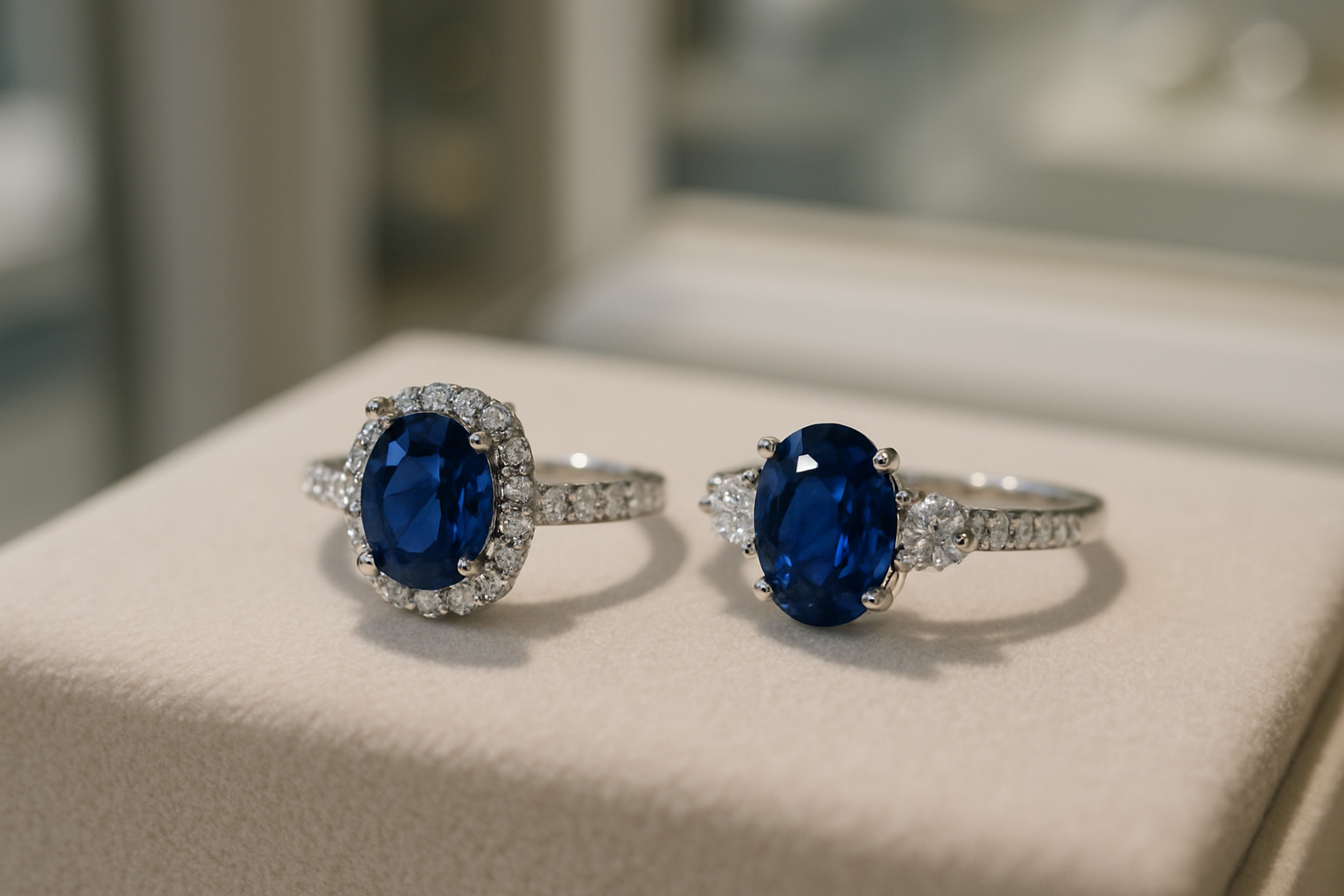
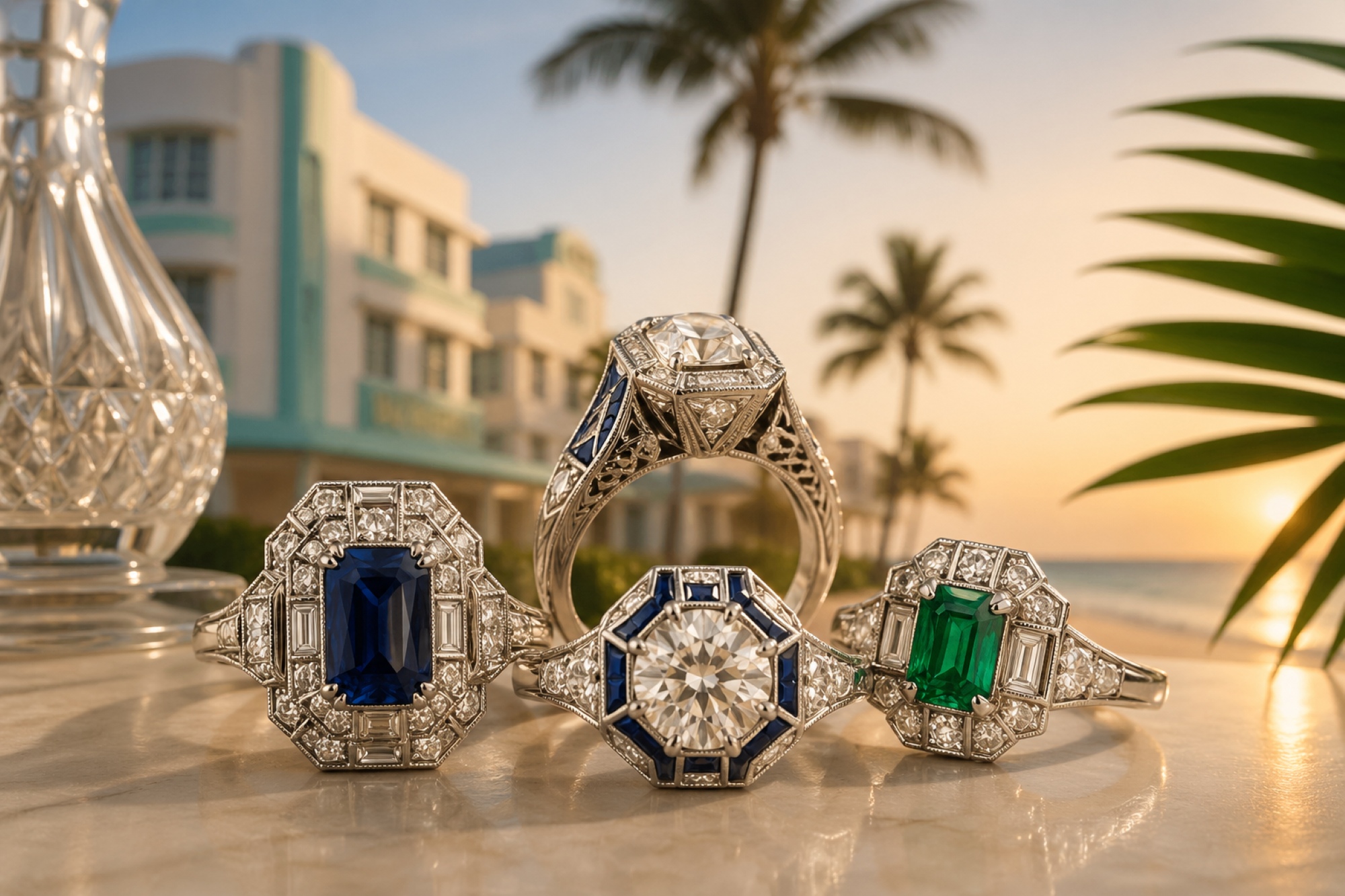
Deco rings used calibré-cut sapphires, emeralds, and rubies that were shaped specifically to fit the architecture of each setting. French-cut and step-cut diamonds followed the same logic, with cutting choices serving the design rather than maximizing carat weight. This labor-intensive practice largely ended after World War II, since custom-cutting stones for individual designs became too costly for most jewelers to sustain. Modern reproductions almost always use stock-shape stones, which changes how a ring reads to a trained eye instantly.
Platinum Reached Its Manufacturing Peak
Platinum allowed thin, strong frameworks that gold simply couldn't match at similar dimensions, opening the door to knife-edge shanks, pierced galleries, and lacework patterns that held diamonds securely while looking weightless. The metal became restricted as a strategic material during World War II under the U.S. War Production Board, which is why white gold appears throughout late-Deco American pieces from that period. Modern platinum work exists, though the labor cost of period-style fabrication has pushed mainstream production toward casting. Casting and fabrication produce visibly different results when you know what to look for.
White Gold Filled A Real Gap
White gold was patented in 1915 in the United States and gained traction as a platinum alternative throughout the 1920s and beyond. Many genuine Deco rings, particularly American examples from the late 1930s and early 1940s, use white gold rather than platinum. We separate them by weight, by hallmarks, and by how each metal ages over time, since white gold typically requires rhodium plating that wears across decades, while platinum keeps its color naturally. Both metals deserve respect, though they tell different stories about when and where a piece was made.
Hand Techniques The Trained Eye Reads
Hand-applied milgrain beading shows distinct, crisp beads under magnification, while cast reproductions show softer, rounded versions of the same pattern. Pierced filigree functions as a structure rather than decoration, and the tool marks reveal how each section came together at the bench. These visual signatures help separate authentic period rings from later reproductions, including the revival-era Deco-style pieces that appeared from the 1980s onward and continue today. Reading these marks takes practice, and we welcome the chance to walk you through a piece in person.
Three Things Deco Collectors Already Know
Synthetic rubies and sapphires made by the Verneuil process, patented in 1902, were used in genuine period Deco pieces as legitimate materials, so a Deco ring with a synthetic stone isn't automatically a reproduction. Converted pieces circulate widely, where original stones get reset into newer mountings or earlier stones appear in Deco-era settings. Signed work from houses like Cartier, Van Cleef & Arpels, Oscar Heyman, and Raymond Yard carries significant attribution premiums for collectors who track maker provenance.
Come See A Hundred Years Of Survival
If you'd like to examine a Deco ring you own or one you're considering, dial Judy's Jewelry at (239) 481-9600 and stop into our Fort Myers shop. We'll show you the milgrain, the gallery, and the marks that tell each ring's full story.
The Art Deco era, running roughly from 1920 through 1935, captured a rare moment when craftsmanship, materials, and design intent met at full strength. Judy's Jewelry, located in Fort Myers and serving Bonita Springs collectors, sees these rings come through often, and each one reminds us why the era still pulls collectors back. Hand fabrication remained the standard, platinum was widely available before wartime restrictions reshaped the industry, and gem cutters routinely shaped stones to fit individual designs. That convergence stopped happening in mainstream production after World War II.
Calibré Cuts And The Discipline Of Geometry
Deco rings used calibré-cut sapphires, emeralds, and rubies that were shaped specifically to fit the architecture of each setting. French-cut and step-cut diamonds followed the same logic, with cutting choices serving the design rather than maximizing carat weight. This labor-intensive practice largely ended after World War II, since custom-cutting stones for individual designs became too costly for most jewelers to sustain. Modern reproductions almost always use stock-shape stones, which changes how a ring reads to a trained eye instantly.
Platinum Reached Its Manufacturing Peak
Platinum allowed thin, strong frameworks that gold simply couldn't match at similar dimensions, opening the door to knife-edge shanks, pierced galleries, and lacework patterns that held diamonds securely while looking weightless. The metal became restricted as a strategic material during World War II under the U.S. War Production Board, which is why white gold appears throughout late-Deco American pieces from that period. Modern platinum work exists, though the labor cost of period-style fabrication has pushed mainstream production toward casting. Casting and fabrication produce visibly different results when you know what to look for.
White Gold Filled A Real Gap
White gold was patented in 1915 in the United States and gained traction as a platinum alternative throughout the 1920s and beyond. Many genuine Deco rings, particularly American examples from the late 1930s and early 1940s, use white gold rather than platinum. We separate them by weight, by hallmarks, and by how each metal ages over time, since white gold typically requires rhodium plating that wears across decades, while platinum keeps its color naturally. Both metals deserve respect, though they tell different stories about when and where a piece was made.
Hand Techniques The Trained Eye Reads
Hand-applied milgrain beading shows distinct, crisp beads under magnification, while cast reproductions show softer, rounded versions of the same pattern. Pierced filigree functions as a structure rather than decoration, and the tool marks reveal how each section came together at the bench. These visual signatures help separate authentic period rings from later reproductions, including the revival-era Deco-style pieces that appeared from the 1980s onward and continue today. Reading these marks takes practice, and we welcome the chance to walk you through a piece in person.
Three Things Deco Collectors Already Know
Synthetic rubies and sapphires made by the Verneuil process, patented in 1902, were used in genuine period Deco pieces as legitimate materials, so a Deco ring with a synthetic stone isn't automatically a reproduction. Converted pieces circulate widely, where original stones get reset into newer mountings or earlier stones appear in Deco-era settings. Signed work from houses like Cartier, Van Cleef & Arpels, Oscar Heyman, and Raymond Yard carries significant attribution premiums for collectors who track maker provenance.
Come See A Hundred Years Of Survival
If you'd like to examine a Deco ring you own or one you're considering, dial Judy's Jewelry at (239) 481-9600 and stop into our Fort Myers shop. We'll show you the milgrain, the gallery, and the marks that tell each ring's full story.
Bonita Springs, FL - What Makes Art Deco Rings So Popular with Collectors Today?
SYNOPSIS: Judy's Jewelry, located in Fort Myers and serving Bonita Springs collectors, examines why Art Deco rings from roughly 1920 through 1935 hold their grip on serious collectors.
Collectors of Art Deco Rings Near Bonita Springs, FL
BY: Sal Lanzieri, Judy's Jewelry
The Art Deco era, running roughly from 1920 through 1935, captured a rare moment when craftsmanship, materials, and design intent met at full strength. Judy's Jewelry, located in Fort Myers and serving Bonita Springs collectors, sees these rings come through often, and each one reminds us why the era still pulls collectors back. Hand fabrication remained the standard, platinum was widely available before wartime restrictions reshaped the industry, and gem cutters routinely shaped stones to fit individual designs. That convergence stopped happening in mainstream production after World War II.
Calibré Cuts And The Discipline Of Geometry
Deco rings used calibré-cut sapphires, emeralds, and rubies that were shaped specifically to fit the architecture of each setting. French-cut and step-cut diamonds followed the same logic, with cutting choices serving the design rather than maximizing carat weight. This labor-intensive practice largely ended after World War II, since custom-cutting stones for individual designs became too costly for most jewelers to sustain. Modern reproductions almost always use stock-shape stones, which changes how a ring reads to a trained eye instantly.
Platinum Reached Its Manufacturing Peak
Platinum allowed thin, strong frameworks that gold simply couldn't match at similar dimensions, opening the door to knife-edge shanks, pierced galleries, and lacework patterns that held diamonds securely while looking weightless. The metal became restricted as a strategic material during World War II under the U.S. War Production Board, which is why white gold appears throughout late-Deco American pieces from that period. Modern platinum work exists, though the labor cost of period-style fabrication has pushed mainstream production toward casting. Casting and fabrication produce visibly different results when you know what to look for.
White Gold Filled A Real Gap
White gold was patented in 1915 in the United States and gained traction as a platinum alternative throughout the 1920s and beyond. Many genuine Deco rings, particularly American examples from the late 1930s and early 1940s, use white gold rather than platinum. We separate them by weight, by hallmarks, and by how each metal ages over time, since white gold typically requires rhodium plating that wears across decades, while platinum keeps its color naturally. Both metals deserve respect, though they tell different stories about when and where a piece was made.
Hand Techniques The Trained Eye Reads
Hand-applied milgrain beading shows distinct, crisp beads under magnification, while cast reproductions show softer, rounded versions of the same pattern. Pierced filigree functions as a structure rather than decoration, and the tool marks reveal how each section came together at the bench. These visual signatures help separate authentic period rings from later reproductions, including the revival-era Deco-style pieces that appeared from the 1980s onward and continue today. Reading these marks takes practice, and we welcome the chance to walk you through a piece in person.
Three Things Deco Collectors Already Know
Synthetic rubies and sapphires made by the Verneuil process, patented in 1902, were used in genuine period Deco pieces as legitimate materials, so a Deco ring with a synthetic stone isn't automatically a reproduction. Converted pieces circulate widely, where original stones get reset into newer mountings or earlier stones appear in Deco-era settings. Signed work from houses like Cartier, Van Cleef & Arpels, Oscar Heyman, and Raymond Yard carries significant attribution premiums for collectors who track maker provenance.
Come See A Hundred Years Of Survival
If you'd like to examine a Deco ring you own or one you're considering, dial Judy's Jewelry at (239) 481-9600 and stop into our Fort Myers shop. We'll show you the milgrain, the gallery, and the marks that tell each ring's full story.