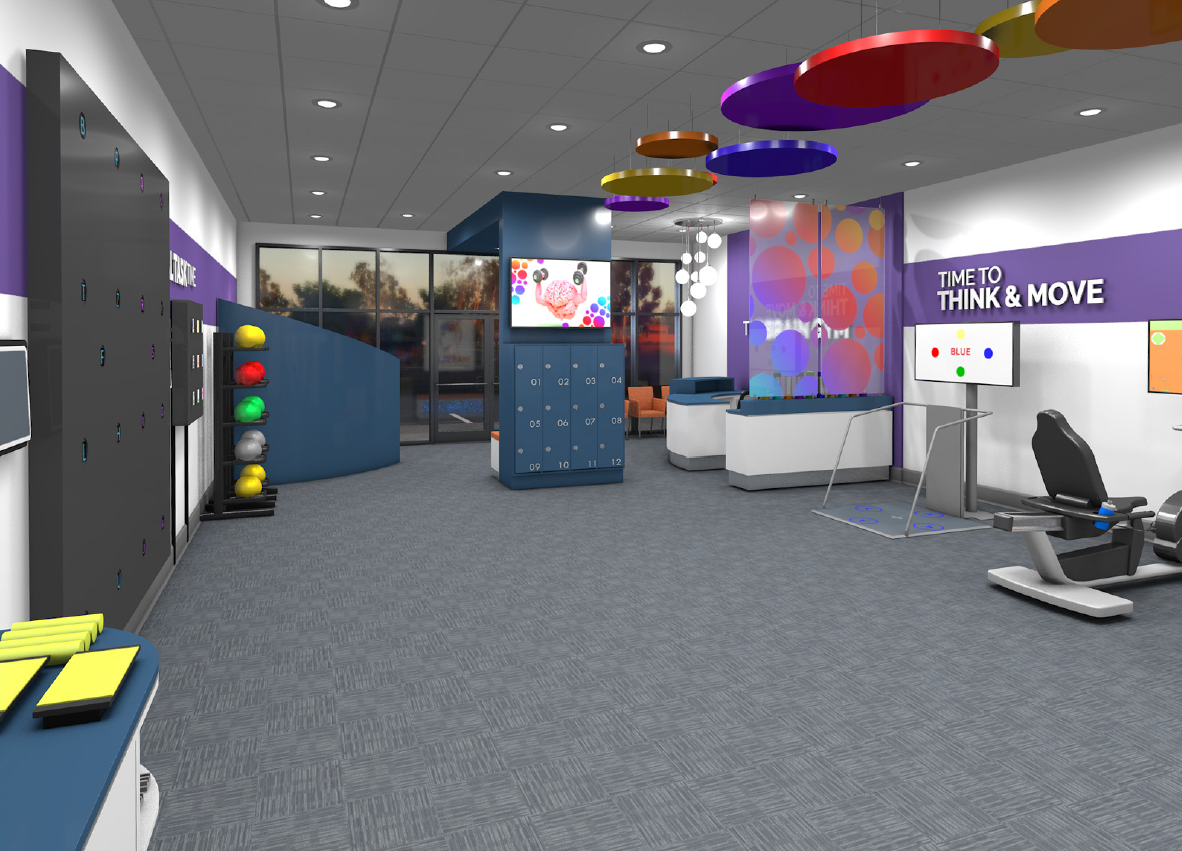
 At Marbles Brain Body Fitness of Fishers, IN, we focus on one clear idea. Your brain grows stronger when you move with purpose and face new challenges. Aging adults often think exercise is only about muscles or endurance. The truth is far bigger. Movement supports cognitive health, memory, and daily confidence.
Below are ten exercises we use or recommend. Each one supports cognition in a different way. Each one helps strengthen reaction time, attention, and the memory systems aging adults count on every day.
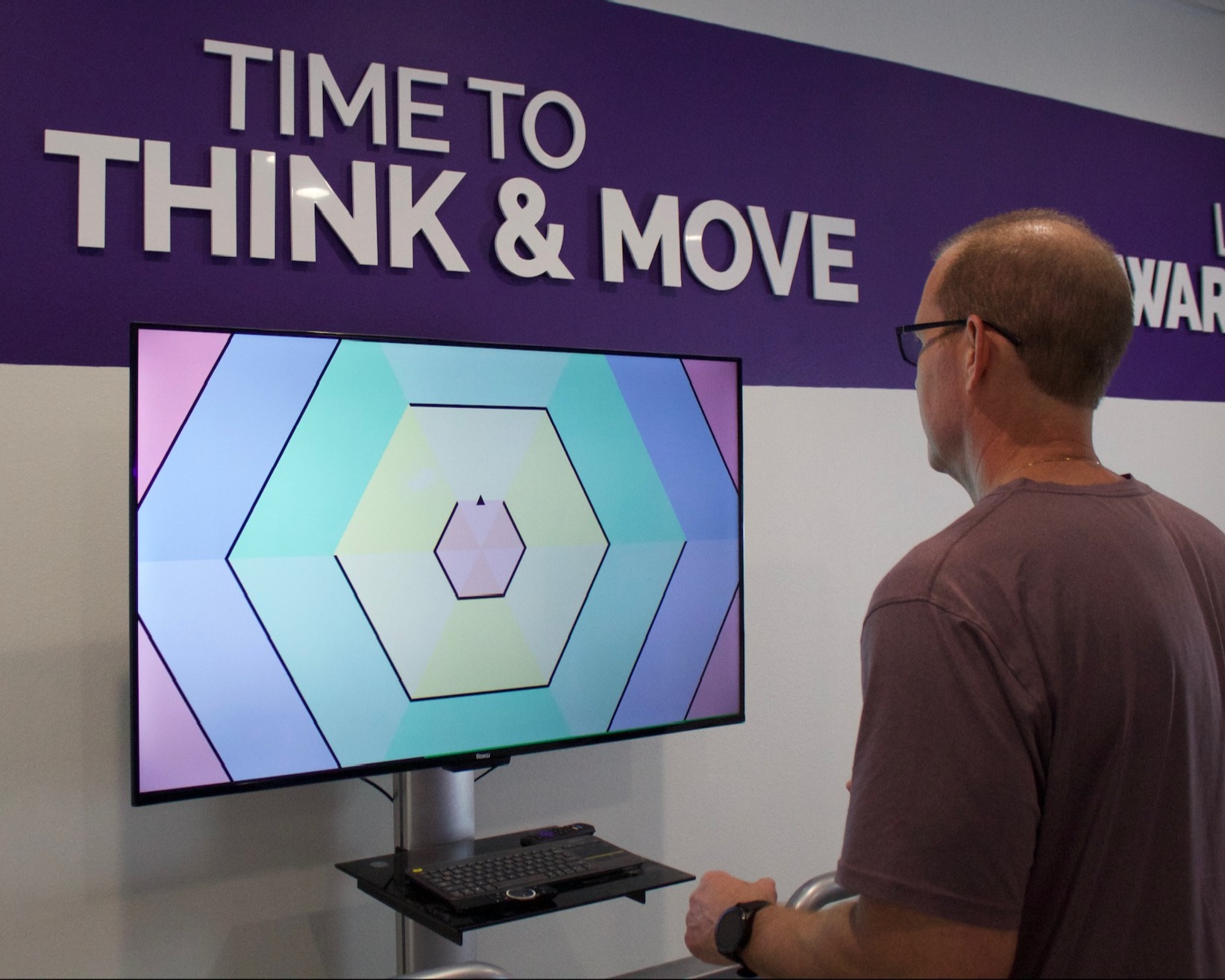
1. Step-and-Respond Drills
This exercise pairs simple footwork with quick reactions to changing cues. You step in different directions while responding to colors, shapes, or symbols that shift on a screen. The novelty keeps your brain active. It improves processing speed and decision-making.
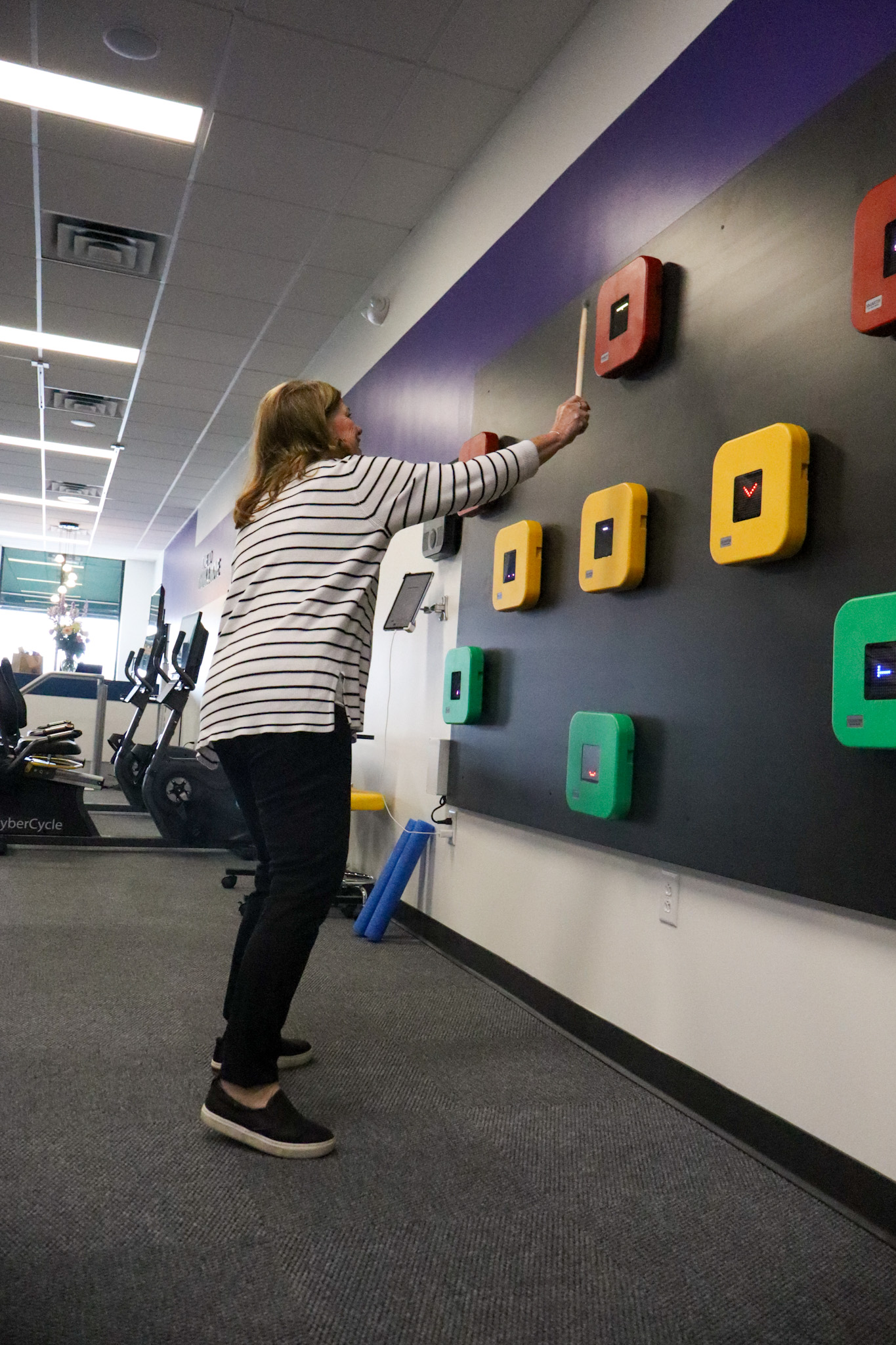
2. Lighted Target Reaches
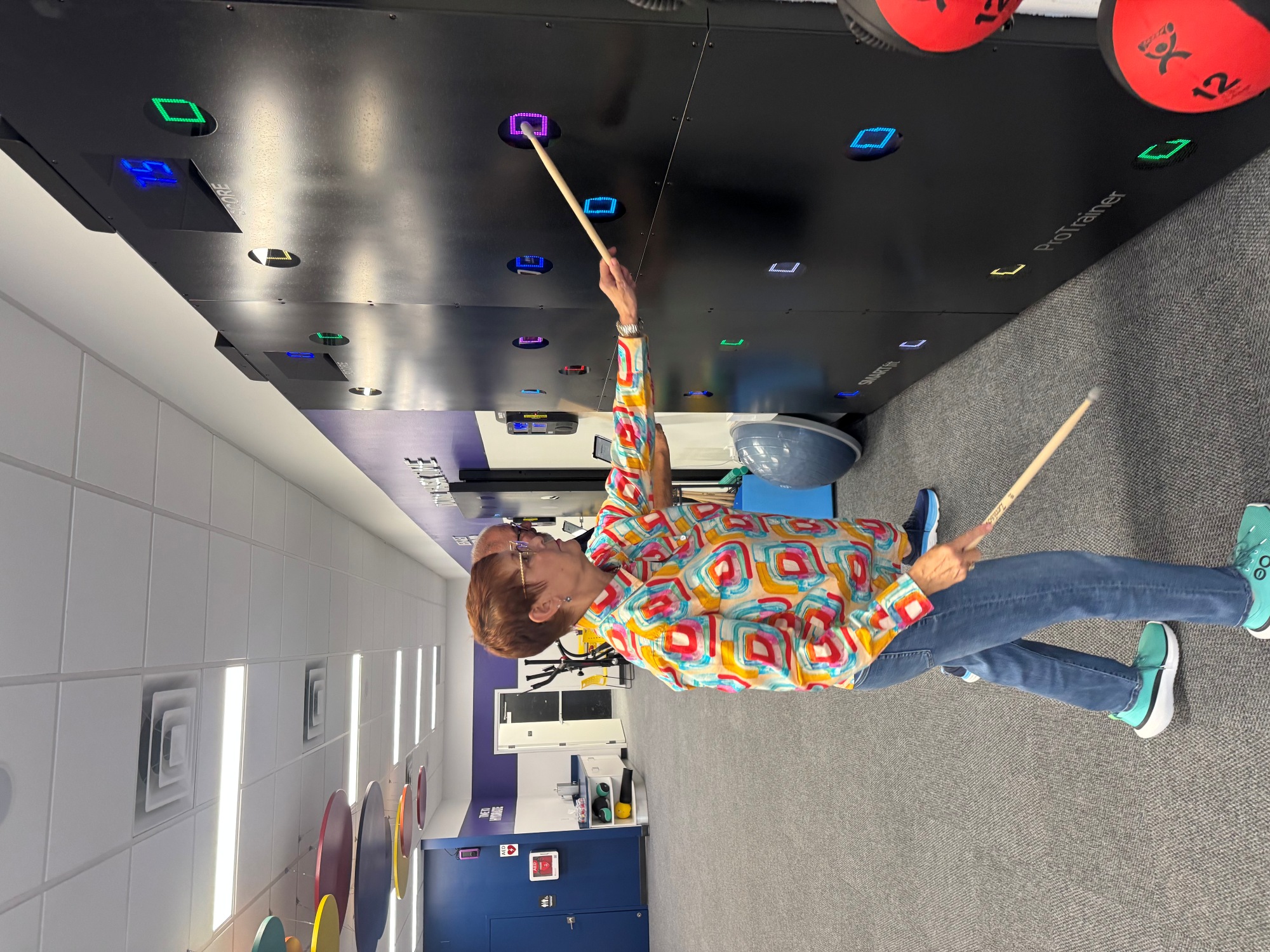
Members reach for targets that light up in unpredictable patterns. This builds coordination and improves reaction time. Your brain must stay alert and adjust to new information every few seconds. That kind of challenge supports neuroplasticity.
3. Balance ShiftsWithFocus Tasks
Standing on a stable surface, you shift your weight while naming items in a category or recalling quick details from earlier in the session. The mix of movement and mental challenge builds cognitive reserve and strengthens attention.
4. Direction-Change Walking
Walking becomes more engaging when the pattern changes without warning. A trainer may call out new directions or speeds. You move. You adjust. Your brain updates its plan in real time. This helps with spatial awareness and memory.
5. Reaction Circuits
Members rotate through short stations that ask for fast responses to visual or sound cues. Because each station presents something new, the brain stays engaged. This helps improve overall cognitive fitness.
6. Timed Movement Patterns
These patterns ask you to move in a set rhythm that keeps shifting. The timing changes. The steps adjust. You have to stay present and alert. This strengthens working memory.
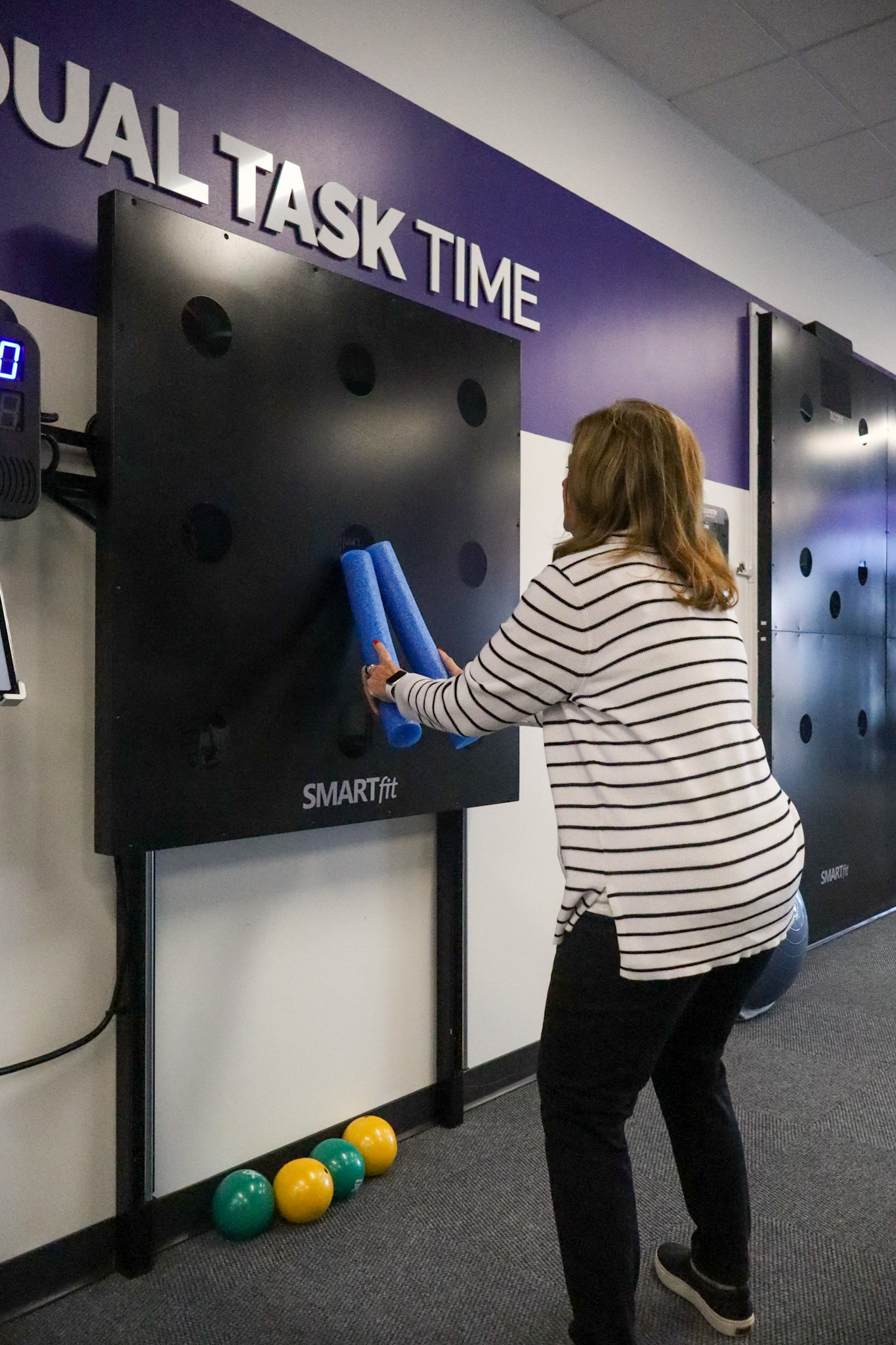
7. Dual-Task Movements With Novel Challenges
Dual-task work never relies on familiar puzzles. Instead, you might march in place while responding to unexpected symbols or pattern changes. The novelty matters. That is what supports long-term cognitive health.
8. Reach-and-Recover Balance Work
You reach forward, sideways, or diagonally, then return to steady footing. These movements support physical stability while asking your brain to plan and adjust. The combination helps reduce fall risk and sharpens spatial memory.
9. Visual Tracking With Movement
Members follow moving visuals while performing small, controlled steps. This strengthens eye-hand coordination and supports attention. It also helps with the kind of focus needed for daily tasks like reading signs or navigating busy spaces.
10. Mild CardioWithCognitive Cues
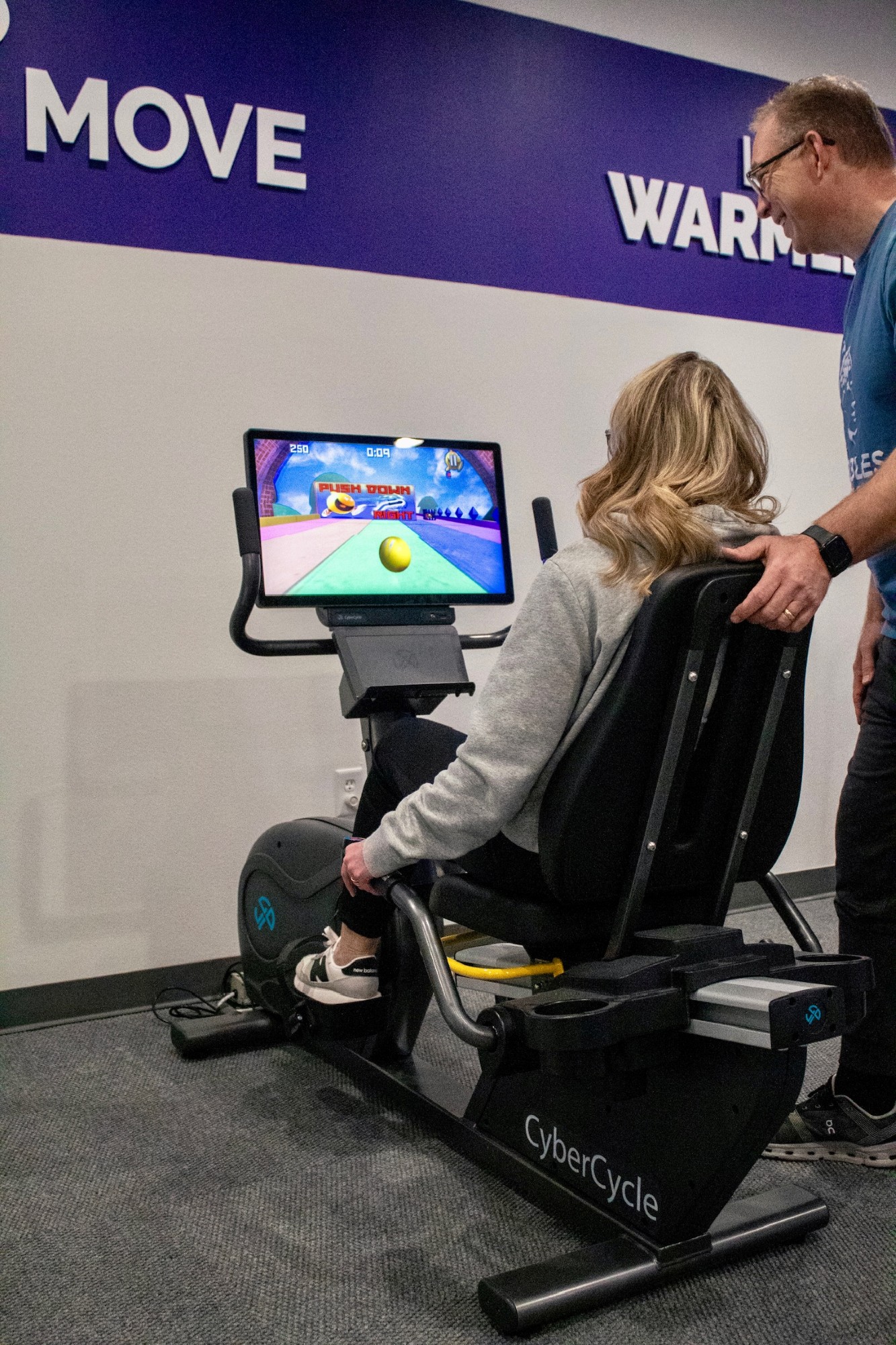
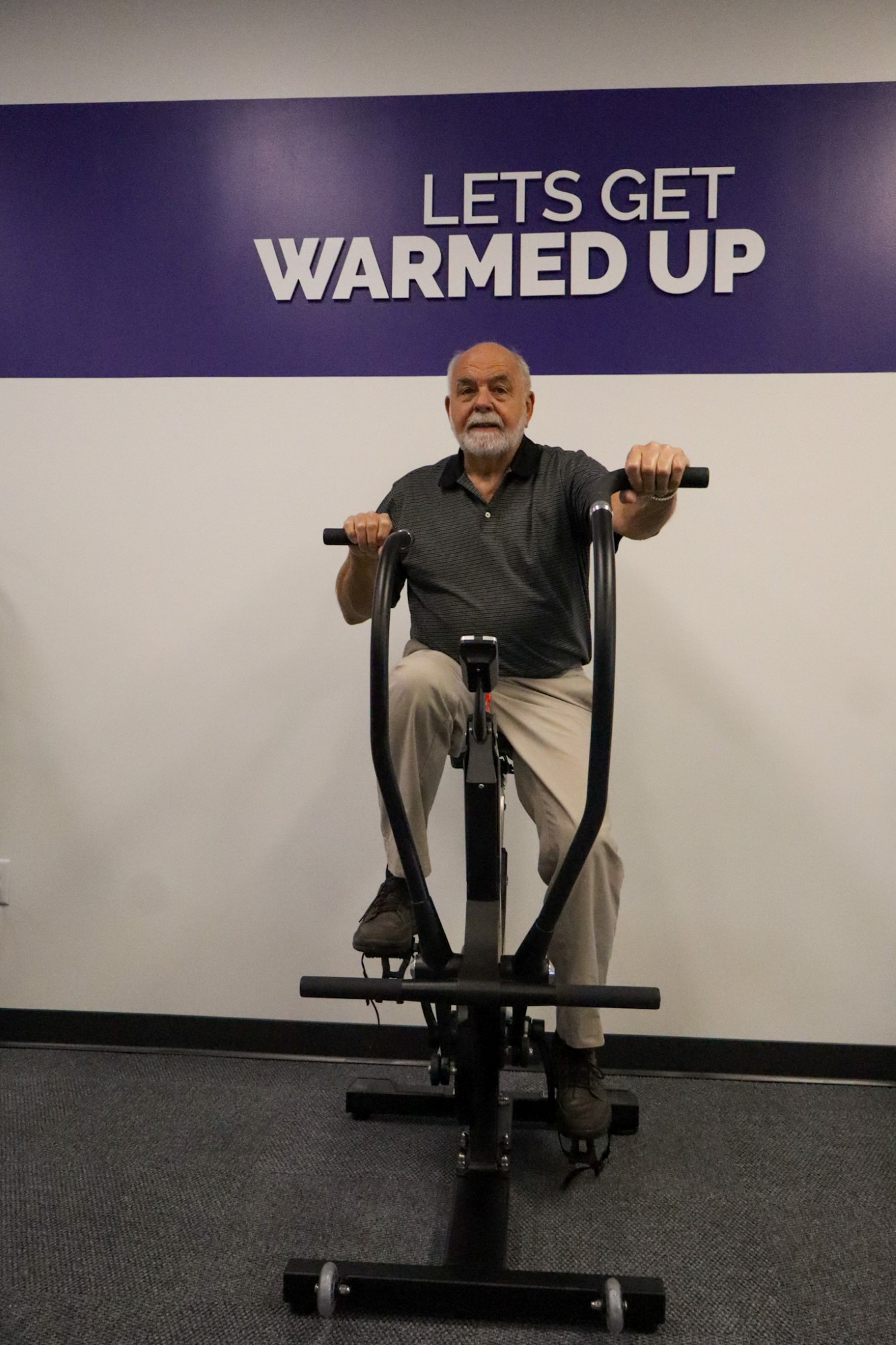
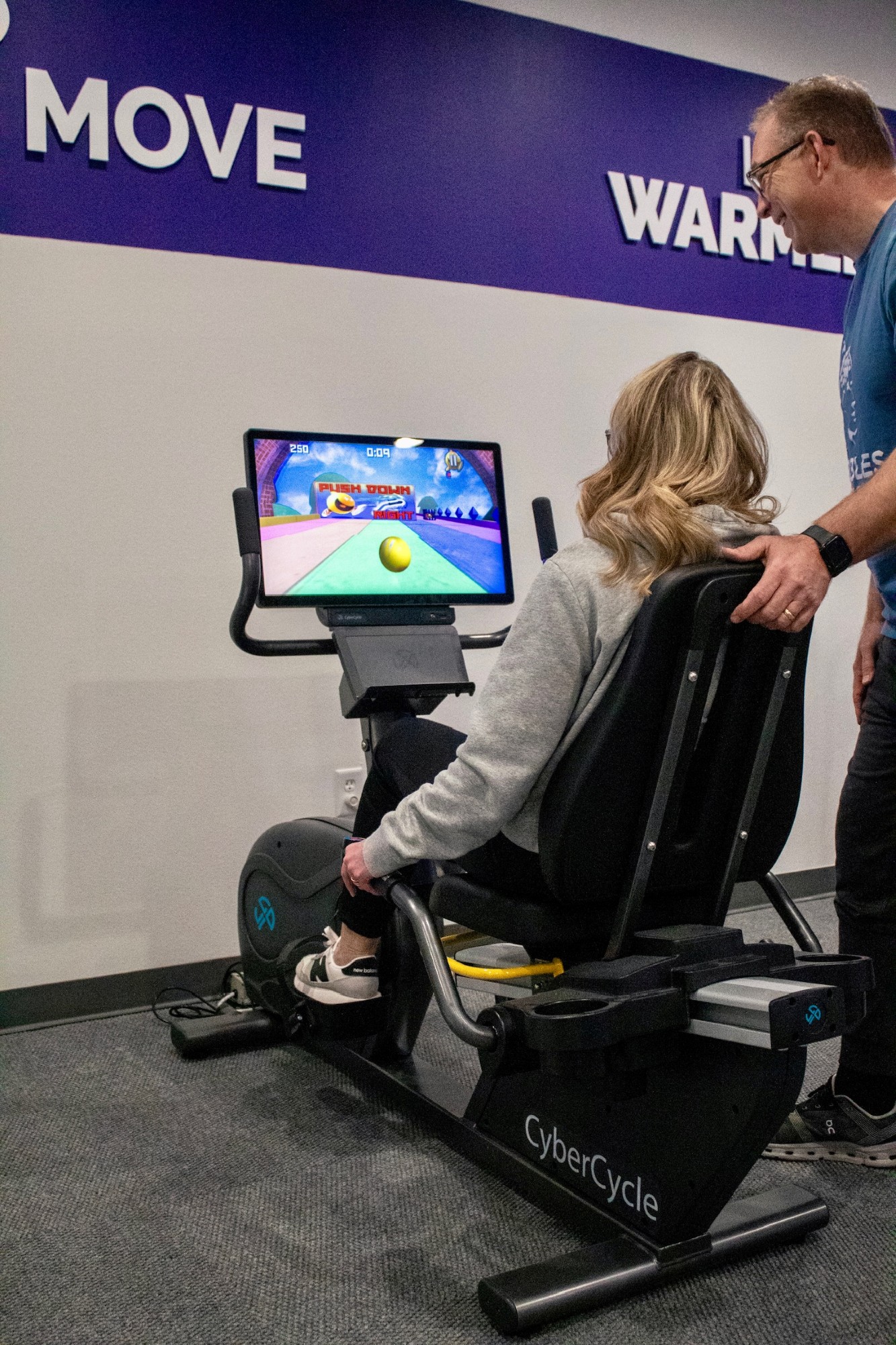
Light cardio, such as steady stepping or cycling, becomes powerful when paired with changing cues or quick recall prompts. It increases blood flow to the brain while adding fresh stimulation. That mix supports both heart health and cognitive function.
Strengthen Your Brain and Body Today
At Marbles Brain Body Fitness of Fishers, IN, we guide you through safe, research-based exercises built for aging adults. If you want to support your memory, sharpen your thinking, and feel steady in your body, we’re here to help. Reach out today to learn how to get started.
At Marbles Brain Body Fitness of Fishers, IN, we focus on one clear idea. Your brain grows stronger when you move with purpose and face new challenges. Aging adults often think exercise is only about muscles or endurance. The truth is far bigger. Movement supports cognitive health, memory, and daily confidence.
Below are ten exercises we use or recommend. Each one supports cognition in a different way. Each one helps strengthen reaction time, attention, and the memory systems aging adults count on every day.
1. Step-and-Respond Drills
This exercise pairs simple footwork with quick reactions to changing cues. You step in different directions while responding to colors, shapes, or symbols that shift on a screen. The novelty keeps your brain active. It improves processing speed and decision-making.
2. Lighted Target Reaches
Members reach for targets that light up in unpredictable patterns. This builds coordination and improves reaction time. Your brain must stay alert and adjust to new information every few seconds. That kind of challenge supports neuroplasticity.
3. Balance ShiftsWithFocus Tasks
Standing on a stable surface, you shift your weight while naming items in a category or recalling quick details from earlier in the session. The mix of movement and mental challenge builds cognitive reserve and strengthens attention.
4. Direction-Change Walking
Walking becomes more engaging when the pattern changes without warning. A trainer may call out new directions or speeds. You move. You adjust. Your brain updates its plan in real time. This helps with spatial awareness and memory.
5. Reaction Circuits
Members rotate through short stations that ask for fast responses to visual or sound cues. Because each station presents something new, the brain stays engaged. This helps improve overall cognitive fitness.
6. Timed Movement Patterns
These patterns ask you to move in a set rhythm that keeps shifting. The timing changes. The steps adjust. You have to stay present and alert. This strengthens working memory.
7. Dual-Task Movements With Novel Challenges
Dual-task work never relies on familiar puzzles. Instead, you might march in place while responding to unexpected symbols or pattern changes. The novelty matters. That is what supports long-term cognitive health.
8. Reach-and-Recover Balance Work
You reach forward, sideways, or diagonally, then return to steady footing. These movements support physical stability while asking your brain to plan and adjust. The combination helps reduce fall risk and sharpens spatial memory.
9. Visual Tracking With Movement
Members follow moving visuals while performing small, controlled steps. This strengthens eye-hand coordination and supports attention. It also helps with the kind of focus needed for daily tasks like reading signs or navigating busy spaces.
10. Mild CardioWithCognitive Cues
Light cardio, such as steady stepping or cycling, becomes powerful when paired with changing cues or quick recall prompts. It increases blood flow to the brain while adding fresh stimulation. That mix supports both heart health and cognitive function.
Strengthen Your Brain and Body Today
At Marbles Brain Body Fitness of Fishers, IN, we guide you through safe, research-based exercises built for aging adults. If you want to support your memory, sharpen your thinking, and feel steady in your body, we’re here to help. Reach out today to learn how to get started.
Fishers, IN - Top 10 Exercises That Improve Brain Cognitive Health and Memory
SYNOPSIS: This article covers ten exercises that support cognitive health and memory for aging adults. Each one builds brain fitness through movement, novelty, and active engagement.
Simple Movements That Support Strong Brain Function
BY: ,
At Marbles Brain Body Fitness of Fishers, IN, we focus on one clear idea. Your brain grows stronger when you move with purpose and face new challenges. Aging adults often think exercise is only about muscles or endurance. The truth is far bigger. Movement supports cognitive health, memory, and daily confidence.
Below are ten exercises we use or recommend. Each one supports cognition in a different way. Each one helps strengthen reaction time, attention, and the memory systems aging adults count on every day.
1. Step-and-Respond Drills
This exercise pairs simple footwork with quick reactions to changing cues. You step in different directions while responding to colors, shapes, or symbols that shift on a screen. The novelty keeps your brain active. It improves processing speed and decision-making.
2. Lighted Target Reaches
Members reach for targets that light up in unpredictable patterns. This builds coordination and improves reaction time. Your brain must stay alert and adjust to new information every few seconds. That kind of challenge supports neuroplasticity.
3. Balance ShiftsWithFocus Tasks
Standing on a stable surface, you shift your weight while naming items in a category or recalling quick details from earlier in the session. The mix of movement and mental challenge builds cognitive reserve and strengthens attention.
4. Direction-Change Walking
Walking becomes more engaging when the pattern changes without warning. A trainer may call out new directions or speeds. You move. You adjust. Your brain updates its plan in real time. This helps with spatial awareness and memory.
5. Reaction Circuits
Members rotate through short stations that ask for fast responses to visual or sound cues. Because each station presents something new, the brain stays engaged. This helps improve overall cognitive fitness.
6. Timed Movement Patterns
These patterns ask you to move in a set rhythm that keeps shifting. The timing changes. The steps adjust. You have to stay present and alert. This strengthens working memory.
7. Dual-Task Movements With Novel Challenges
Dual-task work never relies on familiar puzzles. Instead, you might march in place while responding to unexpected symbols or pattern changes. The novelty matters. That is what supports long-term cognitive health.
8. Reach-and-Recover Balance Work
You reach forward, sideways, or diagonally, then return to steady footing. These movements support physical stability while asking your brain to plan and adjust. The combination helps reduce fall risk and sharpens spatial memory.
9. Visual Tracking With Movement
Members follow moving visuals while performing small, controlled steps. This strengthens eye-hand coordination and supports attention. It also helps with the kind of focus needed for daily tasks like reading signs or navigating busy spaces.
10. Mild CardioWithCognitive Cues
Light cardio, such as steady stepping or cycling, becomes powerful when paired with changing cues or quick recall prompts. It increases blood flow to the brain while adding fresh stimulation. That mix supports both heart health and cognitive function.
Strengthen Your Brain and Body Today
At Marbles Brain Body Fitness of Fishers, IN, we guide you through safe, research-based exercises built for aging adults. If you want to support your memory, sharpen your thinking, and feel steady in your body, we’re here to help. Reach out today to learn how to get started.