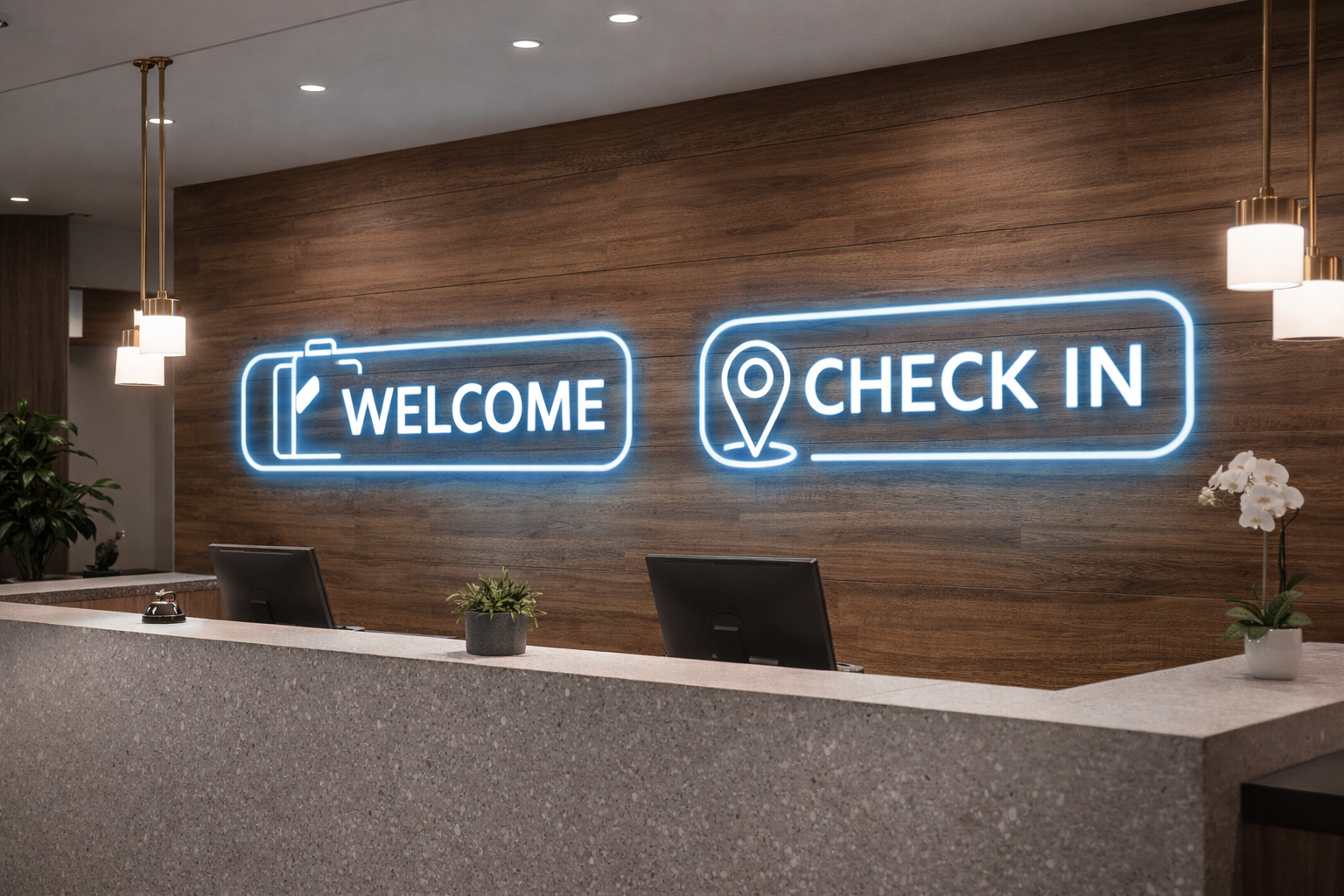
 The front desk at a Cleveland medical office answers the same question every morning. A visitor walks in, scans the lobby, and asks which hallway leads to suite 204. The receptionist points, the visitor thanks her, and the cycle repeats four more times before noon. Good wayfinding is measured in the interruptions that never had to happen in the first place. Every directory, every tactile room sign, every corridor marker exists to save a receptionist from answering that question one more time.
ADA Writes The Rules You Can't See
Most visitors never notice tactile room signs until they need them, and that's the sign of a system working correctly. ADA code requires raised characters on permanent room signs, Grade 2 contracted Braille beneath them, and a minimum 70% light reflectance value contrast between the characters and the background. Our team measures contrast with a meter before we release a file to production, because a sign that looks compliant on a monitor can fail under the fluorescent light of a Cleveland office hallway. Code protects everyone who uses the space.
Sightlines Decide Where The Directory Goes
Directory placement is a sightline problem before it's a graphic-design problem. Our team stands in the entry doorway and watches where a person's eye naturally lands after pushing through the vestibule. The right wall for the directory is the wall the eye hits first, which is often not the wall the property manager assumed it to be. A directory mounted on the wrong wall might as well be mounted in the janitor's closet.
Decision Points, Not Entry Points, Are Where Visitors Get Lost
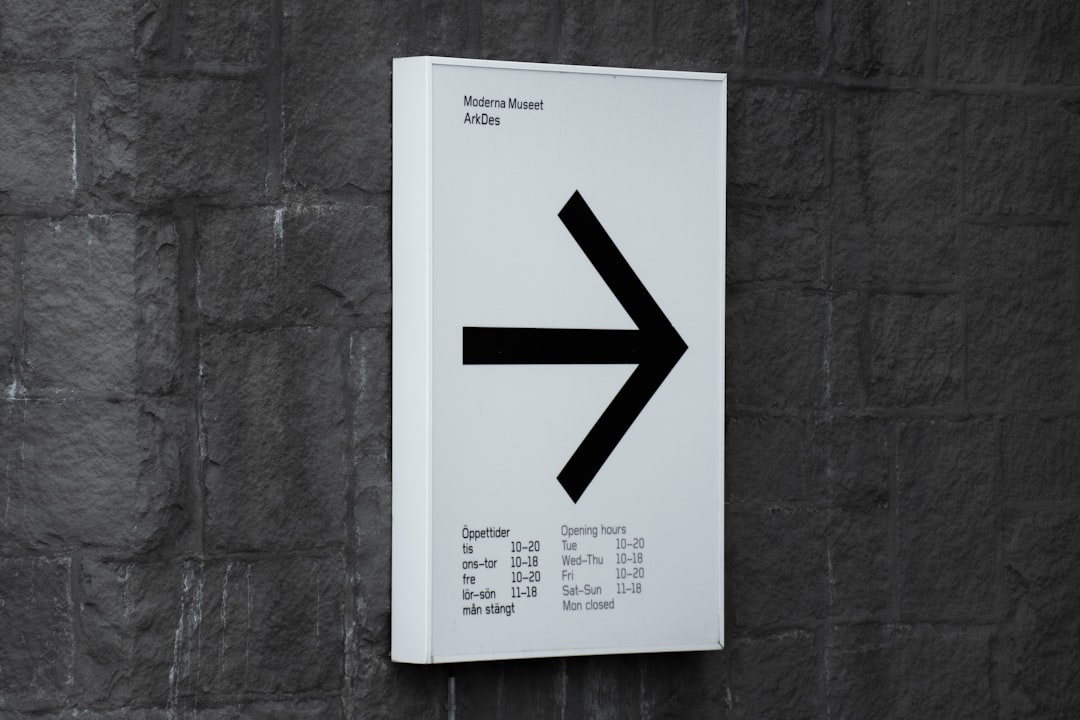
Buildings over-sign the front door and under-sign the hallway intersections. Every place a visitor has to choose left, right, or straight ahead is a decision point, and decision points are where wayfinding either works or falls apart. Our team maps every intersection in the floor plan before we recommend a sign count. A single overhead blade sign at a corridor junction can save a dozen trips back to the front desk each week.
Modular Inserts Make Tenant Changes Easy
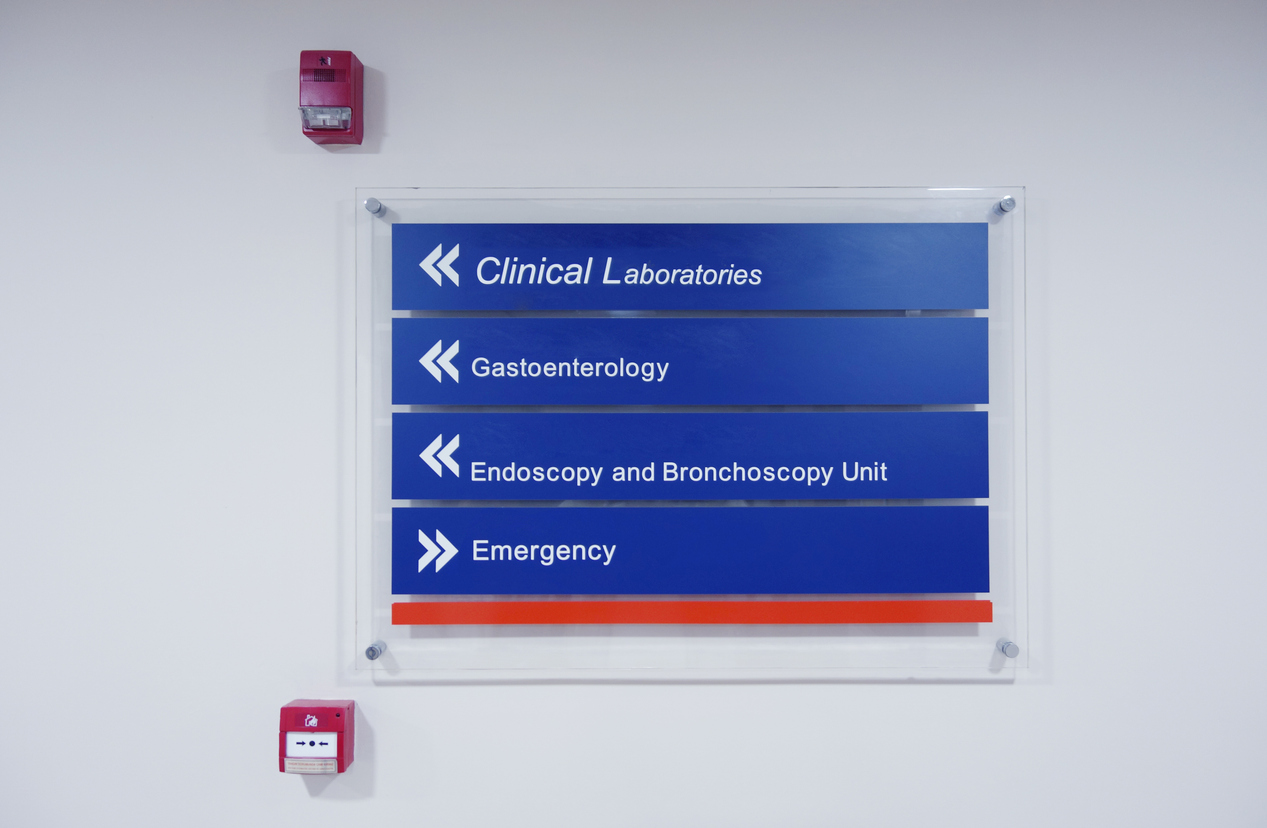
Multi-suite buildings in Cleveland rotate tenants on their own schedule, and fixed-print directories turn every move-out into a full sign replacement. Our directory systems use slide-out tenant inserts that a building manager can swap in under two minutes. The frame stays, the suite name changes, and the wayfinding system keeps working without a single service call. That detail pays for itself the first time a tenant leases a new suite.
The 48-To-60-Inch Baseline Most Signs Miss
Tactile room signs have a required mounting zone. The baseline of the raised characters must sit between 48 and 60 inches from the floor, and the sign itself belongs on the latch side of the door, set back 9 inches from the door frame. Visitors who walk into buildings where this rule is broken feel lost without knowing why, because their hands reach for a sign that isn't where the code trained them to expect it. Small placement call, big flow impact.
Visitors Deserve A Building That Helps
Every wayfinding choice adds up to one question: Does the building welcome people or leave them guessing? Directories, corridor blade signs, tactile room markers, and decision-point overheads all work together toward the same answer.
Call Us To Map Your Building
Visual Impression Sign Solutions, based in Chattanooga and working on Cleveland projects routinely, designs interior wayfinding and directory systems that quietly move visitors through your building. Call our shop at (423) 635-7144 whenever you'd like our team to walk your space with fresh eyes.
The front desk at a Cleveland medical office answers the same question every morning. A visitor walks in, scans the lobby, and asks which hallway leads to suite 204. The receptionist points, the visitor thanks her, and the cycle repeats four more times before noon. Good wayfinding is measured in the interruptions that never had to happen in the first place. Every directory, every tactile room sign, every corridor marker exists to save a receptionist from answering that question one more time.
ADA Writes The Rules You Can't See
Most visitors never notice tactile room signs until they need them, and that's the sign of a system working correctly. ADA code requires raised characters on permanent room signs, Grade 2 contracted Braille beneath them, and a minimum 70% light reflectance value contrast between the characters and the background. Our team measures contrast with a meter before we release a file to production, because a sign that looks compliant on a monitor can fail under the fluorescent light of a Cleveland office hallway. Code protects everyone who uses the space.
Sightlines Decide Where The Directory Goes
Directory placement is a sightline problem before it's a graphic-design problem. Our team stands in the entry doorway and watches where a person's eye naturally lands after pushing through the vestibule. The right wall for the directory is the wall the eye hits first, which is often not the wall the property manager assumed it to be. A directory mounted on the wrong wall might as well be mounted in the janitor's closet.
Decision Points, Not Entry Points, Are Where Visitors Get Lost
Buildings over-sign the front door and under-sign the hallway intersections. Every place a visitor has to choose left, right, or straight ahead is a decision point, and decision points are where wayfinding either works or falls apart. Our team maps every intersection in the floor plan before we recommend a sign count. A single overhead blade sign at a corridor junction can save a dozen trips back to the front desk each week.
Modular Inserts Make Tenant Changes Easy
Multi-suite buildings in Cleveland rotate tenants on their own schedule, and fixed-print directories turn every move-out into a full sign replacement. Our directory systems use slide-out tenant inserts that a building manager can swap in under two minutes. The frame stays, the suite name changes, and the wayfinding system keeps working without a single service call. That detail pays for itself the first time a tenant leases a new suite.
The 48-To-60-Inch Baseline Most Signs Miss
Tactile room signs have a required mounting zone. The baseline of the raised characters must sit between 48 and 60 inches from the floor, and the sign itself belongs on the latch side of the door, set back 9 inches from the door frame. Visitors who walk into buildings where this rule is broken feel lost without knowing why, because their hands reach for a sign that isn't where the code trained them to expect it. Small placement call, big flow impact.
Visitors Deserve A Building That Helps
Every wayfinding choice adds up to one question: Does the building welcome people or leave them guessing? Directories, corridor blade signs, tactile room markers, and decision-point overheads all work together toward the same answer.
Call Us To Map Your Building
Visual Impression Sign Solutions, based in Chattanooga and working on Cleveland projects routinely, designs interior wayfinding and directory systems that quietly move visitors through your building. Call our shop at (423) 635-7144 whenever you'd like our team to walk your space with fresh eyes.
Cleveland, TN - Do Interior Wayfinding + Directories Improve Visitor Flow?
SYNOPSIS: Visual Impression Sign Solutions designs interior wayfinding systems that help Cleveland visitors navigate spaces smoothly without confusion or repeated stops, even in large buildings.
Wayfinding Signs For Cleveland Buildings
BY: ,
The front desk at a Cleveland medical office answers the same question every morning. A visitor walks in, scans the lobby, and asks which hallway leads to suite 204. The receptionist points, the visitor thanks her, and the cycle repeats four more times before noon. Good wayfinding is measured in the interruptions that never had to happen in the first place. Every directory, every tactile room sign, every corridor marker exists to save a receptionist from answering that question one more time.
ADA Writes The Rules You Can't See
Most visitors never notice tactile room signs until they need them, and that's the sign of a system working correctly. ADA code requires raised characters on permanent room signs, Grade 2 contracted Braille beneath them, and a minimum 70% light reflectance value contrast between the characters and the background. Our team measures contrast with a meter before we release a file to production, because a sign that looks compliant on a monitor can fail under the fluorescent light of a Cleveland office hallway. Code protects everyone who uses the space.
Sightlines Decide Where The Directory Goes
Directory placement is a sightline problem before it's a graphic-design problem. Our team stands in the entry doorway and watches where a person's eye naturally lands after pushing through the vestibule. The right wall for the directory is the wall the eye hits first, which is often not the wall the property manager assumed it to be. A directory mounted on the wrong wall might as well be mounted in the janitor's closet.
Decision Points, Not Entry Points, Are Where Visitors Get Lost
Buildings over-sign the front door and under-sign the hallway intersections. Every place a visitor has to choose left, right, or straight ahead is a decision point, and decision points are where wayfinding either works or falls apart. Our team maps every intersection in the floor plan before we recommend a sign count. A single overhead blade sign at a corridor junction can save a dozen trips back to the front desk each week.
Modular Inserts Make Tenant Changes Easy
Multi-suite buildings in Cleveland rotate tenants on their own schedule, and fixed-print directories turn every move-out into a full sign replacement. Our directory systems use slide-out tenant inserts that a building manager can swap in under two minutes. The frame stays, the suite name changes, and the wayfinding system keeps working without a single service call. That detail pays for itself the first time a tenant leases a new suite.
The 48-To-60-Inch Baseline Most Signs Miss
Tactile room signs have a required mounting zone. The baseline of the raised characters must sit between 48 and 60 inches from the floor, and the sign itself belongs on the latch side of the door, set back 9 inches from the door frame. Visitors who walk into buildings where this rule is broken feel lost without knowing why, because their hands reach for a sign that isn't where the code trained them to expect it. Small placement call, big flow impact.
Visitors Deserve A Building That Helps
Every wayfinding choice adds up to one question: Does the building welcome people or leave them guessing? Directories, corridor blade signs, tactile room markers, and decision-point overheads all work together toward the same answer.
Call Us To Map Your Building
Visual Impression Sign Solutions, based in Chattanooga and working on Cleveland projects routinely, designs interior wayfinding and directory systems that quietly move visitors through your building. Call our shop at (423) 635-7144 whenever you'd like our team to walk your space with fresh eyes.