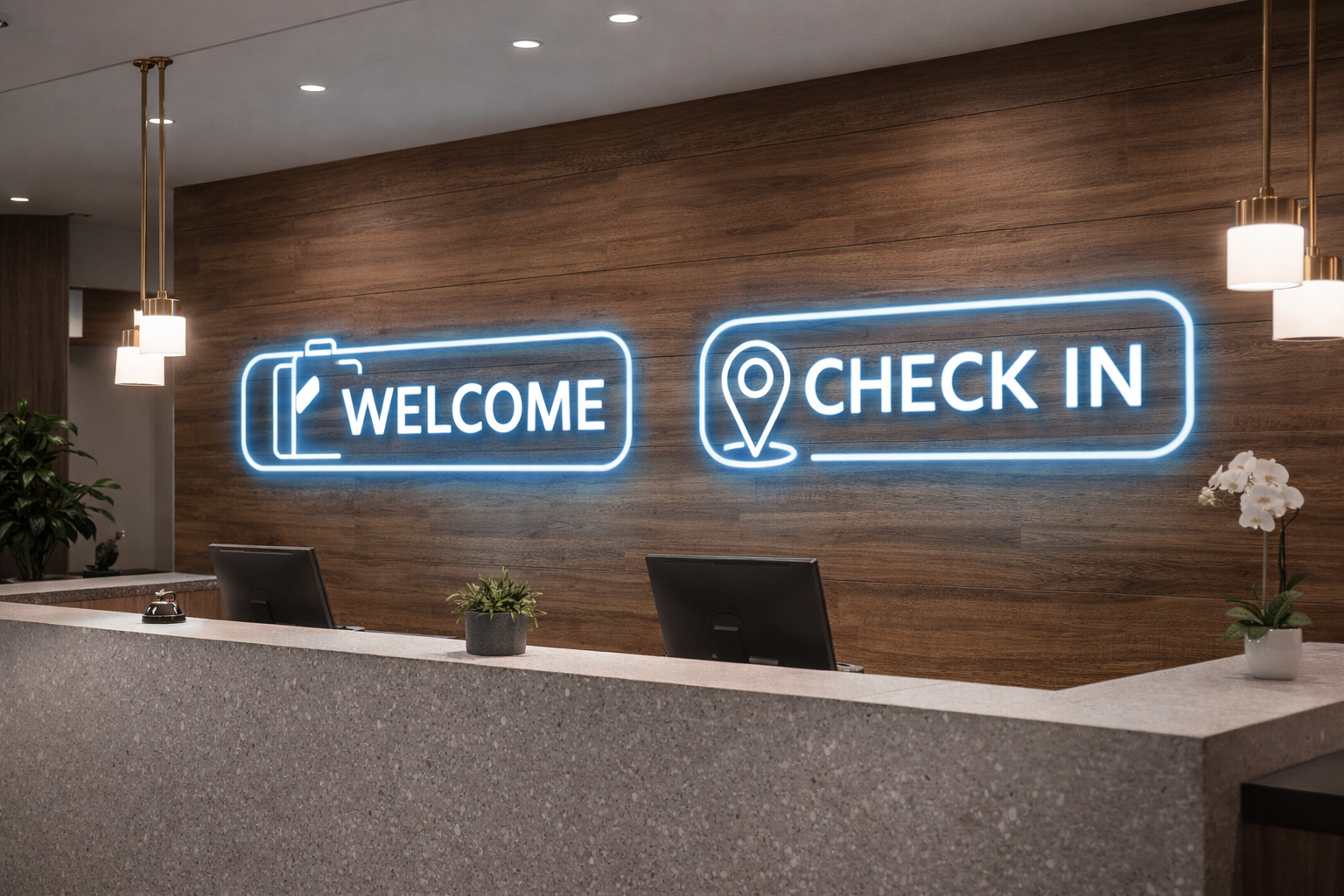
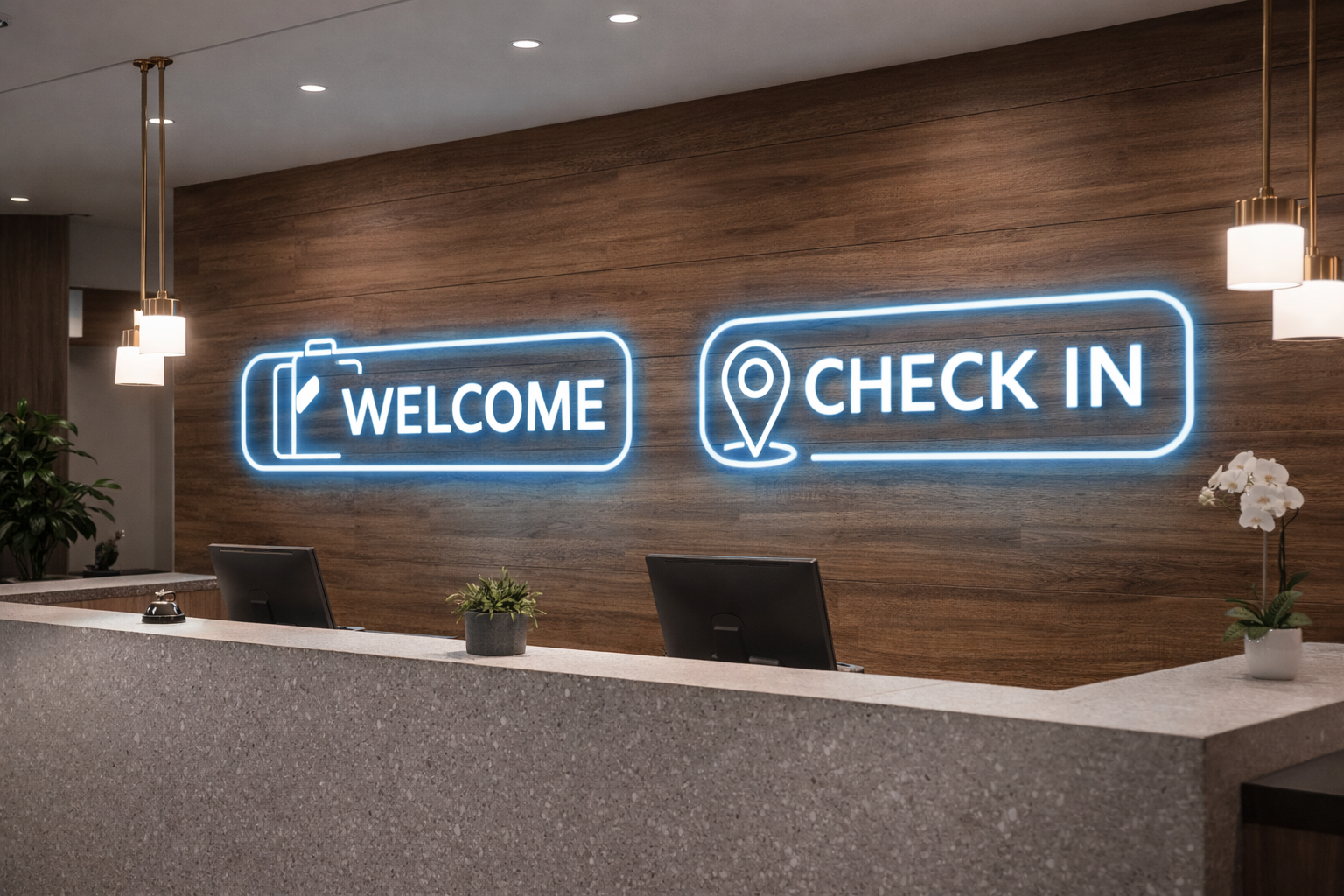
 Older illuminated interior signs announced themselves through sheer brightness, often at the expense of the room around them. LED technology changed the equation by making light precise, dimmable, and quiet enough to belong in a modern Hixson retail or office space. Acrylic LED signs now let a brand glow at a volume that matches the room's own voice instead of fighting it. The craft lives in choosing materials and circuitry that earn that quieter presence.
Cast Acrylic And Extruded Acrylic Are Not The Same Product
Our shop specifies cast acrylic for interior LED faces as a default, because cast holds up differently than the cheaper extruded alternative. Cast acrylic has a more uniform molecular structure, polishes to a brighter edge, and resists the slow yellowing that extruded acrylic develops under constant LED heat. The two products look identical on a sample swatch at month one. By year five, the difference between a crisp white face and a faintly amber one tells the whole story.
Why Do LED Modules From Different Batches Cause Problems?
LED diodes have small manufacturing variances in color temperature across production batches, which means two modules both labeled 3000K can read 3000K and 3150K in the same room. Interior signs installed on the same wall from mismatched batches drift visibly apart within a few months. Our team orders from single-batch runs and test-lights modules before install so the whole signage set reads as one coherent temperature. Matched color is one of those details that's invisible when it's right and obvious when it's wrong.
The Driver Placement Nobody Thinks About Until It Fails
Every LED sign needs a low-voltage driver, and where that driver lives determines whether a future repair takes 15 minutes or half a day. Cheap installs mount the driver directly behind the sign, which locks service access behind the full assembly. Our shop places drivers in accessible zones like above a drop ceiling or inside a dedicated service cavity, so a blown driver becomes a quick visit and not a drywall event. Maintenance planning is part of good engineering.
What Is The Right Thickness For An Interior Face?
Three-sixteenth-inch cast acrylic is the professional standard for interior face-lit signs in the Hixson office and retail scale. Thinner acrylic lets light bleed unevenly across the face and reads cheap from conversational distance. Thicker acrylic adds cost and weight without meaningful visual improvement on signs viewed indoors. Specifying the right gauge is the kind of call that separates signs built to code from signs built to last.
Dimming Is What Keeps The Sign From Becoming Background Noise
An acrylic LED sign that looks ideal at ten in the morning can overpower the room at eight in the evening when the ambient lights drop. Our shop builds interior signs with 0-to-10-volt dimming circuits so the brightness follows the room's natural light curve across the day. Signs without dimming almost always end up taped over or unplugged by frustrated staff. Restraint is what keeps a sign feeling intentional.
Get In Touch With Our Team For Interior Sign Work
Visual Impression Sign Solutions, based in Chattanooga and serving Hixson regularly, engineers acrylic LED signs built to work quietly and hold up for years. Get in touch with our shop at (423) 635-7144 to start the conversation about your interior sign project.
Older illuminated interior signs announced themselves through sheer brightness, often at the expense of the room around them. LED technology changed the equation by making light precise, dimmable, and quiet enough to belong in a modern Hixson retail or office space. Acrylic LED signs now let a brand glow at a volume that matches the room's own voice instead of fighting it. The craft lives in choosing materials and circuitry that earn that quieter presence.
Cast Acrylic And Extruded Acrylic Are Not The Same Product
Our shop specifies cast acrylic for interior LED faces as a default, because cast holds up differently than the cheaper extruded alternative. Cast acrylic has a more uniform molecular structure, polishes to a brighter edge, and resists the slow yellowing that extruded acrylic develops under constant LED heat. The two products look identical on a sample swatch at month one. By year five, the difference between a crisp white face and a faintly amber one tells the whole story.
Why Do LED Modules From Different Batches Cause Problems?
LED diodes have small manufacturing variances in color temperature across production batches, which means two modules both labeled 3000K can read 3000K and 3150K in the same room. Interior signs installed on the same wall from mismatched batches drift visibly apart within a few months. Our team orders from single-batch runs and test-lights modules before install so the whole signage set reads as one coherent temperature. Matched color is one of those details that's invisible when it's right and obvious when it's wrong.
The Driver Placement Nobody Thinks About Until It Fails
Every LED sign needs a low-voltage driver, and where that driver lives determines whether a future repair takes 15 minutes or half a day. Cheap installs mount the driver directly behind the sign, which locks service access behind the full assembly. Our shop places drivers in accessible zones like above a drop ceiling or inside a dedicated service cavity, so a blown driver becomes a quick visit and not a drywall event. Maintenance planning is part of good engineering.
What Is The Right Thickness For An Interior Face?
Three-sixteenth-inch cast acrylic is the professional standard for interior face-lit signs in the Hixson office and retail scale. Thinner acrylic lets light bleed unevenly across the face and reads cheap from conversational distance. Thicker acrylic adds cost and weight without meaningful visual improvement on signs viewed indoors. Specifying the right gauge is the kind of call that separates signs built to code from signs built to last.
Dimming Is What Keeps The Sign From Becoming Background Noise
An acrylic LED sign that looks ideal at ten in the morning can overpower the room at eight in the evening when the ambient lights drop. Our shop builds interior signs with 0-to-10-volt dimming circuits so the brightness follows the room's natural light curve across the day. Signs without dimming almost always end up taped over or unplugged by frustrated staff. Restraint is what keeps a sign feeling intentional.
Get In Touch With Our Team For Interior Sign Work
Visual Impression Sign Solutions, based in Chattanooga and serving Hixson regularly, engineers acrylic LED signs built to work quietly and hold up for years. Get in touch with our shop at (423) 635-7144 to start the conversation about your interior sign project.
Hixson, TN - How do You Use Acrylic LED Signs to Elevate Spaces?
SYNOPSIS: Visual Impression Sign Solutions, based in Chattanooga and serving Hixson, walks through the engineering choices behind acrylic LED signs that look sharp on day one and five years later.
Acrylic LED Signs Built For Hixson Interiors
BY: ,
Older illuminated interior signs announced themselves through sheer brightness, often at the expense of the room around them. LED technology changed the equation by making light precise, dimmable, and quiet enough to belong in a modern Hixson retail or office space. Acrylic LED signs now let a brand glow at a volume that matches the room's own voice instead of fighting it. The craft lives in choosing materials and circuitry that earn that quieter presence.
Cast Acrylic And Extruded Acrylic Are Not The Same Product
Our shop specifies cast acrylic for interior LED faces as a default, because cast holds up differently than the cheaper extruded alternative. Cast acrylic has a more uniform molecular structure, polishes to a brighter edge, and resists the slow yellowing that extruded acrylic develops under constant LED heat. The two products look identical on a sample swatch at month one. By year five, the difference between a crisp white face and a faintly amber one tells the whole story.
Why Do LED Modules From Different Batches Cause Problems?
LED diodes have small manufacturing variances in color temperature across production batches, which means two modules both labeled 3000K can read 3000K and 3150K in the same room. Interior signs installed on the same wall from mismatched batches drift visibly apart within a few months. Our team orders from single-batch runs and test-lights modules before install so the whole signage set reads as one coherent temperature. Matched color is one of those details that's invisible when it's right and obvious when it's wrong.
The Driver Placement Nobody Thinks About Until It Fails
Every LED sign needs a low-voltage driver, and where that driver lives determines whether a future repair takes 15 minutes or half a day. Cheap installs mount the driver directly behind the sign, which locks service access behind the full assembly. Our shop places drivers in accessible zones like above a drop ceiling or inside a dedicated service cavity, so a blown driver becomes a quick visit and not a drywall event. Maintenance planning is part of good engineering.
What Is The Right Thickness For An Interior Face?
Three-sixteenth-inch cast acrylic is the professional standard for interior face-lit signs in the Hixson office and retail scale. Thinner acrylic lets light bleed unevenly across the face and reads cheap from conversational distance. Thicker acrylic adds cost and weight without meaningful visual improvement on signs viewed indoors. Specifying the right gauge is the kind of call that separates signs built to code from signs built to last.
Dimming Is What Keeps The Sign From Becoming Background Noise
An acrylic LED sign that looks ideal at ten in the morning can overpower the room at eight in the evening when the ambient lights drop. Our shop builds interior signs with 0-to-10-volt dimming circuits so the brightness follows the room's natural light curve across the day. Signs without dimming almost always end up taped over or unplugged by frustrated staff. Restraint is what keeps a sign feeling intentional.
Get In Touch With Our Team For Interior Sign Work
Visual Impression Sign Solutions, based in Chattanooga and serving Hixson regularly, engineers acrylic LED signs built to work quietly and hold up for years. Get in touch with our shop at (423) 635-7144 to start the conversation about your interior sign project.