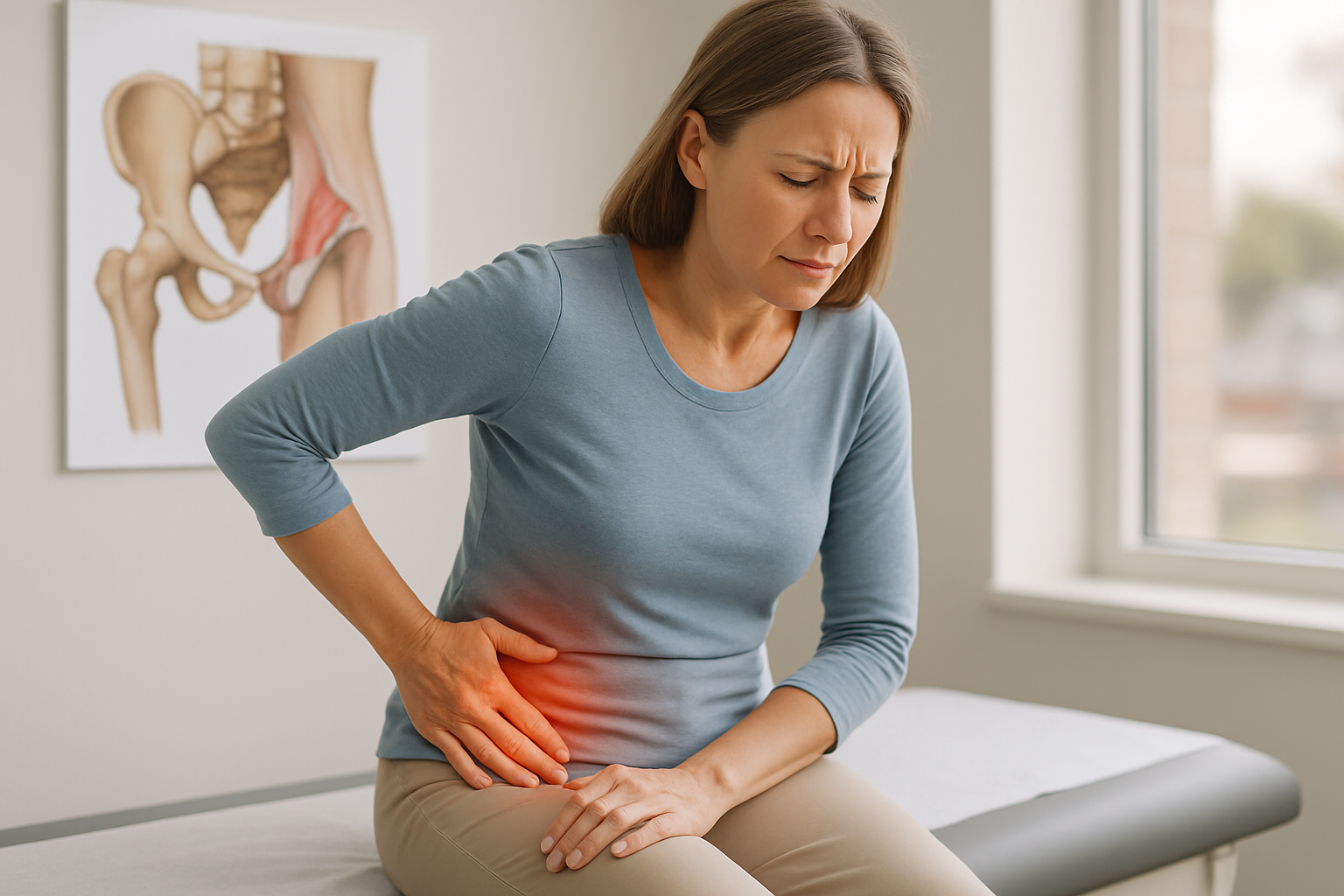
Hip pain sends people looking for answers partly because it's hard to interpret on your own. It could be the joint. It could be a muscle. It could be your back referring pain downward. And a labral tear sits somewhere in that mix as a possibility people have usually read about online.
Getting the right care starts with an accurate answer about what's actually generating your pain.
What The Labrum Does
Your hip is a deep ball-and-socket joint built for carrying weight. The labrum is a cartilage ring lining the socket rim, helping seal the joint and contributing to stability and smooth motion.
Tear it and you typically get deep groin pain, catching with certain movements, and discomfort with deep hip flexion, prolonged sitting, or pivoting.
How A Clinic Sorts Out The Source
Rather than guessing from symptoms alone, a proper evaluation tests things directly. A clinician moves your hip through specific positions designed to load different structures, watching for which ones reproduce your particular pain.
Certain combinations of flexion and rotation stress the labrum. Resisted movements load specific tendons. Pressure over the outer hip identifies bursal irritation. And testing your back and nerve function rules out referred pain from above.
The information from that exam usually narrows things considerably before imaging enters the picture at all.
Why Your Scan Might Not Be The Answer
Something worth knowing. Labral tears turn up on imaging in plenty of people with no hip pain at all. So finding one on your scan doesn't automatically make it the cause of your symptoms.
That's why a good clinic weighs what your hip actually does and what positions hurt, rather than treating the report in isolation.
Starting With Conservative Care
Most hip pain, labral tears included, gets treated non-surgically first, and it works for a good number of people.
That means strengthening the glutes and deep hip stabilizers for better joint control, retraining movement so you stop jamming the hip into aggravating positions, addressing tightness contributing to the problem, and modifying activity while things settle. An injection can calm the joint and also help confirm where the pain originates.
When Surgery Enters The Conversation
Arthroscopic repair makes sense for a specific profile. Younger, active people substantially limited by symptoms, hips where bone shape creates ongoing impingement, and cases where genuine conservative care hasn't delivered enough.
The key word is genuine. Several months of consistent work, not three weeks of half-effort. Hips take time to strengthen meaningfully.
What To Look For In A Clinic
Somewhere that evaluates properly before treating, explains what they found, and starts conservative when that's reasonable. Hip pain has too many possible sources for a generic approach.
Hip pain you can't get a straight answer on? Modern Medicine of Chandler, AZ can evaluate it properly. Reach us by phone or the online booking form.