BMW handling depends on control. The car should settle quickly after a bump. It should stay planted in a fast lane change. It should brake without an extra nose-dive. Struts play a big role in all of that. When the struts wear, the car can still drive, but the feel changes. The steering can feel less direct. The body can move more than it used to. Tires can start wearing in patterns that do not match your last alignment. At our shop, we see a lot of BMW owners come in for “it just feels loose now,” and strut wear ends up being part of the story.
What Struts Do On A BMW
Struts do two main jobs. They control motion and support the suspension layout. The strut dampens bounce, so the car does not keep rocking after a dip. It also helps keep the tire planted, especially on rough roads. On many BMW models, the strut design also affects alignment angles. That means a worn strut can change how the car tracks straight and how it responds when you turn in.
How Worn Struts Change Handling
When struts lose damping, the body moves more, and the tire spends less time firmly planted.
Common handling changes include:
- Extra bounce after dips, the car takes longer to settle
- Nose-dive during braking feels stronger than before
- Body roll feels more noticeable in turns
- Steering feels lighter or delayed on turns
- The rear feels floaty at freeway speed on some setups
- Stability feels less predictable on uneven pavement
Other Signs BMW Drivers Notice
Strut wear often shows up with noise and tire wear.
- Clunk over speed bumps or driveway ramps
- Rattle near the top of the suspension, often in the mount area
- Cupping or scalloped tire wear
- Vibration that gets worse as speed increases
- Fluid seeps on the strut body
A clunk is not always the strut itself. End links, control arm bushings, and mounts can sound similar. That is why inspection matters.
What We Check During A Professional Inspection
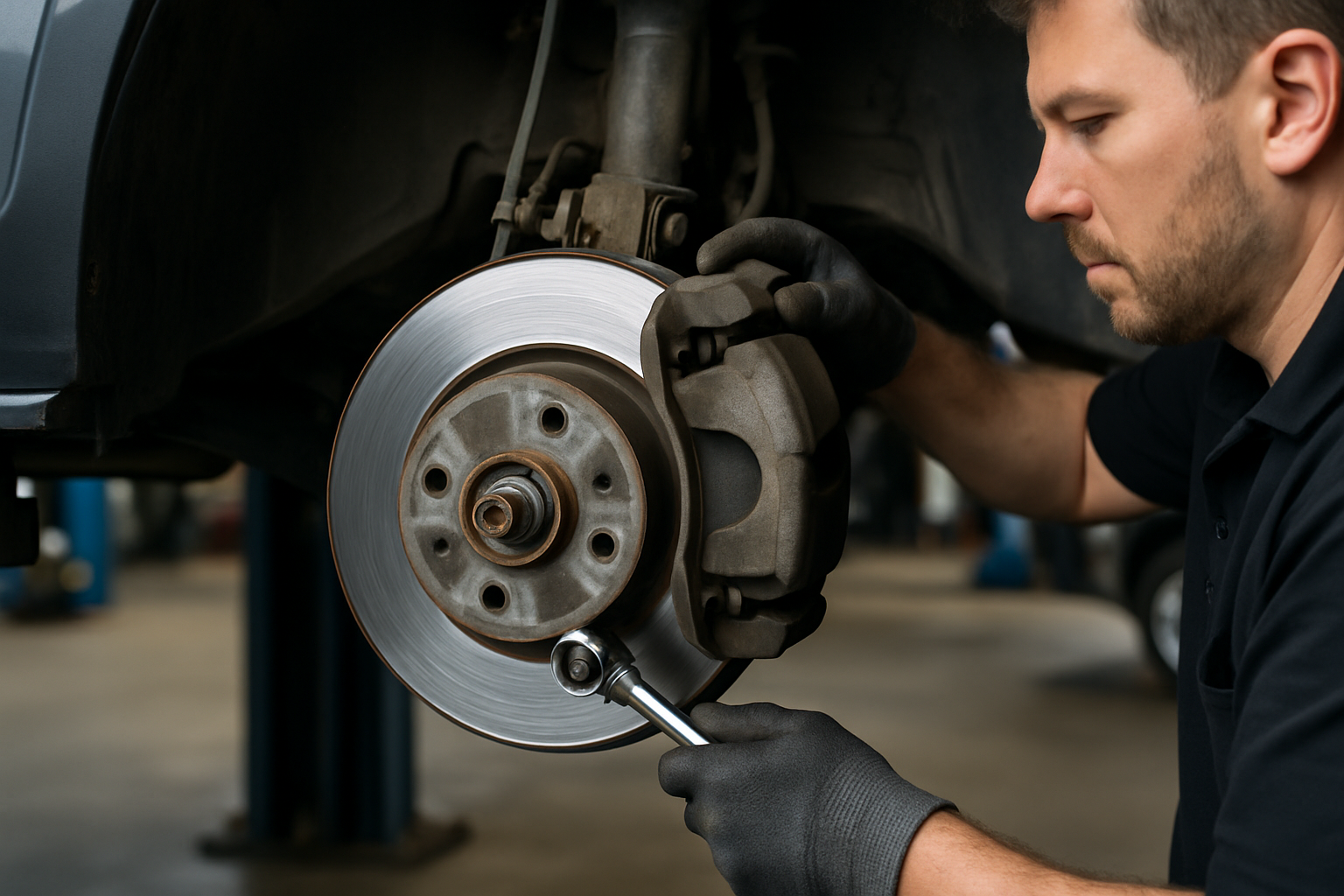
We start with a road test to feel what you feel. Then we inspect the suspension on the lift. We check the strut for leaks, dents, and worn hardware. We check the strut mount and bearing for play and binding. We inspect sway bar links, control arm bushings, and tie rods, since these parts affect handling too. We also look at tire wear patterns and measure tread depth across the tire.
If needed, we check alignment angles and look for changes that point to suspension movement. The goal is simple. Confirm what is worn before replacing parts.
What Repairs Usually Include
If struts are worn, replacement is often done in pairs on the same axle. That keeps the ride and braking balanced side to side. We also inspect and replace related parts when wear is present, since the labor overlaps.
A repair plan may include:
- New struts on the affected axle
- New mounts and bearings when needed
- New bump stops and boots when needed
- Alignment after installation
After repairs, the car should settle faster, track straighter, and feel more controlled through turns and stops.
If your BMW feels bouncy, clunks over bumps, or just does not feel as tight as it used to in San Lorenzo, schedule a suspension inspection with Driven Auto Care of Castro Valley, CA. We’ll confirm what’s worn and help you get that planted BMW feel back.