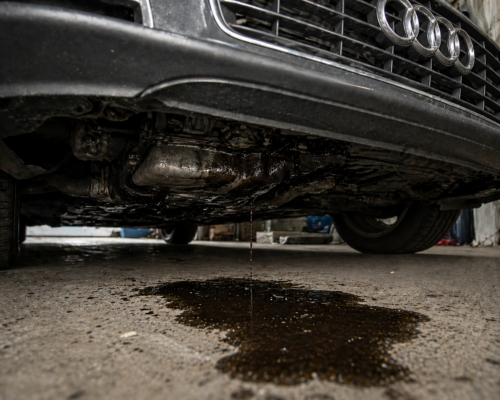
Audi oil leaks do more than leave a spot on the driveway. Some leaks stay small for a long time. Others start small, then spread across the engine and end up on parts that should stay dry. That is when performance changes show up. You may notice rough idle, slow response, odd smells, or warning lights that were not there before. A leak also makes routine service harder, since oil coats covers and hides the true source.
How Oil Leaks Affect Audi Performance
Oil should stay inside the engine and related systems. When it does not, it creates issues that drivers can feel.
- Oil level drops: Low oil can change engine noise and increase wear. Some Audis will warn you, but not all leaks trigger a fast warning.
- Oil hits hot parts: Oil can land on exhaust parts and cause smoke. That smell can enter the cabin at stops.
- Oil reaches belts: Oil can soak a serpentine belt and cause slip, squeal, or belt failure. A slipping belt can affect charging and cooling on some setups.
- Oil reaches sensors and wiring: Oil can soften harness wraps and contaminate connectors. That can trigger warning lights and drivability issues.
- Oil hides other problems: Oil collects dirt, then leak paths get harder to see, which can lead to repeat visits.
Performance changes often feel gradual, which is why drivers wait longer than they should.
Symptoms That Often Show Up With Audi Oil Leaks
Some signs show up outside the car. Others show up in the way it drives.
Common symptoms include:
- Burning oil smell after parking
- Light smoke from the engine bay after a drive
- Oil spots on the driveway or wet underbody panels
- Rough idle or hesitation under load
- EPC or check engine light on some models
- The belt squeal that started around the same time as the leak
If you see smoke, avoid parking in a closed garage until the leak is checked.
Why Oil Leaks Are Not Always Obvious
Audi oil leaks can travel. Oil can run down a cover seam, hit a shield, then drip from a low edge far from the source. Heat can also bake oil into a thin film, so it looks like normal grime.
Short trips can make this worse. The engine heats and cools often, and seals see more movement. That can turn a small seep into a recurring leak path.
What An Auto Repair Shop Checks During A Visit
A proper visit starts with finding the highest wet point, not the lowest drip. The shop will inspect from the top and underside and trace the leak trail. If the area is coated in old oil, cleaning may be needed first, then a recheck after a short drive.
Many shops also use UV dye for slow leaks. Dye helps confirm the exact path, especially on engines with tight packaging. The shop should also check the oil level, belt condition, and nearby hoses and wiring for oil exposure.
If you suspect an Audi oil leak, book an inspection at Driven Auto Care of Castro Valley, CA. Catching the leak early helps protect performance, keeps the engine bay cleaner, and prevents belt and sensor problems later.