 Businesses have a legal obligation to be accessible to people with disabilities in compliance with the Americans with Disabilities Act (ADA). To ensure their building and premises meet this requirement, businesses must provide physical access and easily visible signs. Any company who does not follow these guidelines can incur hefty penalties from the government.
What is the ADA?
The Americans with Disabilities Act was passed in 1990 as a civil rights law, aiming to eliminate discrimination towards individuals with physical or mental disabilities. This federal legislation guarantees equal access for all people to public services and facilities such as businesses. Additionally, companies are legally obligated to provide reasonable accommodations for their disabled customers if needed.
ADA Sign Requirements
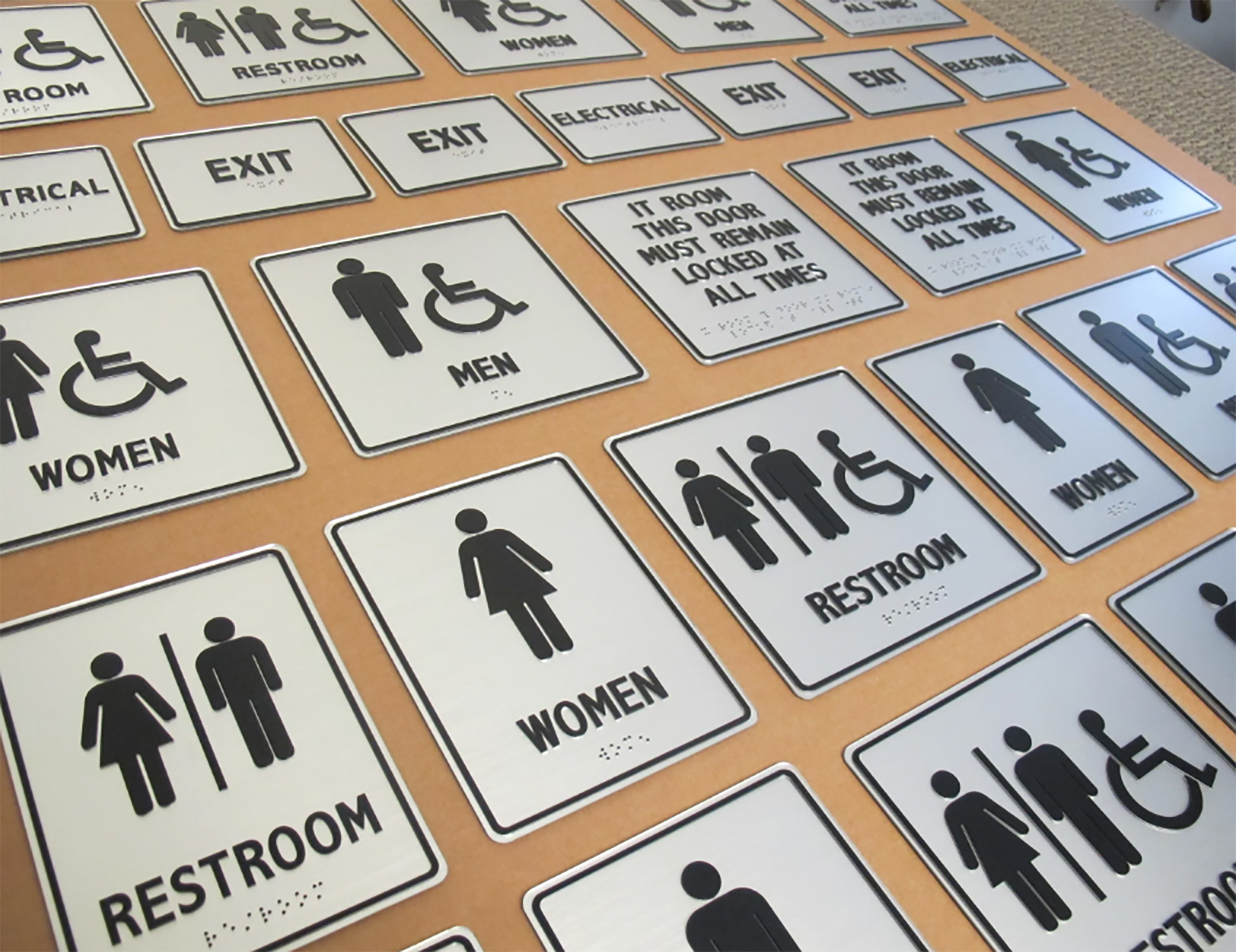
The ADA requires signs to be in a conspicuous spot, with easy-to-read and understandable language. Furthermore, Braille, raised characters, and pictograms must all be included; this guarantees people with disabilities can make sense of the data presented.
Here is a quick rundown of the most important rules when it comes to ADA signs:
Businesses have a legal obligation to be accessible to people with disabilities in compliance with the Americans with Disabilities Act (ADA). To ensure their building and premises meet this requirement, businesses must provide physical access and easily visible signs. Any company who does not follow these guidelines can incur hefty penalties from the government.
What is the ADA?
The Americans with Disabilities Act was passed in 1990 as a civil rights law, aiming to eliminate discrimination towards individuals with physical or mental disabilities. This federal legislation guarantees equal access for all people to public services and facilities such as businesses. Additionally, companies are legally obligated to provide reasonable accommodations for their disabled customers if needed.
ADA Sign Requirements
The ADA requires signs to be in a conspicuous spot, with easy-to-read and understandable language. Furthermore, Braille, raised characters, and pictograms must all be included; this guarantees people with disabilities can make sense of the data presented.
Here is a quick rundown of the most important rules when it comes to ADA signs:
- Signs must be placed between 48 to 60 inches from the floor.
- Signs must be Illuminated if in a dim location
- Non-glare finish on the face of the sign
- Text must use upper and lowercase letters which are sans serif
- Signs must feature Braille, raised characters, and pictograms
- Text must be at least 5/8 inch high for primary characters
- Signs must be in a flush mount or a protruding mount, but not both
- Maintain all signs to guarantee readability and visibility