In Richardson, TX, a doctor's office must not only care for its patients but also be accessible to any patient per the law. ADA-compliant signs are important to guide all patients with disabilities who need navigation and information. Such signs assist in creating an environment where all patients can move freely and self-sufficiently.
Types of ADA Signs Required in Medical Offices
Many kinds of ADA signs are important from a medical perspective:
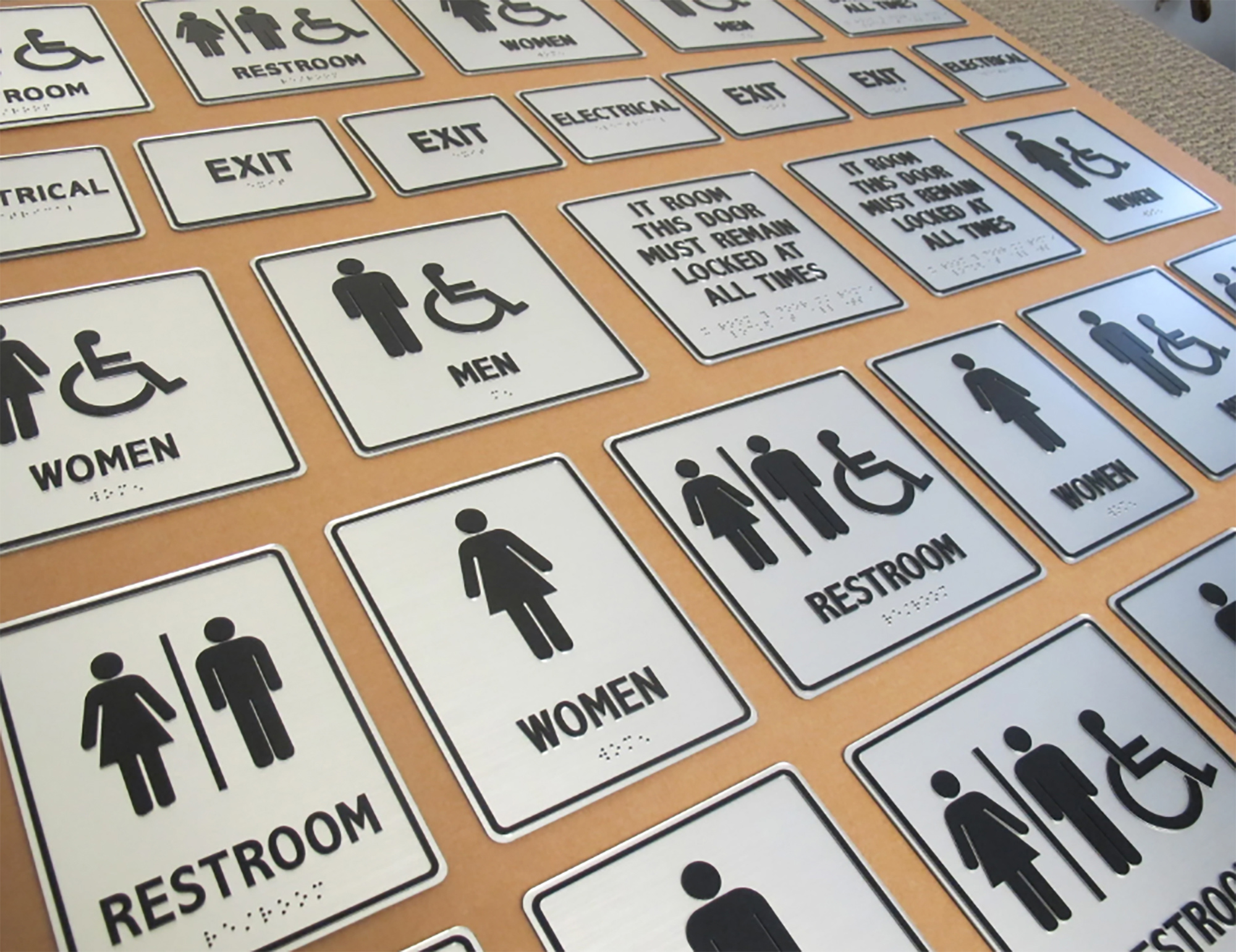
- Room Identification Signs: These are the signs for examination rooms, restrooms, and waiting areas. They should have tactile characters with Braille for visually impaired visitors.
- Directional and Informational Signs: These will lead the patient down the hallways to different sections, such as laboratories, radiology, or suggested emergency exits.
- Regulatory Signs: Signs include those for wheelchair-accessible features, stairwells, exits, and no-smoking areas. All the above-mentioned signs make a facility safe and compliant, keeping the patients and the people associated with it safe.
Best Locations for ADA Signs in Medical Offices
Installing ADA signs in appropriate spots within a medical facility increases its functionality while ensuring compliance:
- Entrance and Exit: Clearly marked with signs that include the International Symbol of Accessibility.
- Reception Area: Signs here should direct to various departments and facilities such as bathrooms that are accessible.
- Corridors and Intersections: Direction signs must be mounted at eye height and at all decision points on the path patients could take.
- Elevators and Staircases: These areas must have signs, as well as instructions in case of emergencies.
Understanding ADA Guidelines for Signs
ADA guidelines for signs are specific focusing on maximum readability and accessibility:
- Font and Size: Sans serif or simple serif fonts are to be used in ADA signage. The minimum text size is specified by viewing distance. Text color should contrast with the background, but in most cases, it should have light characters on a dark background or reverse.
- Tactile Characters and Braille: Raised letters and Braille must be installed on all the room and space-identifying signs. The tactile text will be accompanied by Grade 2 Braille, placed below the corresponding text.
- Mounted Height and Location: The bottoms of signs must be mounted at specific heights, between 48 inches and 60 inches from the floor to the center of the sign, and the signs shall not project more than 4 inches into walkways, hallways, or corridors.
Why SignSmiths of TX for Your ADA-Compliant Signs
SignSmiths of TX is a company that specializes in creating compliant signs that meet federal and state regulations. With state-of-the-art technology and digital printing, we manufacture quality signs that serve dual functions: ordinary functionality and aesthetic appeal. Be assured that every sign fabricated for your doctor's office in Richardson, TX, will improve accessibility.
Call SignSmiths of TX today at 972-464-2926 to discuss your particular needs and how we can help you make your healthcare facility an example of accessibility and patient care.