Do you want to place ADA-compliant Braille and Tactile Signs in your office or building?
SignWorks, Inc. is here to address all your signage needs.
Have you ever wondered why the pictogram of a person in a wheelchair is put everywhere in buildings, offices and businesses? It is simply because there is a law behind it. These signs have to be ADA-compliant.
What Is ADA Signage?
To put it simply, ADA signage is used to indicate rooms, spaces and any other features in a building. The Americans with Disabilities Act (ADA) was passed in 1990 by the Department of Justice to protect people with disabilities from discrimination.
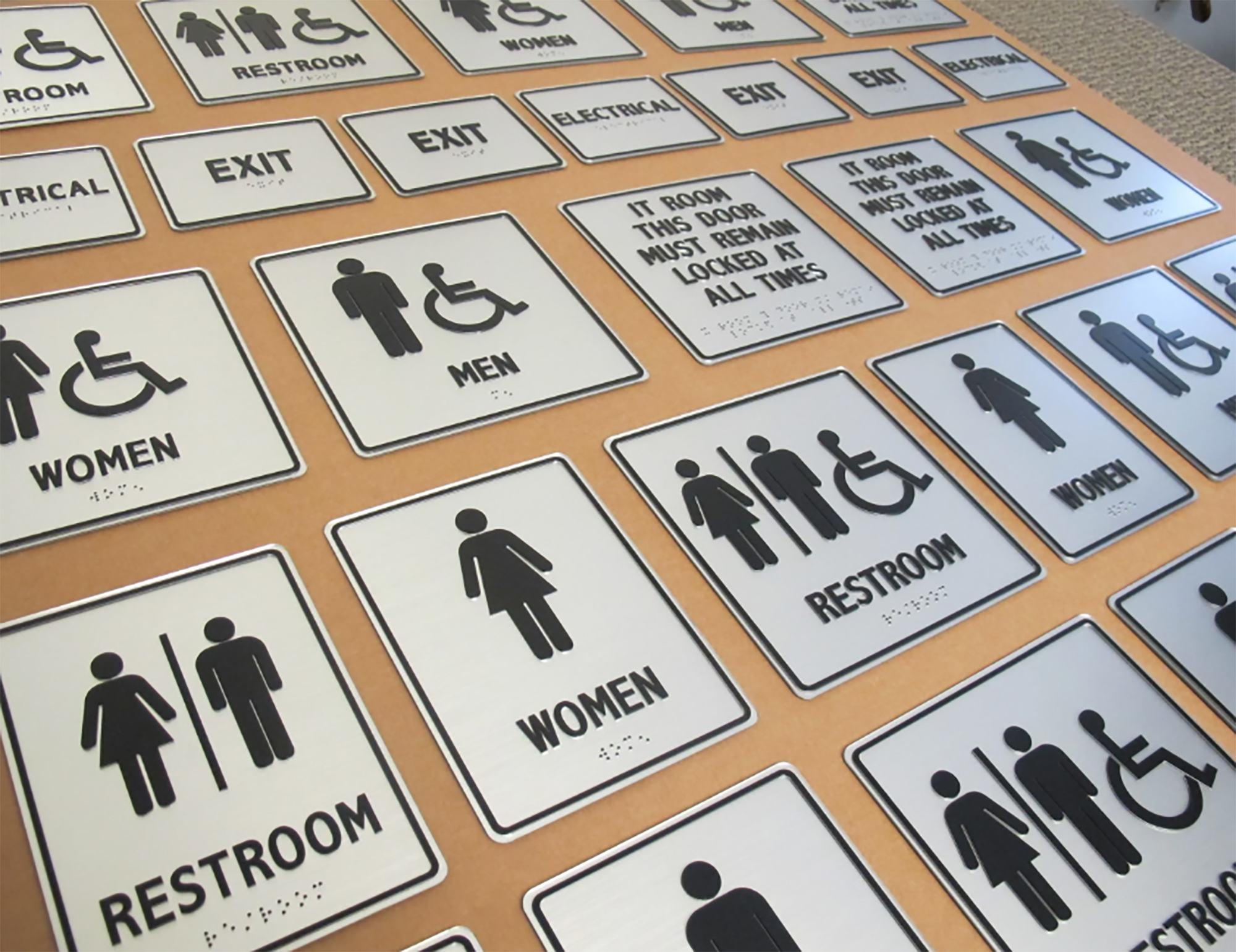
When you hear ADA Signage, think “Braille sign” or “tactile sign”. These are raised letters and braille signs that are made mandatory to help people, especially those who are blind.
ADA Sign Requirements
The requirements for ADA signs are applicable in all public buildings, including offices, apartments, and businesses. Even if you have a home business with an influx of clients and employees, you are obligated to have ADA signage.
Purpose of ADA Signage
Signs which are ADA compliant have three different purposes.
- Identifying interior office rooms and spaces
- Providing direction or information about the building’s interior spaces.
- Identifying, directing or informing people with disabilities about the features and facilities they can use by using the International Symbol of Accessibility (ISA, denoted by a person in a wheelchair).
Types of Signs Used in ADA Signage
ADA signs are used to convey various types of information about a building.
All the exit ways should be marked with ADA compliant signage. These include doors, stairs, and emergency exit passages. The signs should be depicted in both braille and raised lettering or characters. Most people would understand the exit signage on a doorway; it can be difficult to understand it in identifying which corridors would lead to an exit. Hence, such corridors are required to have ADA compliant exit signs.
- Inaccessible Building Elements
All the areas which are restricted or are inaccessible should have ADA compliant signs. These areas could be entrances, elevators and restrooms, which are not accessible for a reason. The ADA compliant signs should also point to the location of the nearest accessible substitute and should follow ADA visual character requirements.
The ISA is mandatory at the entrances, elevators and restrooms; however, braille or pictograms may not be used for signs used for providing directions.
In case of emergency, signs indicating areas of refuge and safety need to be present. These signs should have braille markings, raised characters and the ISA icon.
- Assistance for the Disabled
ADA compliant signs for Text Telephones, Volume Control Telephones and Assistive Listening System should follow the ADA visual requirements.
Most of the ADA-compliant signs are featured indoors; however, there are some outdoor ADA signs too. If an outdoor doorway leads to a bathroom, classroom, courtyard or other spaces, that doorway should have ADA compliant signs.
Conclusion
ADA-compliant signs are extremely useful for everyone, not just for disabled people. Often, there are times when an individual doesn’t have time to process and make decisions quickly and has to rely on visual cues that are quite straightforward. Regardless of the situation, ADA-compliant signs are needed everywhere.
Since following ADA regulations is necessary, it is imperative that you get ADA-compliant signs. SignWorks, Inc. is here to provide you with all your signage needs. Visit our website for a consultation and a quote.