 When visitors arrive at an outdoor destination such as a regional park, a fairground, a zoo, an amusement park, or a botanical garden, one of the first things they experience isn’t a ride, a trail, or an exhibit. It’s a sign. Or in many cases, the absence of one.
Outdoor wayfinding is the system of signage that helps people understand where they are, where they need to go, and how to get there. Done well, it operates quietly in the background. Visitors navigate naturally without noticing how much the signage is doing for them. Done poorly, or not done at all, it shows immediately. Guests wander. Frustration builds. The experience suffers before it ever really begins.
For operators of outdoor destinations and public spaces, wayfinding is infrastructure, not decoration. Parks, nature preserves, campgrounds, sports complexes, outdoor shopping districts, and event venues all have this in common: the quality of the visitor experience depends significantly on how well the space communicates. A guest who can find the restrooms, the main stage, the concession area, and the exit without asking for help is a guest who is free to enjoy what brought them there. That ease of navigation shapes how they feel about the entire experience and whether they come back.
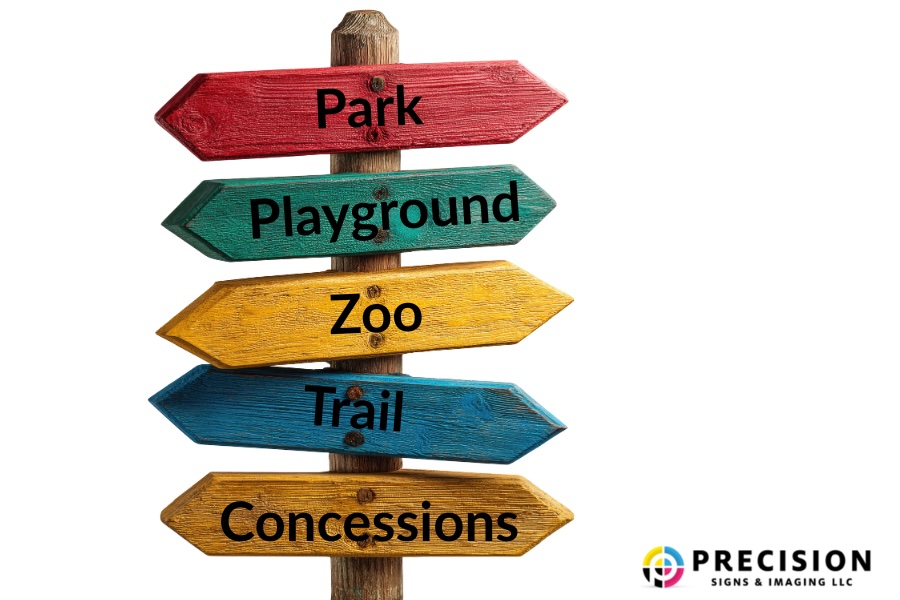
The scope of outdoor wayfinding covers several sign types. Entry monument signs establish the identity of the space and set expectations for what visitors will find inside. Directional signs at key decision points like parking lot exits, trail intersections, and building approaches guide movement through the property efficiently. Informational panels and maps posted at high-traffic areas give visitors the lay of the land before they commit to a direction. Rules and safety signage communicate expectations clearly without requiring staff to manage every situation.
Materials matter significantly in outdoor environments. Signs that look strong at installation can degrade quickly when exposed to UV light, moisture, temperature swings, and the physical wear that comes with consistent public use. Outdoor wayfinding systems need to be built from substrates and finishes designed to last - aluminum, HDU, weather-rated vinyl graphics, and UV-protective coatings are standard for good reason. A wayfinding sign that fades, warps, or becomes unreadable within a season isn’t serving anyone.
Branding integration is also worth intentional thought. Wayfinding signs don’t have to be purely functional - they can carry color, typography, and design elements that reinforce the identity of the destination. A well-designed wayfinding system feels consistent and considered, contributing to an overall impression of quality that guests notice even when they can’t articulate exactly why.
With outdoor season in full swing, now is the time for parks, venues, and event spaces to assess whether their wayfinding is doing its job. Precision Signs & Imaging works with outdoor destinations of all sizes to design and install wayfinding systems built for real-world conditions and long-term performance. Reach out to get the conversation started.
Precision Signs & Imaging … because image is everything.
When visitors arrive at an outdoor destination such as a regional park, a fairground, a zoo, an amusement park, or a botanical garden, one of the first things they experience isn’t a ride, a trail, or an exhibit. It’s a sign. Or in many cases, the absence of one.
Outdoor wayfinding is the system of signage that helps people understand where they are, where they need to go, and how to get there. Done well, it operates quietly in the background. Visitors navigate naturally without noticing how much the signage is doing for them. Done poorly, or not done at all, it shows immediately. Guests wander. Frustration builds. The experience suffers before it ever really begins.
For operators of outdoor destinations and public spaces, wayfinding is infrastructure, not decoration. Parks, nature preserves, campgrounds, sports complexes, outdoor shopping districts, and event venues all have this in common: the quality of the visitor experience depends significantly on how well the space communicates. A guest who can find the restrooms, the main stage, the concession area, and the exit without asking for help is a guest who is free to enjoy what brought them there. That ease of navigation shapes how they feel about the entire experience and whether they come back.
The scope of outdoor wayfinding covers several sign types. Entry monument signs establish the identity of the space and set expectations for what visitors will find inside. Directional signs at key decision points like parking lot exits, trail intersections, and building approaches guide movement through the property efficiently. Informational panels and maps posted at high-traffic areas give visitors the lay of the land before they commit to a direction. Rules and safety signage communicate expectations clearly without requiring staff to manage every situation.
Materials matter significantly in outdoor environments. Signs that look strong at installation can degrade quickly when exposed to UV light, moisture, temperature swings, and the physical wear that comes with consistent public use. Outdoor wayfinding systems need to be built from substrates and finishes designed to last - aluminum, HDU, weather-rated vinyl graphics, and UV-protective coatings are standard for good reason. A wayfinding sign that fades, warps, or becomes unreadable within a season isn’t serving anyone.
Branding integration is also worth intentional thought. Wayfinding signs don’t have to be purely functional - they can carry color, typography, and design elements that reinforce the identity of the destination. A well-designed wayfinding system feels consistent and considered, contributing to an overall impression of quality that guests notice even when they can’t articulate exactly why.
With outdoor season in full swing, now is the time for parks, venues, and event spaces to assess whether their wayfinding is doing its job. Precision Signs & Imaging works with outdoor destinations of all sizes to design and install wayfinding systems built for real-world conditions and long-term performance. Reach out to get the conversation started.
Precision Signs & Imaging … because image is everything.
Burnsville, MN - Custom Outdoor Wayfinding Signage Guides Every Visitor
SYNOPSIS: Outdoor wayfinding signage helps visitors navigate parks, venues, and event spaces confidently, reducing frustration and reinforcing a professional, welcoming brand experience.
Benefits of Custom Outdoor Wayfinding Signs
BY: John Swaney, Precision Signs & Imaging
When visitors arrive at an outdoor destination such as a regional park, a fairground, a zoo, an amusement park, or a botanical garden, one of the first things they experience isn’t a ride, a trail, or an exhibit. It’s a sign. Or in many cases, the absence of one.
Outdoor wayfinding is the system of signage that helps people understand where they are, where they need to go, and how to get there. Done well, it operates quietly in the background. Visitors navigate naturally without noticing how much the signage is doing for them. Done poorly, or not done at all, it shows immediately. Guests wander. Frustration builds. The experience suffers before it ever really begins.
For operators of outdoor destinations and public spaces, wayfinding is infrastructure, not decoration. Parks, nature preserves, campgrounds, sports complexes, outdoor shopping districts, and event venues all have this in common: the quality of the visitor experience depends significantly on how well the space communicates. A guest who can find the restrooms, the main stage, the concession area, and the exit without asking for help is a guest who is free to enjoy what brought them there. That ease of navigation shapes how they feel about the entire experience and whether they come back.
The scope of outdoor wayfinding covers several sign types. Entry monument signs establish the identity of the space and set expectations for what visitors will find inside. Directional signs at key decision points like parking lot exits, trail intersections, and building approaches guide movement through the property efficiently. Informational panels and maps posted at high-traffic areas give visitors the lay of the land before they commit to a direction. Rules and safety signage communicate expectations clearly without requiring staff to manage every situation.
Materials matter significantly in outdoor environments. Signs that look strong at installation can degrade quickly when exposed to UV light, moisture, temperature swings, and the physical wear that comes with consistent public use. Outdoor wayfinding systems need to be built from substrates and finishes designed to last - aluminum, HDU, weather-rated vinyl graphics, and UV-protective coatings are standard for good reason. A wayfinding sign that fades, warps, or becomes unreadable within a season isn’t serving anyone.
Branding integration is also worth intentional thought. Wayfinding signs don’t have to be purely functional - they can carry color, typography, and design elements that reinforce the identity of the destination. A well-designed wayfinding system feels consistent and considered, contributing to an overall impression of quality that guests notice even when they can’t articulate exactly why.
With outdoor season in full swing, now is the time for parks, venues, and event spaces to assess whether their wayfinding is doing its job. Precision Signs & Imaging works with outdoor destinations of all sizes to design and install wayfinding systems built for real-world conditions and long-term performance. Reach out to get the conversation started.
Precision Signs & Imaging … because image is everything.